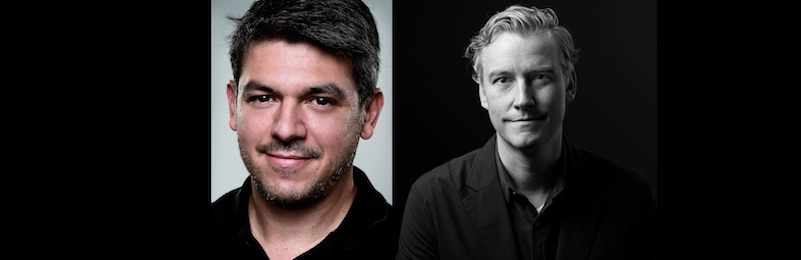
Matt MacDonald, chief creative officer of BBDO New York is one of MAD STARS’ four executive jurors this year. He joined BBDO in 2014 as executive vice president, group creative director. He rose to become chief creative officer for Omnicom on AT&T, the company’s largest account in the US, managing integrated, cross-agency teams in New York, Los Angeles, and Dallas. In 2016, he led the creative charge that gained Omnicom’s AT&T’s $2 billion combined media and creative business, a process that re-invented the agency model where creative, media, and data join forces for better, sharper, more innovative work. Matt has helped BBDO to win some of the agency’s biggest new business pitches, including AT&T in 2016, Ford in 2018, and The Home Depot in 2021. Prior to BBDO, Matt was instrumental in the creative transformation of JWT New York, joining that agency as a junior writer in 2003 and rising to chief creative officer in 2012. Along the way, he helped lead that agency to its best awards show results in more than a decade. As well as winning every major award many times over for brands such as AT&T, Macy’s, JetBlue, Smirnoff and Ford, he has created reality shows for TLC and MTV, an animated prime-time Christmas special for CBS and documentaries that screened at film festivals from Annecy to Tribeca.
MacDonald gives a glimpse into the MAD STARS jury room as well as an understanding of how great work gets there:
What trends have you noticed while judging? Has anything stood out about APAC advertising?
I think we had a huge trend of sadvertising for a number of years. Work that was meant to make you cry in a two- or three- minute film. I didn’t see a lot of that at MAD STARS, thankfully. I think that’s a trend that seems like it’s played itself out a little bit, and humour is way back, which was so refreshing. I think the jury was really happy about it. Some of the best work, the work that really did well, was work that was funny and genuinely, funny in a way that’s different than Western funny, which I think is what’s so special. I think the Thais might be the funniest people in the world. I always thought it would be a great idea to bring a Thai director to the States just to see what happens. Let them like just go loose with like a really normal brand, like a dishwasher and detergent and see what an American audience does.
The other trend is that work is getting longer, it seems. In some cases, the craft, there are a couple of pieces of work that was exquisitely crafted, but the sense of humour, which I think is just so unique and so special, that’s what really stood out.
What’s been great about the work you’ve seen and what do you never want to see again?
I was trying to think about how to answer what do I never, ever want to see again? I’m not one to sort of knock work as much as possible, it’s like you just kind of put it to the side. But it seemed like there were a lot of heavy product demos that were pretty ordinary. And so, if I’d never have to see another ordinary product demo, great. There was some work that took product demonstrations to fantastic, to great lengths, to hyperbolic lengths, and that’s where you could see that they really tried harder. There are examples in the show this year that really showed how to do a demo and make it like unforgettable and to make it rewarding, as opposed to just like a standard “here are all the tech features of this particular product”.
A lot of ideas die. What are the obstacles and what are the key ingredients for getting work through?
I’ve always believed that a lot of creatives are fantastic at coming up with ideas. They’re fantastic at producing the work. They’re not great at defending and communicating their own work. I’ve been a strong believer that a lot of times the reasons why creative ideas die is because they haven’t been explained well enough or they haven’t been – we use the term sell – they haven’t been sold. And presentation makes a huge difference in whether or not an idea lives or dies. And I think because as creative people, we’re so good at understanding our vision. We understand our idea inside and out, but somehow communicating that idea to someone else who doesn’t have that creative spark or doesn’t necessarily have the same imagination, there’s a big gap there. So, I’m a big believer in training people up and making sure that they’re great presenters as well as great creators. Because I think that’s a big reason why ideas die – you couldn’t share that vision you had for it successfully in the time that you had with someone who is a brand leader that’s got a completely different point of view.
I think that everyone’s going to have different motivations and the best way to get great work made is to make sure that you have both sharing the same goals and motivations. Clients have to make sure that the work works and they have to make sure that it’s going to make their quarter or whatever the sales goal is and if we as creative people are able to get our heads around that and understand that, the better off we’ll be and the more likely we will be successful.
Writing seems to have become undervalued. Is writing important?
I think people are seeing increasingly just how important it is, because words are the things that get lodged in people’s brains. If you look at the American political race right now, not that I want to turn anything to politics, but words matter. Trump can’t seem to find a set of words to attach to Kamala Harris. He’s really struggling, whereas “Sleepy Joe” worked really well for him. Kamala has this great expression,
“We’re not going back”. It works so well. Words count for so much. And I think clients buy words. Clients always have to sell the work internally. They have to communicate their ideas. And the better the words are, the better the writing is, the more exquisite it is, I think the better off it will be. So, I don’t undervalue writing at all. I think it’s the thing that I’m most passionate about. But that’s just me.
What makes a great creative leader?
I think the best creative leaders that I’ve ever worked with are the ones who listen and understand what their clients need and want, and then figure out how to triangulate the best possible work for that particular problem. They use the obstacles put in their place and actually get to better work. And I think also the best creative writers I’ve ever worked with were never afraid if an idea wasn’t selling or if they couldn’t get it through. They weren’t afraid to come up with another idea. They knew that they could come up with another idea. They weren’t
going to live or die whether or not one idea got made. They understand that there’s always another idea. So I’ve always been inspired by working with people like David Lubar. You can never get them down. They would always keep going. That was always a big inspiration for me.