In a bar, the cool blokes wear t-shirts and jeans, perhaps even with a casually unbuttoned shirt or jacket. Women are expected to wear as little as possible.
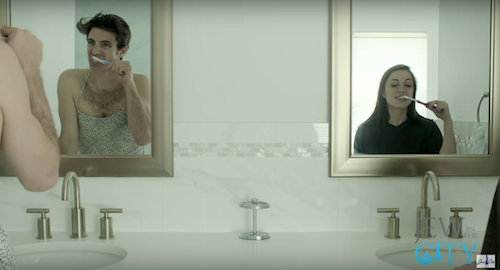
The skin gap, coined by Allison Josephs of social media non-profit, Jew in the City, is the difference in the amount of skin men and women are expected to show in the same social setting.
Images of nearly flawless, scantily-clad women bombard girls and women year round via billboards, ads, TV shows, and movies. The message may be subliminal, but most women get it. They’re meant to “undress to impress”. And “having the perfect beach bod” is of top tier importance.
This is one of the attributes of gender inequality that hasn’t been properly tackled. Until now.
How Jew in the City has done so is simply clever. That’s simple and clever. And clearly, achieved on a very small budget.
The campaign also has a wider agenda. Allison Josephs’ primary aim is to break down stereotypes about religious Jews and offering a humorous, meaningful look into Orthodox Judaism. The Skin Gap campaign is also trying to make people rethink Orthodox modes of modesty. Very many non-Orthodox Jews and non-Jews have a very negative perception of Orthodox Jews and Judaism – they see it as backwards, repressed, outdated, sexist, and anti-scientific. Like stereotypes of women, these misconceptions are perpetuated in the media, popular movies, TV shows and books.
Jew in the City has been campaigning to change that since 2007.
“As a secular American teen, I was so excited to get my first bikini and pair of Daisy Dukes, because it was a sign of being ‘grown up,’” Josephs explained.

“But something unexpected happened: I’d always feel gross when random men would give me the ‘up down.’ I never did anything or said anything because I had no language to express what I was feeling.
“A few years later, I became an Orthodox Jew and started covering up purely to follow `the rules’.
“I discovered something fascinating: covering up actually made me feel empowered. The first time I wore a long skirt and a random guy at the mall gave me the ‘up down’ but had nothing to see, inside I screamed, ‘Yes!’ No one can deny that the skin gap exists, and if this video helps one more woman feel more empowered about her body, then we’ll consider it a success.”