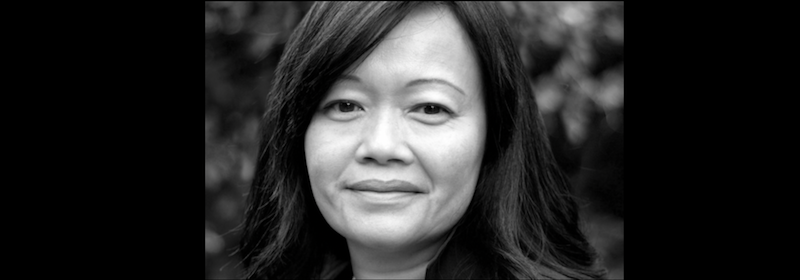
A true all-round creative gem and deputy executive creative director of Saatchi & Saatchi Sydney, Rebecca Carrasco is judging Audio Lotus and Film Lotus at AdFest this year. She is also a pioneer, a part-time ECD mum working in a top agency, and an agency creative who went to Facebook and back. The Stable asked her about all of this and more.
Here’s what she had to say:
The Stable: Radio advertising doesn’t seem to be sexy in Australia right now? What do you think are radio’s challenges and opportunities?
Rebecca Carrasco: It’s a bit like Puff, The Magic Dragon. We believe we’ve out-grown it. Understandably, we’re excited to have new platforms to put work through, but that’s all they are. They don’t make the work better. What makes any medium wonderful is imagination. We just need to revisit our older friends.

TS: What makes a great radio ad? What makes a great ad film?
RC: The same thing that makes a good podcast or a good movie – an idea. What we want from the medium doesn’t change during the ad breaks.
TS: Film production companies have been struggling with smaller budget and tighter timelines. Do you think it shows in the work that has been produced in 2018-9?
RC: We’ve all been struggling with smaller budgets and tighter timelines. The industry is evolving. I think the rise of social media content has created a perception that things can be done fast and cheap, and sure, they can. But there’s a time and place for everything, and we need to keep the objectives in mind when we delineate the course.

TS: The six-second ad – fad or the future of online video advertising?
RC: I don’t think there’s an ideal timeframe to communicate with consumers, because consumers aren’t real. No one is out there waiting to consume. What we’re trying to do is make a connection with people on behalf of a brand. Sometimes the idea allows that to happen in a few seconds. Sometimes it takes a few minutes. Sometimes a few hours. If the idea is relevant and compelling people will stay with you. If it’s not, 6-seconds is probably too long.
TS: Where does the TVC sit in the scheme of most of S&S’s work?
RC: Every brand takes its own approach toward engaging with the audience it would like to talk to, and media mixes are delineated accordingly. While there may be a lot of interest and activity in new media, large audiences are still drawn to TV, so it’s an important part of the mix for most big clients.
TS: There’s a lot of talk at the moment about the undermining of creativity in advertising. Is ad creativity in peril? Why does creativity matter?
RC: I think people make the mistake of regarding creativity in advertising as being an artistic wrapping around commercial messages, that the important work is done elsewhere and you use creativity to dress it up. I don’t think that kind of approach has ever worked well, or ever will. The kind of creativity our industry needs is the kind that solves business problems – beautifully, memorably, uniquely. As long as we empower our best ideas people to work with our most valued clients, in true partnership, real creativity will always find its value.

TS: You have rather a special arrangement with S&S? What are the advantages and challenges of working part-time?
RC: Our industry is driven by passion and deadlines, both of which don’t have an off-switch. Part-time is always going to be challenging within this context, so it really comes down to partnerships and people. Quite frankly, if the people around you don’t want it to work, it probably won’t. I chose to come and get to know everyone through the work before we formalised anything. I’m fortunate that the business is run by people I like and respect, and the team around me are genuine and talented, so it means that when I do put the tools down I can trust in the partnerships that I’ve built with not only the creatives, but the boarder agency teams. This obviously allows me to be able to give some focus to my young family, and still be part of their daily life, which I otherwise wouldn’t get to experience.
TS: You went from adland to Facebook and back. What were the lures (in both directions?)
RC: I was on maternity leave with my second child when Facebook asked if I would consider their ANZ creative leadership role. At the time, I was already thinking about ways of diversifying my career. I wanted to try something different, and I wanted to get more hands-on with creative strategy again – something I’d not had the chance to do since running my own agency. The job I took as head of Creative Shop ANZ was leading a team of creative strategists through the region (ECDs and CDs), to work closely with clients and agencies, to build the best work for the platform. It also offered me the opportunity to immerse myself in the tech industry and build a working knowledge of its potential, something I felt was lacking with most of my career having been in mainstream agencies. It was a great experience for all those reasons, but after a while, I wanted to return to agency life. There’s a certain DNA within our industry which is quite unique, and I missed it.

TS: What is the most important work you’ve done (important to you)?
RC: I once entered a YoungGuns Live Brief, with a hand-drawn concept. It got a bullet, and was printed in the book, still as a hand-drawn concept. This was an important piece of work for me because it taught me the value of the idea (as opposed to an execution).
Another important piece of work for me was one of the first real campaigns I made as a creative. I was working alone, and I’d been told the brief deserved gold. I was terrified. But I worked until I thought I had something. Presented it. Client bought it. And then I had to make it. I got nervous and admitted I’d never produced anything like this before, but it was too late. My taxi had arrived and there was no one available to send with me. My ECD said one thing, “Don’t leave until you’re happy with it. No matter what anyone else says, don’t leave until you’re happy with it.” So I hung onto those words for dear life and did exactly that. The campaign did win gold. And I learned to believe in me.
And there’s the MTV Exit music video campaign against human trafficking on which I was lucky enough to work with Radiohead, The Killers and Muse. I feel very honoured to have had the chance to help bring awareness to the horrific atrocity of child trafficking and exploitation. To be able to use what you’re good at, to do some real good in the world, is the holy grail. No awards mean more to my than the United Nations Award and Asia Pacific Child Rights Award which that campaign was recognised with. They mean even more now I have my own children.
You might also like