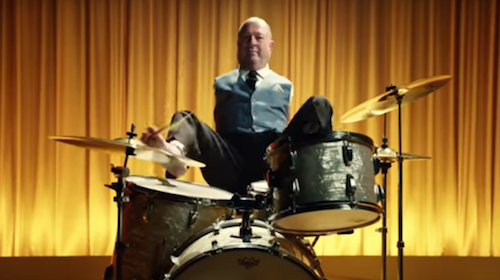
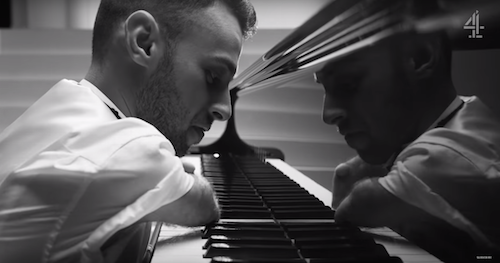
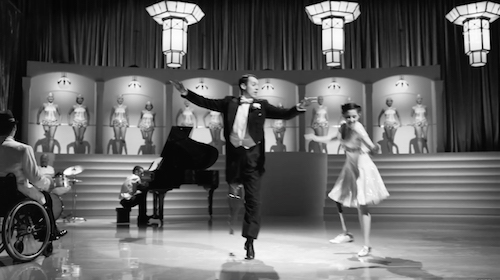
Advertising is a tough business. If you don’t have grit, if your ego isn’t made of concrete, if persistence isn’t in your DNA, get out now. Alice Tonge came to D&AD to remind creative people that The First Draft of Anything is Shit. Until a few weeks ago, she was head of creative at 4Creative, Channel 4’s in-house creative agency, a position she had held since 2017. She spent 15 years at 4Creative and was the creative behind Channel 4’s rebrand in 2015 and the 2016 Rio Paralympics campaign, We’re the superhumans, which won a Film Grand Prix at Cannes Lions. She is also the mother of a girl, who is now aged three. Clearly, Alice Tonge has grit.
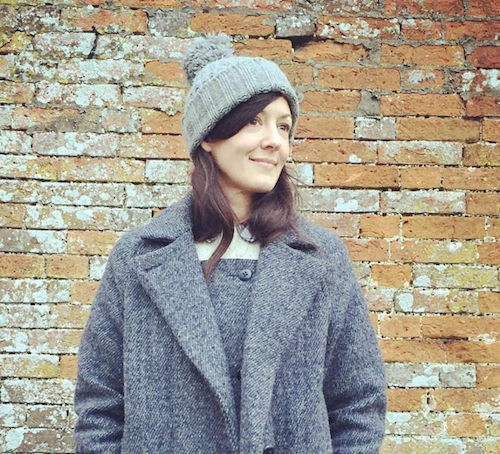
Where is Tonge going? She hasn’t made up her mind. She wants one year with her daughter. “A good friend of mine told me, ‘Leave a part with your lipstick fresh and when it’s good,’ so that’s exactly what I’m going to do. I’m not leaving the industry. I just haven’t decided what that next creative venture is, because I want it to be as special as the last fifteen years.”
The Stable asked her about the resilience required to make great work in adland.
Alice Tonge: I think you have to produce a lot of stuff. And that’s certainly what we do at 4Creative. You have to constantly produce lots of great ideas because they’re not all going to stick. The minute you’re feeling precious about an idea, it’s always those that never, ever end up happening. Keep sharing, presenting, pushing out ideas and be prepared to get the boxing gloves out to have a good old fight about why a good idea can’t go through. A good idea shouldn’t be hard to sell in but a lot of good ideas scare clients. If an idea scares you, it’s a good thing but not all clients want to be scared. You’re not always going to win all the battles. But if you keep producing and keep showing clients the kind of work you want to make something will stick eventually because they will get used to seeing bigger, better, braver bits of work.
The Stable: With Channel 4, It seems as though it must have been relatively easy to get some pretty spectacular work through?
AT: It’s a really incredible brand. I feel very fortunate to have worked there for fifteen years. And when you work in-house, you work with the company you’re creating work for. So essentially, your clients are your colleagues. That will always make the journey from rough idea to the finished pieces easier because you have fewer people to sign off.
We’ve always created very good relationships with our Channel 4 marketing department, with all the stakeholders that have to essentially approve the idea. And I see all of these people as the client. What I like to do is involve them in the ideas process as early as possible. A bit like, “Hey what about this?,” and “Here’s an idea,” rather than a formal presentation where you’re allowing them to have the power to say, “I don’t want to do that, I want to do this.” Most of the time it’s “I don’t want to do it.” The trick is in seeding those ideas early, getting someone on board with them so that yes, it might be scary or it might be a brave idea, but they’re a part of that idea and they helped to develop it. Of course, you have to keep a client happy. That’s how you run a business, so there will be stuff you have to do but if sharing “We could do this,” becomes consistent you’d like to think that a client will come with you. You just can’t come out of nowhere and say, “Buy this really ballsy piece of work,” and think they’re going to do it. It’s a slow burn instead. Creating brilliant bits of work is a partnership, a combination of a lot of people. It’s like a massive jigsaw puzzle and all of the pieces, all of the people, have to fit together and be a part of the “family” for it to work.
TS: Apart from the Paralympics, what work are you most proud of?
AT: There’s one piece in particular, Alternative Voices. Channel 4 has continuity announcers, who introduce what’s coming up next. It struck me that all these people, in every channel, sound the same. I thought, “Channel 4 is set up to take creative risks, to champion diversity and disability, to challenge the status quo, why don’t we change these voices – take a risk.”
So we hired five people with communication difficulties to introduce our biggest shows. These are voices that no one had ever heard on a TV channel introducing a show. We hired someone with tourettes, someone with a stutter, someone with cerebral palsy and talking through a voice box. There was no brief and very little money so I ended up rolling up my sleeves and directing it myself. It was incredibly rewarding because it makes disability more visible on screen. Why can’t someone with tourettes introduce a show? Why does it have to be a posh British person? I would sit and wait quadruple the length to hear someone with a stutter introduce what’s coming up next. What’s even more amazing is that Jess, who has tourettes, got employed by Channel 4 to introduce its shows. She didn’t think it would ever be possible for her to get a job. That kind of work, where you’re shifting perceptions, changing stuff matters.