Black Pencil judging can get tricky when you’re connected to the work “everyone” is exuberant about. Although Revolver/Will O’Rourke represents Kim Gehrig in AUNZ they cannot claim Libresse’s Viva La Vulva, created by AMV BBDO and produced by Somesuch in the UK, and it was the Black Pencil contender in the judging room. Revolver/Will O’Rourke, managing director and partner, Michael Ritchie, declared his connection, crossed his fingers and waited.
Shortly after, I asked (OK, coerced) him to tell me what he thought about the film that was causing a buzz among all the judges. Here’s what he said:
Michael Ritchie: Viva La Vulva is a fascinating piece of work in every which way. On one side of what’s really powerful at D&AD this year is the New York Times’ campaign, The Truth is Worth It, which was also judged in Direction (amongst many other juries), has done an incredible campaign that is all about the world reacting to the fact that we don’t know what the truth is any more. And that’s such a big part of the world’s problems.
On the other side is this thing that Kim Gehrig has created with AMV BBDO. She took an agency idea and I understand that the agency gave her enormous scope and she really ran with it. As far as I’m aware, she was integral in the music selection with Soundtree. The rest of the piece is all about directorial invention, and is talking about the vulva in a way that no one’s ever thought about. As a male, it has such a refreshing objectivity about it. It’s such a fantastic way for women to reveal themselves and other women, just how they are.
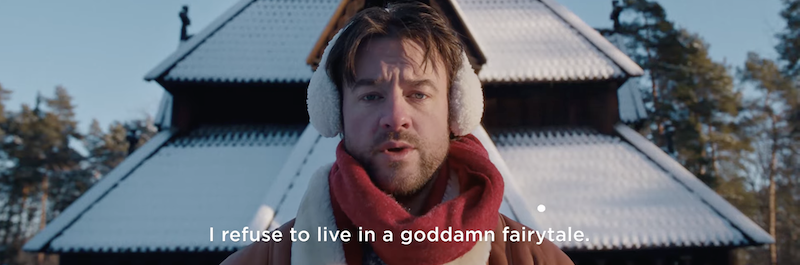
It’s one of those wonderful pieces of work that actually changes the way you think about how women feel and it comes straight out with it. And also it’s so fun. It’s so ridiculously fun. From the moment you start hearing that track and start seeing a bit of voice synch out of a shell, you’re in there for the ride. It’s fastidiously done and done in a way that there’s sometimes an intended “found” kind of feel to it. It’s really bang-on, it’s slick and then some of it looks more low-fi – actually supporting the pure accessibility of its message. Everything about it goes to the end result and I think Libresse is incredibly lucky to have it as a piece of communication. They’re the benefactors of one of the best bits of work in that area that the world has ever seen. Plus, it was pre-empted last year by Blood Normal, which was also a really great campaign – well done AMV.
Michael Ritchie joined Steve Rogers, in 1999. They became partners. He has steered it, very cleverly, through more than one minefield (production has had to fight a lot of battles to thrive), and built a star-studded line-up of directors that include headliners, The Glue Society, Richard Bullock and, of course, Steve Rogers. Will O’Rourke is the experiential production agency that was ahead of its time. When the rest of the production industry caught up, Ritchie merged it back into the main brand. Smart move from a smart bloke that has helped his company to stay at the front of the pack for thirty years.

The Stable: Production was really tough a year ago. And now?
Michael Ritchie: Production is always difficult and that’s kind of why we love it and why we hate it. What I’ve noticed is that every time you think the business may not exist in six month’s time it comes back in a different way. We’ve always been trying to work our company around being one step ahead of whatever incarnations production might have.
At the end of the day, and it’s an enormous cliché, we are still pitted in situations where we need to solve really high pressure situations that have enormous impact on that brand, or even the country in some cases (as with Dundee) where you just can’t drop the ball. I think we’re finding that when you’ve been doing it for quite a while, you end up having a trust thing to which agencies respond. And when they know it has to be great I hope they think about us. So we’ve been making sure we don’t drop that ball. That takes a lot of effort, and budgets are all over the place. No doubt, when you see a decent budget you see a far better result. When you see a smaller budget and it’s written tightly, it can also work. It’s the middle that scares me.
I feel more invigorated by production than ever because it’s more expansive and we’re doing more interesting things with it. It can be like waking up and running into a brick wall sometimes as well but then suddenly you get through it and it’s rewarding. I actually love it. More than I ever did. Then, when you come to shows like D&AD, you see all the best people doing all the best work and it reminds you that Australians are part of that. Australian production companies really punch high –Finch, Goodoil, Sweetshop, Rabbit, ourselves etc – compared to other countries for our population base. I think we can be really proud. We can deliver anything.
The Stable: How is Revolver/Will O’Rourke navigating production right now?
MR: It’s really very international and we chose our partners and roster with so much deliberation and care. Pip Smart, who EPs and heads up how we roll out our production is a massive part of it for me too. She is so good, embodies our company ethos so well and is integral to it working. I have to say it – all our people are simply amazing. I am so privileged to work with them every day, that’s what really helps us navigate our production.
Overall, we will always look for where we can add the most value and I also guess its fair to say that scripted FMCG problem-idea-answer-pack shot is not as prevalent any more because the audience won’t really absorb it. I think we have such fantastic scope with audiences these days. They’re so smart. We so underestimated audiences’ intelligence for a long time, and now I do think our industry has established how smart audiences are. So the commercial business can elevate itself and be a lot more intricate. It doesn’t have to go lowest common denominator and I think that’s having a great effect. You can be a little more lateral. There can be storyline threads that don’t have to be completely obvious and the same for everyone who observes them. You can interpret, and that makes people want to watch stuff again and again, rather than being repelled by a low common denominator piece of advertising. They’re helping the good end of production and smart agencies who believe we can spend reasonable money on doing something that really engages – and it’s their clients who are going to win in the end.

The Stable: And Will O’Rourke?
MR: We started Will O’Rourke about nine years ago and in a way it was flag to say, let’s do something really different. Let’s do something art based. Lets’ do something where we don’t necessarily even have a camera in there. Then everything we did actually always had a camera in there so that people would know about it. At the same time, Revolver started doing really interesting things as well and innovations came about in both film and experiential. So we put our two separate names together as part of a natural progression.
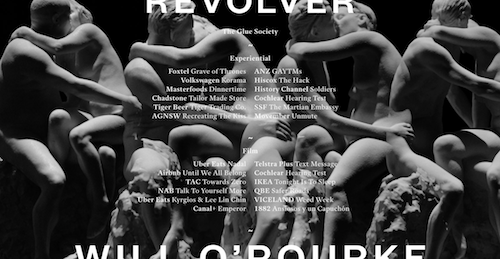
We’ve brought everything back into one entity with the two legacies, and that has made us stronger. I hope it gives us an edge, something different about us. And without sounding as if we think we’re on the front of the new frontiers, I hope it has paved the way for other production companies to do things differently. I do think that Australia does really different campaigns and our different kind of approach was really born from the lateral thinking of Australians. We’ve had to do different kinds of campaigns because we sometimes haven’t had the money or the market scale. Our agencies punch high. We came second in the Palme D’Or last year, something we are really proud of. Clems Melbourne pulled off top agency in Cannes worldwide, the previous year. It’s important that we know that we, as an Australian marketplace, are capable of getting to the top in the world. But we just can’t rely on that. We have to keep doing it.