D&AD is hugely grateful to, and for, The Glue Society founding partner, Jonathan Kneebone. Grateful that he exists. That he is sincerely passionate about nurturing the next generation and that his generosity in helping D&AD’s endeavours to get more, more diverse, more interesting and more valuable next generation members into the creative industries knows no bounds. He’s also one of Australia’s star adpeople, with a flair for producing what no one else has thought of before.
Kneebone came to D&AD to talk with D&AD CEO, Tim Lindsay; Karmarama ECD, Brian Williams; and creative partner and co-founder of content creator, Visual Editions
Anna Gerber about What’s Next for Creativity? But on the way here, he was held up in Amsterdam. Generously, he talked to The Stable about creativity, by email while on a plane.
The Stable: What is putting the future of creativity under pressure and what can agencies do about it?
Jonathan Kneebone: Right now I think the biggest issue for every part of the industry and every stage of the creative process is the pressure of time – and getting lots of different people to share enough time together to focus and align and see through a bold ambition.
The truth is that creating work which will stand the test of time doesn’t happen in an instant. And getting time set aside for all the various people to agree on a shared mission is vital if you are to have any hope of breaking barriers or doing something without precedent.
With no time, we resort to things which appear to solve our immediate problems. And they tend to be stock standard ideas. What time allows is a chance to fully explore what the opportunities are and live up to them.
So I think the way we schedule our work flow needs to change so that priority is given to creative thinking, creative discussion and creative expression.
It’s got to be a shared agenda otherwise we end up with a lot of wishful thinking and not much actual progress.
TS: What is the future of creativity – What does future ad creativity look like?
JK: Wow – this is quite a big question. I think there is a feeling that we need to find a new approach. A new standard. There is an appetite for something bold and brave to break the formulas or at least prove that the formulas exist. But at this point, it is hard to say what the near or far future looks like.
Personally, I think brand behaviour is going to become more common than traditional brand communication. I think we will see brands being more active – behaving like people, expressing their personalities – in order to better connect with their audiences and finding fans.
Brands ‘being’ rather than ‘saying’ will allow audiences to connect with them in the real world and when people share these experiences they in turn will become the broadcasters of these events and messages.
So rather than a single definitive ad, we may end up with a continual series of brand expressions. Creativity can in turn become more human, personal and personable. And possibly more artistic and progressive. Which is possibly a reaction to the recent rush to tech – and even now, I think real world experiences are starting to see a resurgence.

TS: What is putting craft under pressure? Why is it important for D&AD to emphasise craft in its awards?
JK: The pressure of time is also one that affects craft. But also, I think the appetite for craft is becoming lost when tools to make everyone appear to be more creative are so widespread.
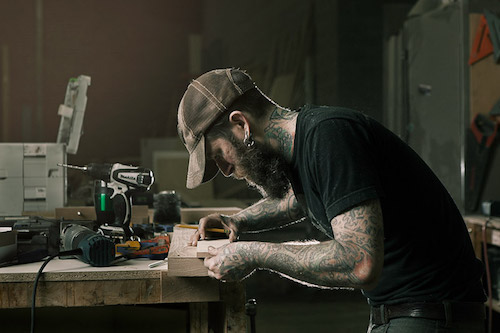
It is possible for anyone to ‘design’ a logo, or ‘shoot and edit’ a film on their phone – it’s an immediate and accessible thing. And that’s a positive of course. But what is being lost is a desire to develop real skills and practices which can break these common conventions.
We can all take a photo, but it is hard to discover the new photographers who will take over from the Toscanis or Baileys or Rankins. We can all write an email or a tweet, but finding the new persuasive writers in our industry are thin on the ground.
What D&AD has done this year is hand the judging of the craft categories to those people who excel at those particular craft skills. And I think as a result, the work that is being applauded and recognised will perhaps better represent these particular craft capabilities.
That, in turn, should inspire the next generation within these craft categories to excel.
TS: What are the most important elements of a well directed ad?
JK: Storytelling, casting, surprise, involving and rewarding the audience and doing everything with confidence. It is something that Kim Gehrig and Steve Rogers deliver in every piece of work they touch. And they are in my opinion the best directors working in the industry right now.
TS: What ingredients do young directors need to bring or cultivate to be great?
A unique perspective, opinion and the vision and bravery to bring an audience along for the ride. It’s important to know what you think, to know who you are, and to have something to say. Being a director means having a sense of purpose and giving everyone else a focus.
It’s easy to say you want to be a director, but to BE a director requires you to be able to have an answer for every conceivable question. Even the ones you haven’t thought of yet – and particularly the ones that emerge as you begin filming or editing.
TS: What have you added to your skills/abilities as you’ve matured in your career?
JK: A sense of perspective. And purpose. And an increasing determination to be more myself. And apply myself to new opportunities. I have avoided the things that I have felt I would be able to handle (ie: be a creative director) in favour of trying to do things which I feel may be beyond me.
I believe the book of birthdays describes my character trait as being ’the day of difficult demand’ – where I prefer to choose the more complicated path to the obvious one.
And that is most definitely the case.