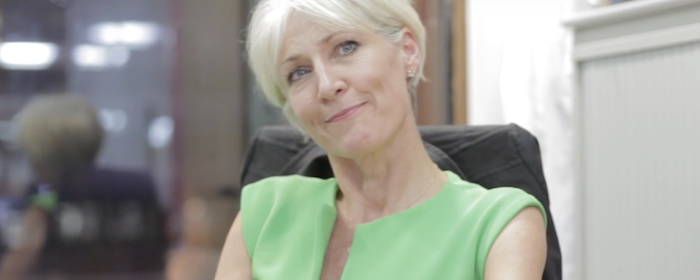
Rosie Arnold spent thirty-five years in two ad agencies, thirty-three of them at Bartle Bogle Hegarty and two as creative partner and head of art at AMV BBDO. No one has done more for the status of women creatives in advertising and few – if any – creatives have done more for the calibre of advertising in the world. She left AMV BBDO at the end of last year. It was with a huge amount of pride (and no doubt to exorcise a huge amount of frustration) that she got to speak her mind about advertising creativity.
Her talk at D&AD was innocuously titled Making Great Work: Moving Beyond Mediocre. Here is what she told The Stable about that.
Rosie Arnold: I don’t think most creatives say, “I didn’t stretch myself.” Most creatives do stretch themselves. I think things turn out mediocre because we just get tired of fighting and if I’m going to be really, really open about it I also think mediocre happens these days because everybody thinks they’re creative. This means that everyone gets involved in the creative process, in the idea. And every single time you have to take on board another opinion and adapt your original idea, it’s a compromise. If you’re not careful, it gets worse and worse and worse. What matters is to understand the point at which to walk away from something like that. Because of business imperatives you don’t and you end up with something not powerful.
So many times I’ve said, “It’s just not going to work. It’s going to be awful. We’re all going to be massively embarrassed by this,” and people go, “Rosie, just do it.”

That’s a real shame. To my mind, I feel that the best creative is done by benign dictators, who have a great idea and then inspire everyone around them to make it happen, persuade the clients and persuade the advertising authorities. That takes a lot of energy. It also takes a very good client. And it takes everybody involved in that process to agree to, and buy into, this benign dictator. And that is so difficult. John Hegarty said he got out of the industry because he was in meetings where the junior marketing executive would be saying to him, “Why don’t you do it like that?” John would answer, “Because that’s going to make it worse. Why do you want to make it worse?”
You know what guys, I’m sorry, I know that everyone wants to be the groovy creative person but you’re not and let’s all do our jobs and we might get much better work. Everyone can have a creative idea – but it might not be very good. Imagine you have a beautiful piece of architectural design and someone comes in and says, “Can we just change the door handles?” They’re only door handles, so you change them. Then they say, “And I’d like to change the windows.” The next thing you know you look at the building and suddenly it looks awful. And that’s because the windows and the door handles aren’t right. Unfortunately, the minute you take it away from the analogy, people stop getting it. They say, “They’re just ‘windows’. I’m only asking you to change the ‘windows’.”
The Stable: Is advertising in trouble?
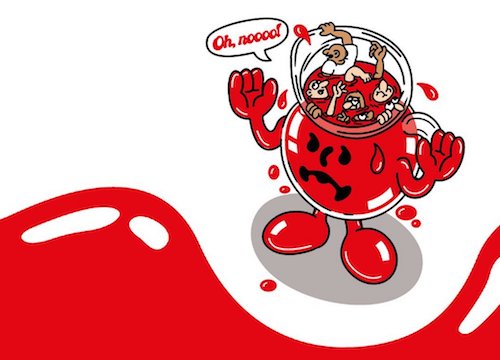
RA: This, I think, is the problem. It’s as if somebody’s drunk Kool-Aid and decided “this is the solution” all the time. I left AMV last year because I couldn’t stand going into meetings and having a client say, for example, “We want to change the world. We want to revolutionise this brand. And what we’ve done is we’ve bought fifteen-second ads.” And I was like, “Can we have a meeting? I’m going to radically change the way people think but I’m only going to have fifteen seconds to do it? Are you insane? You don’t have to do TV ads. Look at the iconic brands that have done really well in the past. They haven’t run fifteen-second ads.”
I had to do training with Google recently. Google has a lot of rules, like “This is what you have to do in an online ad. You have to put the brand up front.” The problem with that is, the minute you put the brand up front, people are not going to be interested. Facebook has been very disingenuous with its research. Yes, people click out within the first three seconds if they haven’t engaged with it. What they haven’t left in is that if the brand comes up in the first three seconds, people will disengage with it straight away.
We used to have a nice symbiotic relationship with people. When I first came into the industry in the UK, people loved ads. Everyone would know which one you were talking about, and that was because we were entertaining people. Yes, of course the media landscape is very different. But if you’re just irritating people, people start hating you.
And ads are everywhere. At some point, advertising began to think that irritating and interrupting people was acceptable. If I’m online looking for something, just be very basic and give me money off. Don’t try to have a longer conversation with me. And if I’m watching TV or in the cinema, entertain me. I think we’ve forgotten to be human beings interacting with other human beings. I also think that when clients are thinking about their own brands they forget what it’s like to be at the other end.
You might also like