The job of a top creative is to conquer challenges. To use creative thinking to get around, through or over a problem.
The challenge is usually a brief. But really, a creative mind will tackle any problem creatively. It might be a problem connected to a shoot, it might be a problem at work. It might be an industry problem. Or it might not. It might be dealing with an awkward social moment or a D-I-Y dilemma.
So I asked some top creative minds – ad creatives, executive producers, directors – to tell me their creative dilemma stories. Any creative dilemma story. Read them because they’re fun. Or because they’re little gems of useful insights.
I’ve divided this Chat into two collections, in the order the content arrived. Episode two is a brilliant read also. It will be published on Friday morning. [ed]
Dantie Van Der Merwe, creative director, BMF
 ,
,
My first boss gave me some great advice. Back then I was too stupid and green to understand how important it was and how many times I’d need it.
These were his wise words:
There will come many times in your career where you’ll find yourself out of love with what you do. You’ll have to master the skill to teach yourself how to learn to love what you do all over again. And sometimes you’ll need to do it quickly.
Whenever you’re over it, whether it be the industry in general, your current job or just a current project, find the tiniest little element of the job that you actually like doing and just focus on that. Start messing around with that tiny element and the love will spread from there.
It could just be the tiniest thing: move a logo around on a layout, stick things up on a wall, some weirdos like going through typefaces (I hate looking for typefaces), write headlines, go to an edit or a film shoot, write presentation intros, do research, read about the subject, photoshop something, anything that comes easy to you.
Find your tiny thing. Start there. And just start. Something will come from it. Great inspiration can start and spread from the tiniest places.
Jonathan Kneebone, founding partner, The Glue Society
Unexpected problems often lead to something better
It’s far too long ago to say just how long ago it was, but I was lucky enough to have Tony Kaye direct a Mazda project for me and my then creative partner,
Dave Johnson, while we were working at Howell Henry Chaldecott Lury.
It was when Tony was at the height of his notoriety – he’d just finished shooting Dunlop – and our scripts needed some of his unconventional and crazy magic to bring them to life.
A few things happened to justify our decision to get him involved.
The script called for a white car to appear against a white background to make it feel “special” but not “shouty”.
We turned up on the shoot at the call time, and Tony had already been shooting for three hours. He announced he’d decided to shoot in black and white. Which wasn’t what anyone from the PPM had been expecting. And the car was covered in about 30 metres of see-through industrial plastic tubing.
It looked insane. And I thought my face looked astonished until I saw the account guy clock the monitor. He literally looked sick. But when Tony saw the impact the split had on the account guy, it gave him another idea. He started shooting the imagery from the monitor. And before you knew it, we had a better visual idea than anything he or we could have scripted.
The ad involved fast forwarding and pausing video to reveal hidden messages about the car. And so filming off the monitor gave us the context for white noise and video tape imagery. And an objective, somewhat remote, angle on the car. At some point, because of frame rates, we got what could only be called visual feedback.
The whole thing felt like a mistake. But precisely the type of mistake Tony said he’d been waiting for all day. A side-comment I will never forget.
The first edit we saw was three minutes long. And the editor had put a John Cage piano work on it. Apart from thinking how the hell is this going to work in 40 seconds, I was genuinely overwhelmed that I’d been involved (albeit slightly) in something so special. But as John Cage was unlikely to be interested, we had a problem. We needed a soundtrack. Tony decided he wanted to conduct an orchestra playing the music you’d normally hear at the punchline of a joke – just extended out for 40 seconds.
We went along to the recording session and it was undoubtedly the most hysterical experience I’ve had in advertising. It was pure chaos as he conducted the orchestra with a baton. It was never going to work, but we had to entertain the notion of it.
But it left us with a problem. Tony loved it, and we hated it. And the more we quietly expressed our reservations, the more he felt we were being narrow-minded. That weekend, I happened to see a South Bank documentary about a deaf percussionist called Evelyn Glennie. (Now Dame Evelyn Glennie, and performer at the London Olympic Opening Ceremony). And I proposed to Tony – more out of desperation than anything – that we see how a deaf percussionist would musically interpret the vision he’d created in place of his performance.
It was crazy and perhaps because it was more left of centre than his proposal, he said, “let’s do it”.
The end result was astonishing. And to be honest, everything we’d hoped for. It gave the film incredible cut-through. Getting attention from the media, the arts and the target market.
Ultimately, the film even inspired the Oasis music video for whatever. One of the first times an ad has inspired a music video rather than the other way around.
Truly the kind of mistake I’ve been trying to make ever since.
The Mazda ad:
Agency: HHCL & Partners. Director: Tony Kaye
That inspired this:
Brie Stewart, creative director – content, J.Walter Thompson Melbourne
A mentor of mine years ago shared, “You never want to be the smartest person in the room. The person who thinks he/she/they are, is the person in the room no longer learning.”
This thought has stayed with me. And while this may not be the sexiest response, and it certainly doesn’t talk to my creative flex, what it does talk to is something that I think is essential to solving problems. Collaboration.
Yep. An absolute buzz word that I’m almost ashamed to be using – but, in the spirit of honesty – collaboration really is the main way I approach moments when I’m challenged. From the brief, to the prop, to concepts, execution and to working with clients and internal teams.
For me, I often interrogate the media channels stipulated on a brief. With the diversification of channels and changing behaviours of our audiences, I like to look deeper into what we should be doing with our creative ideas to connect with audiences in their more natural places of engagement. However, our ideas can only go so far if we don’t collaborate with our media partners, and importantly – the channels or technology themselves. Why? Due to new-ness or complexities and restrictions of technology – there’s only so much we can find out on our own. Lately, it’s been exciting to see how collaborating in this manner more up-stream is helping us solve problems (whether it be consumer, brief or creative), with the outcome – better ideas.
At the pointy end, I’m a big believer of being closely tapped into clients to build a partnership. When I can call a client directly when we are stumped, get them in the room to workshop our thoughts, or even have an honest conversation around the why something won’t work – we begin to share the challenge. This often stimulates situations where we are able to make the ideas better or sell in a new route that more effectively answers the initial business problem of the brief.
The reality is when you open up the room – question, debate, laugh, trust and then drive hard together – well, that allows something to happen (more than the initial problem at hand) that you can’t always do on your own. And hey, we often mock the word “collaboration” in this industry because of the buzz word factor of it – but maybe it’s time to be (even more) cool with it.
Armand de Saint-Salvy, director, //Thirteen &Co
How to build an airport in 5 days
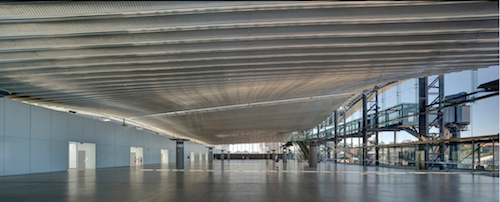
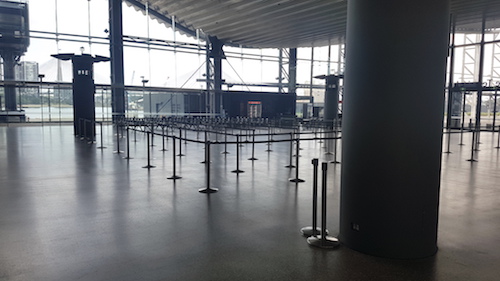
Fast turn-around jobs and airport locations don’t mix. Last year, I was directing a Westpac commercial (DDB Sydney) that needed an impressive airport. With 5 days to go before a 3 day shoot, several airports had given us verbal permission, but no sign of anything in writing. It was just too damn tight.
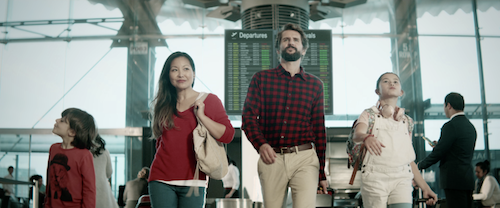
So Plan B: recreate an airport in a big fuck off space – why hello White Bay Overseas Passenger terminal! We split the space into sections – welcome hall, customs security, travelator, check in. We divided art direction tasks into real world builds and CG components. Our team constructed a functioning 20 metre travelator and erected massive airport signs. We used existing security scanners and tensile barriers to create a believable customs area. We took an exit door nestled in a wall and transformed it into a boarding gate, complete with signage, and strategically placed extras.
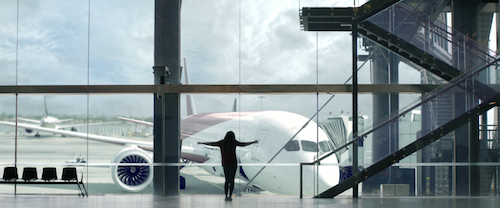
Then with some smart post compositing, we added an airport runway and planes into the glass walls, as well as large electronic departure/arrivals boards hanging from the roof.
Finally, as we had full control of the space, we trucked in large lights to add visual flare. Attention to detail was also paramount – from costuming to bar code scanners to realistic background extras with luggage.
Suddenly this large open space, when looking through the monitor looked like a believable functioning airport. Crisis averted. Clients stoked. Agency hi 5s. And a production team that lives to fight another day.
Before:
After:
Leah Churchill-Brown, executive producer, Exit Films
How do you solve a problem like Hurricane Sandy… and still make the on air date?
Producing is part business, part creativity. And more than anything, it’s about dealing with the unexpected quickly, thoroughly and intuitively.
In 2012, we had booked a job to shoot in New York. It was a studio shoot but the talent was based there so off we went, a small local contingent and the agency and client.
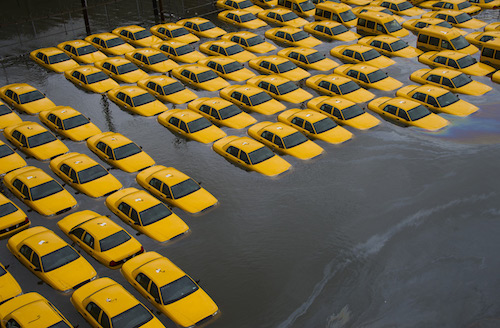
As we jetted in from the West, a little gust of wind by the name of Sandy decided she was going to visit the city that never sleeps from the East, casually drifting in at 150km an hour.
Fortuitously we managed to get the shoot done just in time, but literally as we wrapped the heavens opened and Mother Nature unleashed what was to become a $32 billion havoc-wreaking shitstorm.
And it’s really here that the professionalism of the team kicks in. In times like this, it’s tempting to throw your hands up in the air and think “well we’ll just have to ride this thing out”. But we got the director on the very last flight out of the airport, data drive in hand to get back to Sydney to begin the edit. And after that little bit of forward planning, we needed to start considering things like insurances, schedules, data protection, travel arrangements for the rest of us etc.
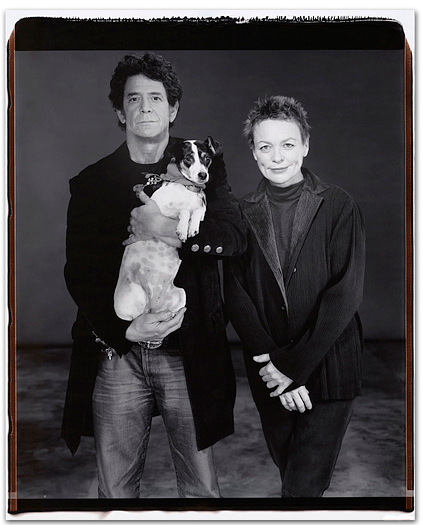
We retreated to our hotel in Soho, one of the only in the city which still had wifi. No running water whatsoever, but we had wifi. This meant a few of the city’s luminaries made their way there to stay. To say it was slightly surreal hanging out in the lobby with Lou Reed and his dog, while we and everyone in the city were frantically trying to organise an escape is an understatement.
We ended up having to stay in the hotel an additional 4 or 5 days, and then finally got the agency onto the first flight to LA once the airport had reopened. After literally hours and hours on the phone to insurers, we managed to have everything completely covered, the spots turned out beautifully and we made it to air on time.
And we got to hang out with Lou Reed and his dog in a hurricane in the Big Apple.
Loren Bradley, Executive Producer, Sweetshop Australia
How to make a wasteful industry go green
Sweetshop is committed to ethical policies and we’re passionate about making our productions as green as possible by implementing our systems, not only within Australia and New Zealand, but also in our offices in Asia, the UK and the US. Green policies are an ever-evolving project and passion is required from every stage of commercial making to implement these correctly.
In what can be an incredibly wasteful and disposable industry, support from agencies and clients is relevant, but it’s also down to every head of department to be responsible and passionate about the change. The biggest hurdle I have faced is changing peoples’ mindsets.
If I think of an example when we’ve managed to change people’s way of thinking, I would say our most significant success would be when we produced a job up in Asia – it was a large production set with over 600 crew and extras. It was great to put Sweetshop’s Green Policies into play. And while we couldn’t fix every single issue – recycling in Thailand is very difficult, for example – we did everything we could to minimise our footprint. We removed single-use plastic on set, auctioned off all construction wood and propping at the end of the commercial, hired locals from the area outside of Bangkok we were filming to wash the wardrobe and then gift it to their local community. We went as far as making our set non-toxic (using organic materials rather than tonnes of paint) to ensure we weren’t setting up a production line for five days, that would have a more substantial impact on the environment for decades to come.
I mention mindset because it’s always possible to do something on each production that’s a move in the right direction towards an entirely green production. It’s just a case of whether you’re up to problem-solving and looking at doing things differently.
After all, we’re a service company and it’s important to ensure we still provide a premium service to our agency and clients. It’s an ever-evolving project finding ways to do it better. Eventually, we would love to say that we have zero waste for all productions from script development to when the commercial is live. Step by step we’ll get there.
Shane Bradnick, chief creative officer, TBWA\New Zealand
“The problem contains the solution”: Michael Bierut (Partner at Pentagram Design)
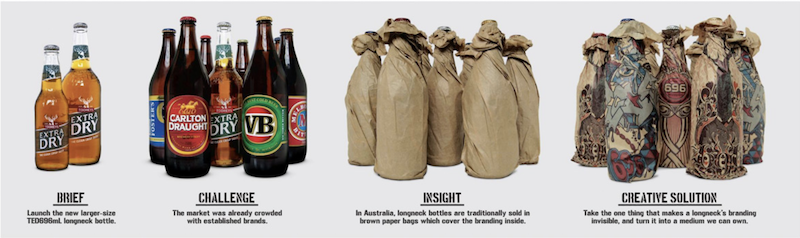
A few years back at BMF Sydney, we were briefed to launch the new Tooheys Extra Dry “longneck” (a larger 750ml bottle). Tooheys Extra Dry was a popular beer amongst a younger audience with a history of amazing creative work. The pressure was on – but there were a couple of obvious problems with the brief.
Firstly, we were last to market with all the other established brands already having a larger bottle out there, and also our new bigger bottle was smaller than theirs at only 696ml. So a simple, “Try our NEW BIGGER beer,” wasn’t going to cut it.
Another less obvious problem, becoming our insight, and eventually our idea. In Australia, longneck bottles are always sold in brown paper bags, ironically covering up any branding inside. If we could own the brown paper bag we would, in effect, own the category.
So we launched the TED696 Project. A collaboration between Tooheys Extra Dry (TED) and some of the world’s best street artists and designers, who were commissioned to design a brown paper bag around the theme of 696. These were then used in our advertising, distributed to bottle shops and also as a call for entry to the public to submit their own designs. The winning design was used in bottle shops around the country.
In the first eight weeks, over 500,000 longnecks were sold, representing $9 in sales for every $1 invested. The campaign also went on to win at every advertising and design award show, including multiple Gold Cannes Lions and Yellow D&AD pencils.
Not bad for a humble brown paper bag.
UPDATE. Here’s episode 2:
You might also like