What do you do when the marketing director is turning a one-day shoot into a three-day marathon? Find him a distraction. Like the make-up artist. It wasn’t my idea but I wish it had been. It was the director’s and it worked a charm. Plus, the commercial was approved without a hiccup.
The job of a top creative is to conquer challenges. To go around, over or under a problem to get to the other side. The challenge is usually a brief. But really, a creative mind will tackle any problem creatively.
So I asked some top creative minds – ad creatives, executive producers, directors – to tell me their creative dilemma stories. Any creative dilemma story. Read them because they’re fun. Or because they’re little gems of useful insights.
Jess Lilley, creative director, Leo Burnett
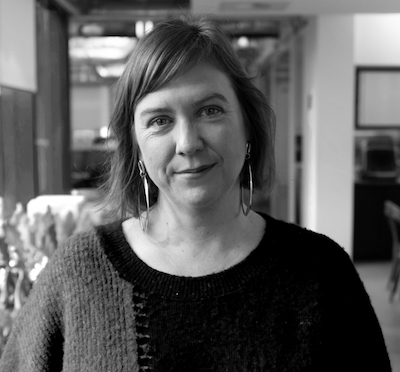
The biggest creative dilemmas aren’t the ones that are part of the agency day-to-day. Creative problem solving is baked into our professional DNA so that muscle is pretty ripped. It’s the unexpected ones, the ones that shake and rock you, that need the most lateral creative thinking. When I’ve been at my unhappiest professionally is when I’ve had to bring out the big guns.
Rewind a few years to a very unfulfilling role in a stifling agency atmosphere. My creative partner and I clung to each other as the winds of discontent raged around us. We escaped via daily walks spent despairing at how we’d gotten ourselves into this and desperately workshopping how to get out of it. The circumstances were complicated so it wasn’t just a matter of finding another job. We needed a way to arm ourselves against the daily assault of a workplace hacking at our sense of self-worth.
Raking over the fiery coals of our situation wasn’t helping. There’s nothing less empowering than raging against something you have no recourse to change. So, in an effort to get a bit of control back, we vowed to turn our experience into something positive. To use our daily walks to create something new, something related to, but entirely unrelated to, advertising. We decided to train a different kind of creative lens on ourselves.
We decided to write a play.
Bit by bit, day by day, month by month. It slowly grew during our morning coffee walks, our lunch breaks, our afternoon coffee walks (we smashed a lot of chai lattes back then). That little act of building something hopeful, removing ourselves from our experience by analysing the culture of the industry as a whole, gave us a sense of ownership over our circumstances.
Eventually, we both moved on separately from that job. But we continued developing the play, thanks in part to being awarded a writing residency to do so. Umpteen drafts later (in collaboration with a producer, director and read-throughs with actors) it’s still in pre-production and who knows whether it will ever make the stage. But the process continues to be unbelievably rewarding and has had a lasting impact on my ability to deal with tough patches in my career. Having an external creative outlet gave us agency when we felt like we had none, and built our resilience through the knowledge that our creative abilities are vastly greater than a single bad job could ever reduce them to.
Shelley Dodd, senior copywriter & content editor, MercerBell

Who needs Plan A anyway?
As any creative will tell you, it’s impossible to switch off the ideas machine the moment you walk out of the agency. Ideas continue bubbling in, often hitting the subconscious at 3am.
And creativity isn’t limited to work. It extends to music, cooking, photography and more. In my case it’s interior design.
With zero DIY skills, I threw on my new safety boots and jumped right in. Through trial and error, I learned A LOT. Like, no matter how careful you are, paint always gets everywhere. And that power tools are fun.
While I’ve had more hits than misses, one project stands out – The Curtain Cockup.
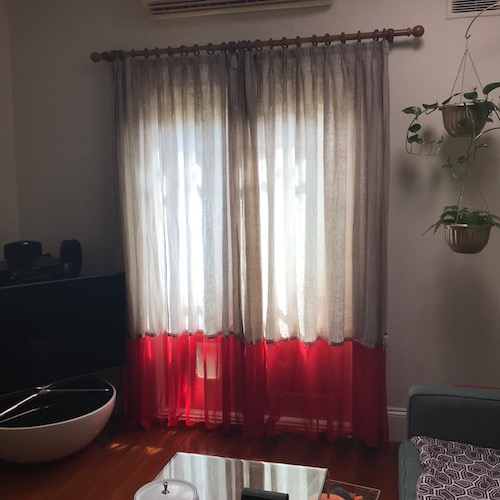
You see, I wanted to hang some linen curtains. Yet the only place I could find said curtains was Lithuania. Yep, Lithuania. So after carefully measuring the space, I placed my order. A few weeks later, I started to hang my luxurious new curtains. But something was wrong. Really wrong. To my horror they were too short. Not just a few centimetres – an entire metre.
I needed a Plan B. So I switched to work mode. When you’re a creative you’re faced with curveballs every day. Challenging feedback. Shrinking budgets. A last-minute media plan that’s has your 500-word editorial piece destined for a quarter page strip slot. But whatever creative dilemma we’re faced with, we always find a solution. We are the masters of turning lemons into lemonade.
And that’s the approach I took with the curtains. I came up with a few ideas (within budget), and decided to add a panel to the bottom in a contrasting colour and texture.
And you know what? They look fan-bloody-tastic.
Peter Grasse, executive producer & founder, Mr+Positive
Pipe down! Yes, producers solve problems…all the problems. If we didn’t, we’d be out of a job. Yet, we certainly don’t want to shout about it. God forbid they bring us all their dilemmas and expect immediate solutions. Some things take time.
For example, while producing Nike here in Japan, the director wouldn’t stop badgering me to shoot on film. He literally got of the plane from LA, looked me up & down (first meeting) and said, “we’re shooting on film”. To which I smiled and said, ‘We’ll see about that and welcome to Japan!’
Now I love to shoot film and have the fondest memories with Dan Ardilley in Gympie filming XXXX (the last time I’d shot film until 2018 here in Japan with Monika Lenczewska). Yet, shooting film suits some projects better than others (wait till you see what Monika shot), and Nike’s tight post turnaround, was not it. It, like most jobs, needed a flexible digital solution.
So did the LA director put me in a corner? Hell no, I’m from Philly and I’m a producer! I hired a 24-year-old hot-shot DOP from Montreal, Kristoff Brandl, who was perfect for the job, but had never even shot film. When he got off the plane, the director said, “I didn’t know we hired a child.” Nevertheless, it was the right child and he did a beautiful job.
All up, the world’s full of problems. There are many more takers than givers. So, thank god there are producers to keep everything on the rails. Here’s to the doers.
Dan Wright, Executive Creative Director, Colenso BBDO
A good problem at Colenso is the best gift for the creative process. Once you’ve designed the perfect problem, the solution becomes obvious. Then you can cast a really smart team to dig deeper into how we solve the problem and deliver it to the world.
That’s exactly what we did for Spark’s latest platform: Kupu. The problem and solution came from two opposing points of view, but intersected at the perfect place. The ancient, universal problem is that indigenous languages (including te reo Māori) are becoming extinct. The new-age problem is that our obsession over our mobile phones – the dopamine that’s triggered every time our Insta pings, the constant connectedness – is globalising the way we communicate, and accelerating these extinctions.
The sweet spot for us (in this case) was using the same technology that’s contributing to the problem, that’s affecting culture for better and for worse, to overcome the problem.
It defeats science. If you put two norths of a magnet together, they repel. But if you put two problems together, we discovered a solution.
To encourage New Zealanders to learn te reo Māori, we asked people to take photos of the world around them. Partnering with Google, te Aka Māori Dictionary and AUT, these photos were then translated (visually and audibly) into te reo Māori.
The psychology of instant gratification makes problem solving difficult. Problem solving for such a culturally potent opportunity can be uncomfortable and requires a bunch of diverse, patient thinkers. Awkwardly, the solution in this instance was instant gratification.
https://youtu.be/yGq-8AxQpgE
Paul Bruce, creative director, Innocean Worldwide Australia

You need everyone in the team to solve the problem to make great work happen.
Here’s what I’ve learned along the way.
Get to the front
If you’re sat in a briefing and it’s the first time you’ve heard about it then you’ve blown it. Get to the brief before it’s written and help out. Be part of the conversation and give yourself the chance to be heard from the start, add your own insights before someone stamps there’s on it. Better yet take a seat, right at the front, when Clients are sharing a single-minded business problem. Great work starts before the beginning.
Biscuit diversity
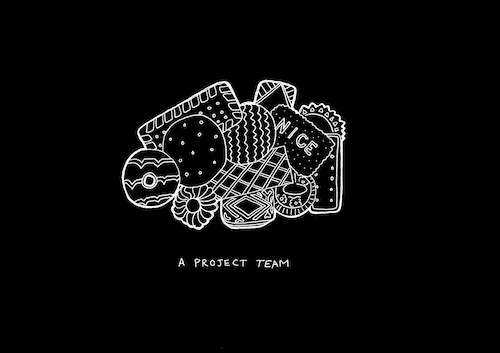
Agencies are judged by the work they’ve done in the past. I prefer to look at the people in it, working there right now. Agencies producing the best work have a diversity of brains. Now, I am going to ask you to think of biscuits. Think Assorted. Go and work for the best selection of biscuits. To explain further take a look around you – if you’re all digestives then you’re going to need some mint slices or shortbread creams. Likewise, if you all think you’re the hundreds and thousands then pull up a seat for an organic rice cracker with green tea and seaweed or make room for a classic rich tea. Great work is made by interesting people on a team, not by just one type of biscuit. Important: Don’t be a hob nob.
Help enthusiasm vacuum cleaners
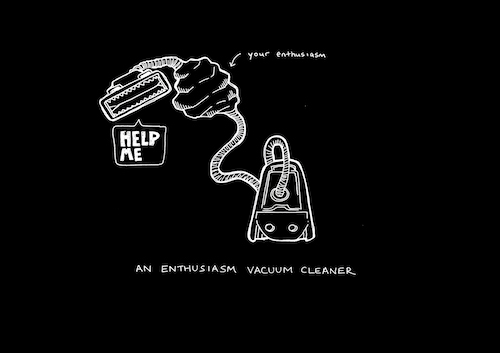
They rarely move from their desk getting up and down only when the diary tells them. They nod in meetings when others nod, contributing little, and when they do finally speak the enthusiasm of those around them get sucked up. Of course, no one sets out to be like this and I’m not sure how it starts. Could be a muddle or a conflict, way back when, on another project. The smallest of disagreements might have grown to something much bigger. But if you want to solve a problem and they’re on the team you’ve got to heal them, rewire them somehow, find what they’re good at again. If there’s an enthusiasm vacuum cleaner on the team nothing great will happen.
Speak up
I’m a strong believer that great work is presented by everyone on the team. As a junior creative I suffered from a debilitating condition called reddus face maximus “Shinier than a red traffic light,” a mate once told me. It would only happen in big client presentations often at a pivotal moment. It wasn’t so much that my redness was reflecting off the paper that bothered me, not that my body temperature was hotter than a cup of tea or that basic language skills left me it was seeing my idea out there without explanation and often silence. There’s no way round this and I rehearsed, rehearsed and then rehearsed again, just after I had rehearsed, until it came naturally.
Hope I haven’t banged on too much – as often as possible keep feeding your brain with something else other than advertising, avoid biscuit analogies, obviously, and talk freely with clients. Take care of everyone in your team whatever your position in it or all too soon it might be you that turns into an enthusiasm vacuum cleaner.
Marcus Tesoriero, executive creative director, The Brand Agency

I love a good problem to solve. When it comes to our clients’ problems, the deeper the issue, the more impact our agency can have to help them stand out. Our client with the biggest problem this year was Foodbank, they were dealing with a crisis. Government funding for the charity was under threat while demand for food relief was at an all-time high – with many Western Australian children being the worst affected.
Ordinarily for Foodbank’s annual Christmas appeal, an emotional TV ad would be created, communicating the need for donations with the hope that viewers would donate at a later point. But with a problem this big, we needed to capture people’s attention in a completely unique way. So, we created a new cereal brand called Hungry Puffs – the breakfast over 100,000 West Aussie kids wake up to every day – a bowl of nothing.
In the lead-up to Christmas, we managed to get empty boxes of Hungry Puffs stocked in over 40 supermarket cereal aisles across Western Australia. Intentionally crafted with a stark, black and white design, the boxes aimed to stand out on aisles teeming with colour. Grocery shoppers, who were then in the process of buying food for their own families, were suddenly encouraged to support a much bigger cause, helping feed children that go without breakfast, every day. Each empty box of Hungry Puffs sold at check-out provided 10 children with their next meal.
And we were pumped about the result. In a time when everyone was pulling in their purse strings, we managed to generate over double the donations from the previous year, creating 625,770 meals for hungry children. A proud, problem-solving moment for us at the agency to be honest. Who says our line of work can’t make the world a better place?
https://youtu.be/u9VS1vE4qe0
Bim Ricketson, executive creative director, GPJ Australia

You’ve got this
It was late on a Friday afternoon when a clanger hit my desk – a big pitch to a new client. The brief was complex, the product was new and the expectations were enormous. Oh, and it was due within a week.
I needed a big idea. Something original and brave, even better than the client could have imagined possible. What to do?
Pull the pin on end-of-week drinks and get the team together to sweat it out until it’s cracked? Cancel the weekend plans, lock myself in the garage and power through it? Ugh. Maybe there’s a better way.
I forgot about it. Did nothing. Chilled. On that occasion I tried this approach and it worked for me.
Read the brief. Chat to everyone involved. Crack a beer. Talk about the footy with your team. Go home and have a good sleep. Seems counter-intuitive, but it worked for me that Friday arvo.
I did my normal thing. Went home and had dinner with my wife. Battled the kids into the car on Saturday morning for swimming classes.
I trusted that it would come. I stayed relaxed. I knew the brief, I understood the challenges. I swam my usual laps in the pool while my kids had their lessons. I got in a flow. And it came to me. A small idea that grew, lap on lap, into something epic. By the time I got out, I had the whole thing figured. A few days of frantic work did follow as we crafted a killer presentation around the idea. But the client loved it.
So my advice for your creative dilemma: step away from the problem and trust. You’ve got this.
Andrew Wareham, executive producer and managing director, The Taxi Group

Challenging the production status quo
Diversifying a production house’s brand is not a new concept in the industry. An upswing in the demand for digitally focussed work has seen production houses create content across a host of different mediums and genres. However, few have been able to keep up with the changing tides.
At the helm of The Taxi Group, I’m all too familiar with the changes that impact the industry I’ve known and loved for the past 25 years. I believe that flexible production approaches and collaboration are the key to adapting to change. This is something I’ve tried and tested with success.
My team and I have grown flagship brand, Taxi Film Production, into a multi-tentacled assortment of enterprises, each with their own identity. The Taxi Group is now home to a specialist tabletop production company, Tasty Pictures; the end to end budget production house, Traffic Film and Video; Fiji’s most renowned production facilitation service, Welcome Fiji, and rounding out the bunch, influencer marketing company, Born and Bred Talent.
Hand-picked for varying reasons, the companies combine under one roof to create a forcible array of services purpose fit for today’s dynamically changing landscape. While a changing industry is not a problem that’s going to go away, with new talent, new technology and new alliances, Taxi has its eyes set firmly on the future.
You might also like