…and what it takes to be there.
Junior creative to ECD, CCO or creative partner isn’t everyone’s destiny. Some burn out long before the reach the top layers. Some get stuck on the middle rungs. How did those powerhouses at the top get there? Great work, great leadership potential, a great partnership, working harder than everyone else…a lucky encounter…?
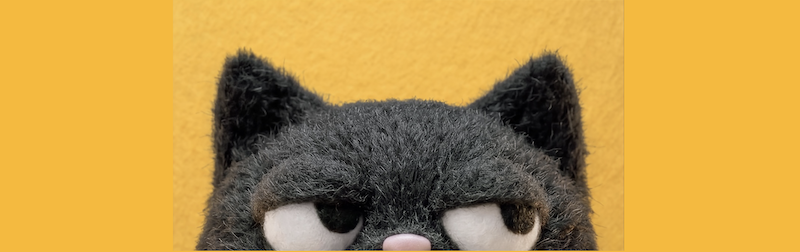
This Chat asked 13 top creatives to tell their stories – from Jim Ingram (pictured above) to Nisheeth Srivastava in India; Ruben Goots in Brussels to Tara McKenty in APAC...Because how you got there and what is keeping you buzzing helps advertising creativity strive higher.
They told great stories. (Is that the definitive answer?) Here they are (in alphabetical order).
Sophie Beard, Creative Director, Clemenger BBDO, Melbourne Australia
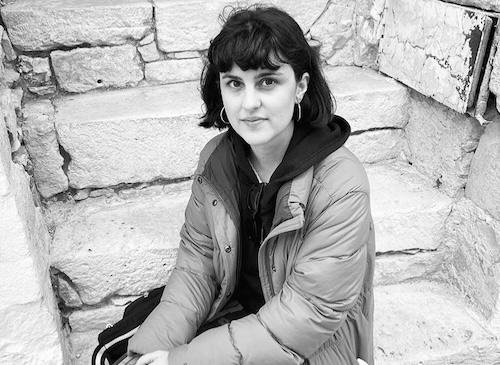
When I was 16, I went to Singapore for a conference, I guess you’d call it that, with other 16-year-olds from around the world. Yay, unaccompanied teens. Before we got there, we had to fill in a pretty extensive questionnaire, which apparently Oprah herself had taken (doubtful). At the end, it spat out a single word that defined your ‘spirit’. Mine was ‘determined’. While I was very jealous of my friend who was labelled ‘courageous’, ‘determined’ was pretty accurate and still is.
Throughout my career, I’ve stayed rabidly determined. Maybe it’s my perfectionism or just pure competitiveness (that demon), but that little voice that says ‘you just watch me’ has steered me through. From being the only female in the creative department, to redundancy, fighting for ideas, fighting to be in the room, and most recently moving to London alone.
But I’m making myself sound like the little engine who could. Along the way, I’ve been helped, shaped, supported and cheered on by fellow pathologically determined ad folk. I think you have to be to survive this crazy industry. So find your kind and have fun on the roller coaster. This is a ridiculous industry, but one worth fighting for.
Matt Chandler, Creative Officer, Clemenger BBDO. Sydney, Australia. What it takes to reach the never quite top
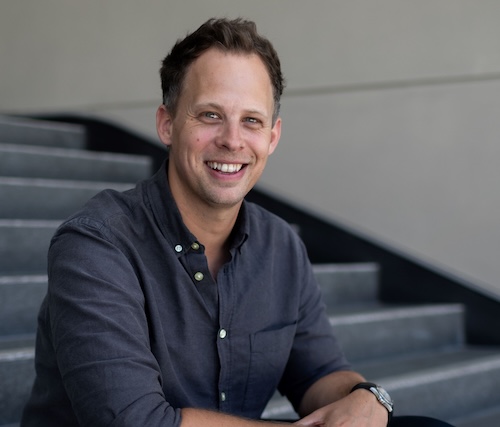
I’m not much of an outdoorsman. No secret to anyone who knows me. Having said that, I did take a few hikes as a teenager, in a stretch of high school which seemed to measure your level of masculinity by your height above sea-level. Of those hikes, what I remember was the optical illusion of ascending a mountain and believing the summit was mere steps away, then getting there, only for the landscape to peel back and reveal the summit was higher than your previous vantage.
So, you’re forced to put your head down, grit your teeth through the ever-growing chafe and force your legs toward what now appears to be the summit.
This time, surely, you’ve made it.
No, again, there’s farther to go.
There’s always farther to go.
In the general interest of not losing one’s mind, it serves to learn to enjoy the climb. With every inch of ascent, there’s a level of achievement or satisfaction. And beyond what you thought was the top, little by little, the next climb reveals itself. All the creative people I most admire, from our industry and beyond – filmmakers, writers, artists of all sorts – are the ones who, despite having reached “the top” from an outsider’s perspective, didn’t stop, but ascended to higher planes of discovery and perspective. After all, to torture this metaphor one last time, once you’ve really reached the top – it’s all downhill from there.
Ruben Goots, Co-founder & Executive Producer, HAMLET, Brussels, Belgium
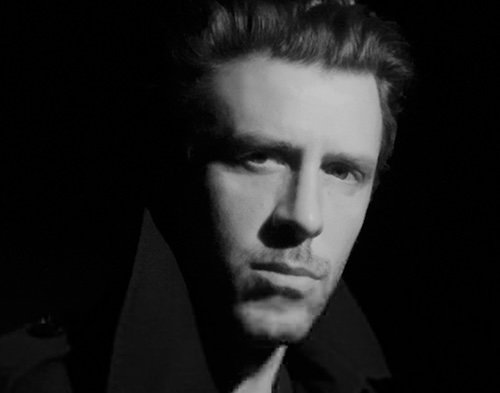
People often ask what it takes to make something great. They expect a technical answer. A camera. A lens. A director. Maybe some secret production formula hidden in a spreadsheet somewhere. Honestly, it is much less romantic than that, and much more human. At HAMLET, we have always believed that great work starts with curiosity. Not just about images, but about people. Understanding why a story matters before figuring out how to shoot it. The best productions are rarely the loudest ones. They are the ones where every person involved, from agency to crew to client, feels invested in making the same thing better.
Of course, experience matters. So does craft. We work with directors from different cultures, crews across multiple countries, and productions that can shift between intimate storytelling and large-scale shoots within the same week. But tools evolve every year. Technology changes constantly. What stays is taste, instinct and the ability to build the right creative environment around an idea. There is also a certain resilience required in production. Not drama, just endurance. The ability to keep moving forward, keep solving problems calmly, and protect the creative energy even when timelines shrink or circumstances change.
And maybe that is the real answer: making something great is never the result of one person. It is the result of trust between talented people who care enough to push an idea further than what was initially expected. That, more than any camera or technique, is probably the real craft.
Jim Ingram, National Chief Tinker Thinkerbell. Melbourne, Australia. How I got to my position: I’ve never known what you’re not supposed to do.
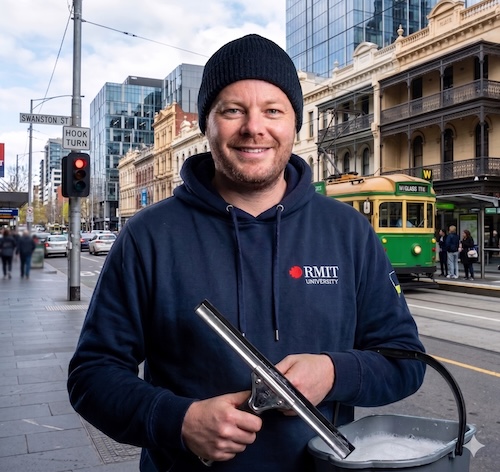
I grew up in country Victoria. One of my high school teachers would sell us dope (true). I learnt to drive in the local divvy van (also true). One of my friends killed a cow with a home-made bazooka (I think true). So I’ve never really known the real rules of what you should, or shouldn’t do.
Fast forward to my first year at uni. Living in the big smoke, paying my own rent, buying my own beer. Waiting for the tram one day, I saw a bloke washing windows at the intersection of Hoddle and Victoria. He appeared to be making good coin. So I got chatting to him. Turns out he made really good coin. Around $5 per red light cycle. 30 cycles an hour. That’s $150 p/h. Heaps more than my Aus Study. I saw this as a business opportunity. So off I hop to Bunnings, for a brand-new squeegee and bucket, and I start my first shift the next day. Old Mate is there and side-eyes my brand-new kit (little did I know I was supposed to knock ‘em off from a nearby servo). But we shared the intersection with a cordial businessman-to-businessman like respect. And baby did we make it rain. I’d jingle my way home each arvo with pockets full of coins. I was the king. Until one day a ‘customer’ stopped at the lights, one of my uni mates (Paul Reardon – now a highly respected creative leader in our industry). At the time though, he was a fellow uni student, but also a highly respected leader of the ‘cool people’ industry. If you know Paul, he’s devilishly handsome, charismatic, charming and had just been in an ad where he drank milk from a bath with a supermodel in it. Paul rocked up to the lights, as I recall, in a soft top 4×4 convertible, music blaring, equally ‘cool people’ dancing in the seats. Paul lowers his Aviator sunnies to clock me, as I offer to wash his already perfectly clean windscreen and says, “What the fuck are you doing??” First alarm bell. I looked at my squeegee hoping it would give me some kind of answer. Nope. “Washing windows” was my feeble response. Before I could get a reply, the lights changed and he sped off in a flurry of laughter, music and Lynx Africa fragrance. The clincher came when I turned around to see a cop standing there, hands on hips, perplexed look on her face. “What are you doing?” Fearing my “washing windows” response was no longer adequate, I didn’t say anything at all. She looked at me, with my neat clothes, brand new equipment, and zero meth scabs on my face and said, “You’re not from around here, are you? You know this is highly frowned upon, but also highly illegal?” Both of which I did not know. So that was it. I ended my traffic light window washing career, roughly $1,900 in profit (minus expenses). But here’s the point. I never learnt my lesson. My whole life I have never quite known what you’re not supposed to do, so I’ve always just done what I think I should do. And it’s worked out. And so, I will keep doing it. And you should too.
Oh, I’m also very good friends with Paul, and he’s still devilishly handsome. I hope he still drives that Wrangler…
Andy Lima, National Chief Creative Services and Delivery Officer, Think HQ, Melbourne, Australia
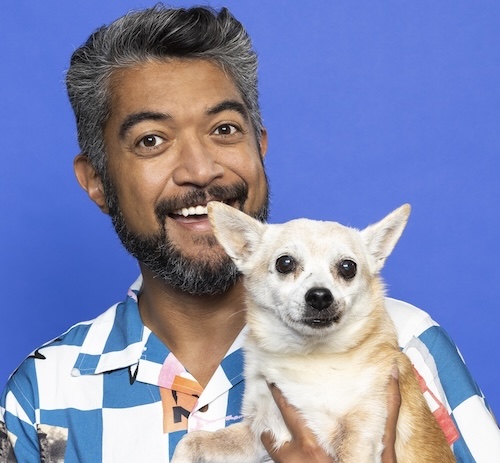
Think HQ turned 16 this year and I’ve been lucky enough to be here for more than half of that history. I had just relocated from Perth to Melbourne, and I guess it was a lucky encounter with Jen Sharpe that triggered a really fantastic chain of events that led me to my current position as Think HQ’s national chief creative services and delivery officer.
My career journey was far from linear. I went from graduating in computer science in the ‘90s to studying Advertising and working as an art director to starting a creative agency with my partner in the early 2000s, to graduating as an actor and having an identity crisis that resulted in a sabbatical period in Australia. Fate (or love, if you prefer) served me a different set of cards and I found myself living in Perth for 5 years. There, I worked as a freelance designer, creative produced short films, events, and exhibitions and then worked as a user experience designer while curating larger cultural marketing projects back in Brazil.
When I started at Think HQ, we were a team of 13. It was a blank canvas, and it was thrilling to start our creative and production offering from scratch with no real reference point apart from our own: the deadset intent of making work with a positive impact. We wrote our own rules, and it paid off – Think HQ today has more than 110 staff and continues to grow from strength to strength. We did great work, we worked hard. I don’t know if it was destiny, maybe a combination of all of the above, but certainly it has been the result of showing up stupid every day and being willing to learn and grow.
AKQA AU/NZ Chief Creative Officer, Tara McKenty, APAC
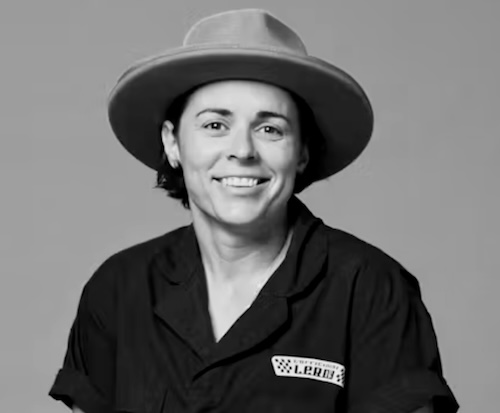
I don’t know how to explain my career path. It was messy, I never really had a plan; I have followed the work and creative people I have admired and respected. I was lucky to have fallen into TBWA for the first four years of my career where disruption was at its core, and to be honest, was also at mine. I was not designed for this industry, so perhaps then my differences were also my disruption, and that’s why TBWA felt like it was my place. And I loved it. I mean, advertising in the early 2000s – what a time to be alive.
I was an overconfident, cap-wearing, plaid-pushing cocky upstart with an Adobe Photoshop 5.0 subscription. I was hungry (competitive) and just so happy to be there. I thought my ideas were the best (clearly not humble) and what would have been the traits of “too much”? Somewhere else, advertising seemed to embrace. Let’s be frank, I am sure I was the most obnoxious creative in the department.
And that’s where Iain Nealie comes in. He was much more likeable than me. Rarely is creativity a solo sport. Iain and I were a match made at university; he was a film grad who loved words, music and technology, and I was a skateboarding art nerd that needed a word nerd to help me spell good. I also needed a calm to my chaos and that was Iain. Our partnership for the 12 or so years we were a creative married couple changed my career. Like me, he had a mild refusal to behave, and I liked that. Iain shared a love for taking risks before we were ready and refusing to be creatively safe. Iain liked dangerous thinking and absurd ideas too. We didn’t make pretty advertising. Our ideas were ugly, oddly shaped experiences, inventions, or innovations. We challenged each other. He pushed me further and occasionally told me when I was being completely insufferable. We left advertising together, holding hands, as we entered technology, where our next challenge was to figure out how creativity fitted into an engineering business.
Our years at Google shaped our belief that the way we thought had value; our role was to humanise Google’s products and platforms through creativity across Asia-Pacific. This enabled us to focus on the intersection of technology, humanity, and creativity within new places and cultures, and within different contexts, for a decade. What a privilege. At Google, I was, and my work was, benefiting from the difference of perspective we were gaining working regionally, and diversity and inclusion were celebrated and encouraged from ERG groups like the Gayglers to the Greyglers, to inclusive policies for people of difference. And that is because tech companies had put their Harvard school business degrees together and realised diversity of perspective had value. Looking back over at Adland, the industry I love, my next professional partner, Rare co-founder Stef DiGianvincenzo, and I saw little shift in the diversity department, so that is when we started Rare, a D&AD collaboration that provided initiatives designed to make underrepresented creatives thrive at each stage of their careers. With the help of some Google coin, Rare scaled to nine countries and ran for eight years. To this day, I am most proud of doing this.
Now at AKQA, I get to exercise my two core beliefs: the belief that technology means nothing without humanity. And, that ideas need diversity otherwise they risk not being relevant to the cross-section of society that make up our audiences. These two beliefs are at the core and the heart of creative frontier work, which is AKQA’s pursuit. I have also entered a new kind of professional partnership with Justine Leong, my manager director. She teaches me a lot about the business and critical thinking, and I learn from her every day. She challenges me and I grow as a creative leader because of her. She also has a mild refusal to behave, which I like. I know this partnership will lead to incredible things.
So, my career wasn’t built by following a path. It was built by saying yes before I felt ready, backing instinct over approval, forming formidable partnerships, and occasionally walking straight into chaos on “new hat day” with a fake sense of confidence.
Gavin McLeod, CCO Emotive. Sydney, Australia
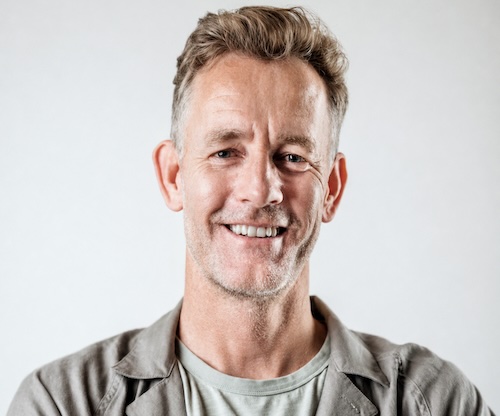
What struck me looking back on what shaped me into the creative leader I am today is that it wasn’t one moment. It was one place. Joining M&C Saatchi Sydney changed me as a creative.
I’d been in the industry a few years, started out in Cape Town and spent time at Colenso in New Zealand, but I still hadn’t really found my confidence. Especially as an art director. I hadn’t fully developed my craft yet.Then I landed at M&C at this incredible moment in time. The agency was ambitious, emerging fast and fiercely competitive. You felt it everywhere.
Everyone wanted their idea up. I remember going into reviews knowing you had to earn it. We were competing against seriously talented people. Graham Johnson and Oliver Devaris, in particular, always felt a level above, and their standards forced Dave King, my copywriter, and I to raise ours. But the competitiveness never felt toxic. That’s the important part. There was genuine support underneath it all. People cared about each other and wanted everyone to get better.
Michael Andrews, one of the creative pillars of the agency, had a huge impact on me. He became a mentor and pushed me hard. He’d ask difficult questions, challenge the easy answers and force you to think deeper about the work. He taught me that good craft comes from discomfort. From not settling for the first thing that works. Then there was Tom McFarlane.
At the time, some of us probably pushed against his thinking because we were young and idealistic. But looking back, Tom had an incredible instinct for great commercial creativity. Not just work creatives loved, but work that genuinely connected with people and moved a client’s business forward. Watching Tom McFarlane and Tom Dery run pitches was like watching elite sport. The rigour. The discipline. The obsession with detail. Every angle considered. Every strategic beat sharpened. Nothing vague. Nothing half solved. M&C in those years was a formidable competitor because everyone was aligned. Brilliant leadership. Brilliant people. High standards. No shortcuts.
But they also knew when to let go and celebrate. We had some legendary parties. I still remember when we won Tourism Australia and the Toms shut the agency for the afternoon and booked out a pub so everyone could celebrate together. That balance stayed with me.
The importance of surrounding yourself with talented people who care deeply. The value of healthy pressure. The understanding that creativity isn’t just originality, it’s rigour. And that the best work doesn’t come from chasing awards or trends. It comes from obsessing over ideas that genuinely connect with people and make an impact for clients. And just as importantly, remembering to celebrate the wins when they come.
Not everyone makes it to the top layers of creativity. Some people burn out. Some stall. Some lose confidence along the way. For me, the biggest shift came from finding an environment that demanded more from me than I thought I had, and being lucky enough to have people around me who cared enough not to let me take the easy way out.
Chiara Monticelli, Creative Director, DUDE Milan, Italy
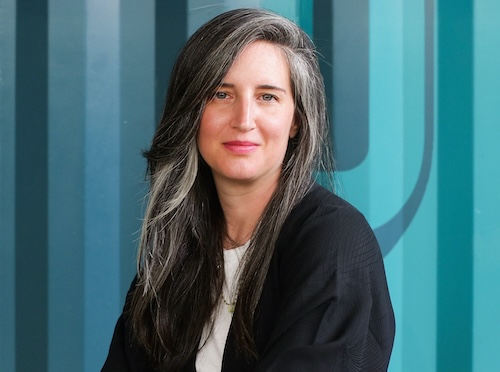
Long story short: I believe I made it mostly because I wouldn’t know how to do anything else. My Plan B has always been Plan A. I never dreamed of opening a countryside farmhouse, starting a podcast, or teaching yoga at a Balinese retreat. I’m exactly where I want to be.
Put more clearly, I never really considered the possibility of not doing this job – or of not doing it to the very best of my abilities. There are definitely a few things that helped me along the way – a subtle but constant sense of dissatisfaction, a strong belief in the value of teamwork, the ability to rely on the people around me and invest in them, and a deep awareness of the weight and responsibility that comes with my role. And maybe also, why not?, being in the right place at the right time.
It’s true that there were moments when I questioned whether all the effort this job demands was really worth it, especially when trying to balance professional and personal fulfillment. But if I’m here today, it’s because, in my case, the answer turned out to be yes. The fact that being a leader isn’t for everyone is a great truth, and one that isn’t said often enough. Not because those who succeed at it are necessarily better, but because it’s simply a different job, one that requires a completely different set of skills beyond creative talent. Throughout my career, I’ve had managers who probably shouldn’t have been managers. Thankfully, that happens less often today, perhaps because the selection process has become much more demanding. It’s a job that keeps changing constantly, and that’s exactly what makes it so stimulating.
But if you don’t like it, you can always move on to Plan B. Assuming you have one.
Cary Murnion, Executive Creative Producer, Honor Society Films, Los Angeles, USA
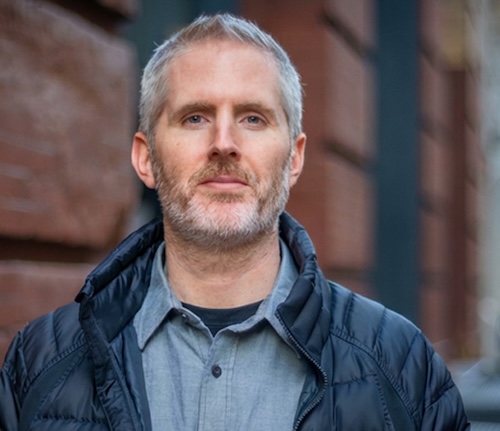
I didn’t arrive at being an Executive Creative Producer through some grand master plan. Jon Milott, my longtime creative partner, and I mostly just kept cultivating things and chasing whatever creatively excited us at the time. Design, animation, music videos, weird and wonderful digital projects, commercials, films. Some of it worked brilliantly, and some of it crashed and burned. But even the failures ended up being valuable, and they taught us that nobody is coming to say, “Hey, you’re ready now”.
One of the biggest advantages for me was never separating creativity into strict categories. Working across digital, commercials, animation, and feature films gave me a much broader understanding of storytelling and problem-solving. Advertising taught us precision. Film taught us patience and tone. Digital taught us speed and adaptability, and eventually all those elements bled together. The biggest thing I’ve learned is that sustaining a creative career is really about protecting the part of you that made you interesting in the first place. The industry quietly rewards people for becoming safer, smoother, easier to explain and mold. But the creatives I admire still have some danger in them, and they advocate for things they care about. Their work still feels like it cost them something.
Now, everything feels unstable again. New platforms, fractured audiences, changing production models, and AI, of course. It’s messy and chaotic. But honestly, I get nervous when creativity becomes too optimised, too explainable, too polished. When that happens, something real was lost along the way.
Frankie Oviedo, Executive Creative Director, WTA, Kanas City, USA. There Is No Top. Only the Pursuit
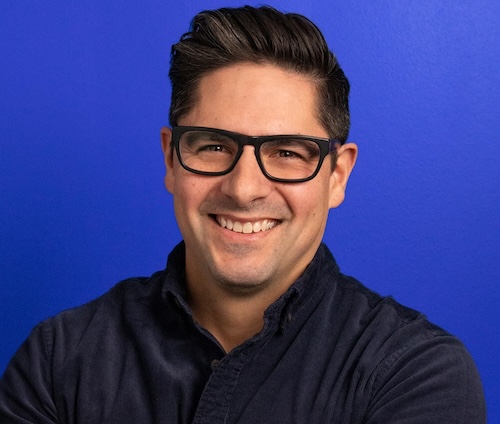
I used to think this career had a summit. A title. An office. A name on a door that meant I had arrived. It doesn’t.
I got here through relentlessness. A refusal to let the work settle, even when the room said it was good enough. Anyone can make something incredible in the first round. The real test is staying sharp by the fifteenth. Does the feedback deflate you, or send you digging for something better? My path wasn’t linear, but I found mentors along the way who showed me what great work takes. Art school to art director. Side gigs to running my own shop. Production designer to director. Years with artists and labels and big brands. Now, leading the new era of creative inside WTA.
Somewhere along the way, I stopped obsessing over the destination and started valuing the pursuit. Every setback. Every brief. Every win. Lessons in what it takes to make something meaningful. Not every brief is the one. But every so often, something rare appears – a client brave enough, an audience that needs it, and a team ready to deliver. Miss those moments, and you can spend a career making fine work. Catch them, and you remember why this industry can be magic. What keeps me energised is simple, and maybe a little selfish – being around people who haven’t been beaten down yet. People who still think their idea can change something. Sit next to that long enough and you remember you do too.
Because there is no top. Only the pursuit.
Nicolas Rajabaly, co-founder & CCO makemepulse, Paris, France
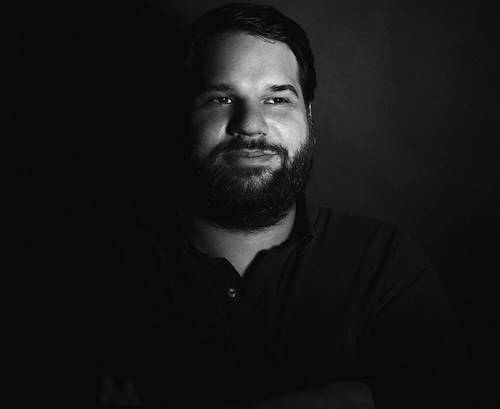
I never really had a masterplan to become a CCO. I actually started my career as a developer, which probably says a lot about how unpredictable creative industries can be.
At the beginning, I was much more interested in building things than leading teams. I liked solving problems, experimenting, and figuring out how technology and creativity could work together in ways that felt new at the time. The move toward creative leadership happened gradually, mostly through curiosity and collaboration rather than ambition.
Looking back, the progression probably came from a mix of consistency, adaptability, and saying yes to opportunities before I felt completely ready for them. I was lucky to work with great people early on, and I learned pretty quickly that talent matters, but attitude and resilience matter just as much. What surprised me most is how much the job changes over time. Early in your career, success feels very individual: your ideas, your output, your craft. Leadership is almost the opposite. Your role becomes creating the conditions for other people to do their best work, protecting creativity when things get messy, and helping teams stay confident through uncertainty.
But I think the thing that keeps people going long enough to reach senior roles is staying interested. The industry keeps evolving, technology keeps reshaping the way we work, and despite all the pressure, there’s still something exciting about solving new problems with creative people every day.
Nisheeth Srivastava, Senior Executive Creative Director (North & East), Saatchi & Saatchi | BBH | Propagate. Rejection – The secret sauce
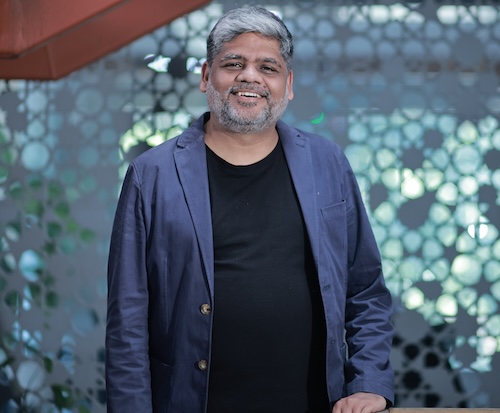
“Wow! You work in advertising!”
That is the most common reaction I have had in 15 years of my advertising journey. Mostly from celebrity-struck cousins and friends, and sometimes from parents and family members who never thought of it as an actual profession. For the first few years, according to them, I was pursuing a hobby, and one day I would find a ‘decent job’. Because see, parents are not against your choices, they just don’t want to see you in poverty.
In the time that I grew up, which was largely in the ‘90s and early 2000s, and especially where I come from – Lucknow, in Uttar Pradesh, India – the prescribed career choices were fewer than vegan dishes on any popular menu. Little do people know that behind the razzamatazz of a 30-second film, which runs the risk of being skipped during ad breaks, and the glitz of award nights that no one remembers, lies a word that crushes you harder than we crush ginger for our morning tea. The word is rejection.
Stepping out of a meeting triumphant, with everyone having loved your idea or script, is every writer’s dream, a dream that is thwarted almost every hour of every day from the moment the journey begins. We get rejected by our immediate bosses, CCOs, sometimes CEOs. After a SWAT-level internal round, the idea must face the litmus test of the client’s expectations, their judgement of the consumer and sometimes the all-too-brutal Link Test. After crossing more levels than Mario did to save the princess, the idea stands out there in the open, alone, without the support of the most amazing strategy deck, vulnerable to the depleting attention span of consumers.
Here is a trick that has almost always worked to keep me sane and has helped me go back to the same boardrooms again; the rejection is of the work we create, not of the individual, and that is the only trick to survive it. What I have done, learnt and now practice with my team is to give feedback they can actually use – whether or not the work they have currently created gets approved. Rejection makes us better. Failing is the first step to success, and no other profession breathes this life lesson in us more. And therefore, I can still exclaim today: “Wow I work in advertising!”
Giles Watson, ECD, Clemenger BBDO, Melbourne, Australia
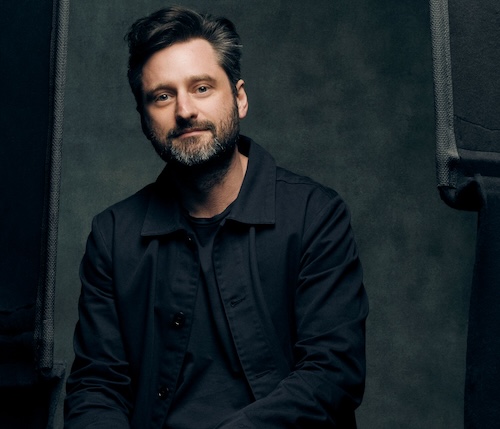
I’m obsessed with making work that makes me jealous. The stuff that’s excruciatingly obvious, and stupidly simple, and of course crafted. What I didn’t understand early on was how much more of an impact the people around me had in shaping what I was capable of. People who I felt natural around, making work, the pressure around it, the fun of it all. I’m chaotic. I get overexcited about ideas before they’re fully formed. In the wrong environments, that can make you smaller, where self-editing becomes simply numbing. You sand down the edges that were probably the most interesting thing about you.
But when you find the right people and environment, everything feels natural and organic… Work becomes confident, which then has space to be extraordinary. I genuinely don’t think I’d be where I am without those quiet, special people who not only pushed me but let me be myself too.
I first felt that at Clemenger years ago when I joined as the place was making some of the best work in the world. It was equal parts exciting and intimidating (probably more the latter) and made me more jealous than I’d ever been (and I’m not alone with that experience!). Now I’m back. As ECD. And while the pressure of honouring what this place has made is real, I’ve never felt more confident. The environment we’re building is exactly that mix of high standards, real ambition, and people who make all of it feel alive.