Are production and post going through a tough time? Undoubtedly. There’s a new world of playgrounds for creative ideas, the global economy is in a gloomy mood, and a new kid in town called AI wants an ever bigger piece of the action. But resilience and inventiveness are meant to be the DNA of the creative industries. Has that died?
This edition of The Stable’s Chats began with a brief to production companies to find their silver linings. “Maybe that’s a capability you’ve never had before? Or a business decision (pivot – ugh: buzzword) you needed to make? Maybe a new partner/director/employee …or project that filled you with joy? Maybe something outside the office that reignited your spark?” I wrote. The responses that came back show that creative resilience and inventiveness are very much alive. Brands should be immensely grateful for that.
Here are the answers in alphabetical order (except for Photoplay and Revolver, who confused that idea by showing that their power is in their teamwork).
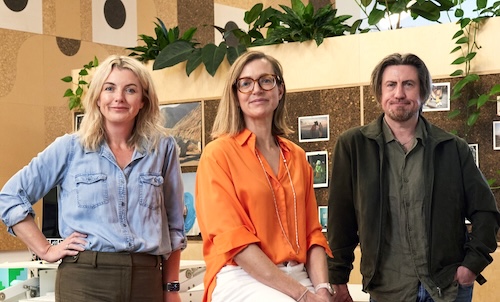
Photoplay Films EPs, Oli Lawrance, Florence Tourbier & Emma Thompson
You’ve all heard it, it’s a bit crazy out there… “unpredictable times”; sure, sure – “worldwide economic chaos”; blah blah – “A.I everything”…
Depending on where you’re standing, there’s either too much going on right now or not enough. Either way, production companies (and post-production companies even more so) are the canaries in the coal mine.
Yet this creative, technological and economic reckoning (and it seems like we have the unHoly Trinity in play here) forces you to reflect on the whole thing… What’s it all mean? Why do we do it? What do we love about it?
It was curiosity that got us into this thing to begin with, so it seems silly to abandon it all in the face of all the new possibilities coming down the line. At Photoplay we remain curious. And not just about new tech possibilities and experimentation, but also new relationships. If Photoplay is built on anything, it is relationships. A group of friends that started a company together when the odds were not necessarily stacked in their favour (what’s changed? lol).
One of these new relationships is with our friends at BERMUDA, an international creative tech studio who reached out about launching in Australia and it seemed like the perfect opportunity to expand upon our installation experiences for Creative NSW/ VIVID into doing more experiential work for agencies and brands. Not only to create more things that embrace the possibilities of new technologies, but that can also take on a physical form and exist tangibly in the real world. With their new offering combined with our film crafted genes, it feels like anything is possible.
Our longstanding partnership with sister company, Photoplay Photography, continues to grow and is now a truly integral part of what we do. We share an office space with the Photoplay Photography team, including EPs, Alison Lydiard and Ross Colebatch, which allows us to easily collaborate when those opportunities arise.
The challenges of the last twelve months also inspired us to take the learnings of our long form Film and TV division into the branded world, and begin forging relationships with those agencies and clients interested in building bigger story worlds for their brands, which is an exciting area.
The whole world is going through this revolution right now, in every industry. For filmmaking the landscape is constantly changing, but our goal as a production company remains the same – to create stories that connect with people and reach them where they’re at. And that was never achieved by sticking your head in the sand.
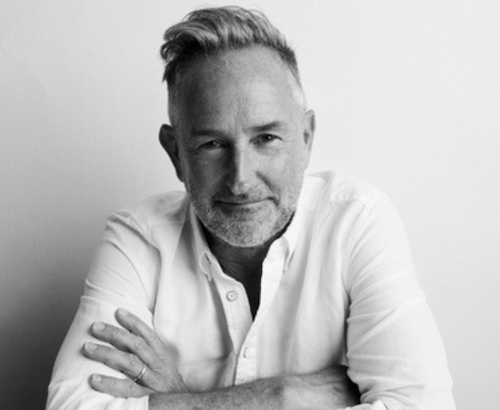
Michael Ritchie, managing director & co-owner, Revolver
Headwinds, turbulence, uncertainty, inflation, adaptation to new paradigms…
All these words give more value to silver linings.
With every bone in my body, the pursuit of crafting communication that people simply are moved by, has become more of a commodity than it ever ever was.
I feel that our company, with all the ups and downs that every company has, is perhaps more clearly defined by the current state of things, than perhaps it was say two years ago.
The ability to move, elicit laughter, tears, happiness and true connection is the remit we had before but now it’s x10.
I believe that good clients will crave this for their brands and more than ever, I feel we can deliver that.
I feel we can move the needle, and that is the best silver lining I can think of.
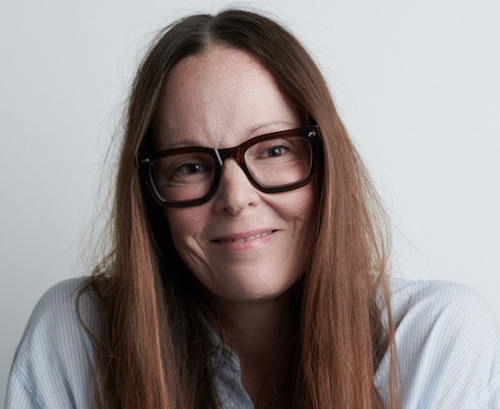
Pip Smart, EP & partner, Revolver
While things are undoubtedly tough out there, I am thankful and hopeful given the successes of late.
A huge part of this for me is our hire of new business/EP, Nick Payne. Nick brings such energy and natural good taste to the role. He shakes up the way I see and do things, and really has an eye for good work and new talent. His enthusiasm for the industry as it is and how it could be, is infectious and has really shifted the dynamic for me.
Alongside Nick we have the new additions of Ollie Ritchie and Lizzy Dingle who make up studio:Revolver. Studio sits alongside the Revolver roster with a very separate but unique offering, and these two really complement and challenge us all in so many ways, which allows us to improve both of our production practices. While the social first work that they specialise in is different from what we do, our uniting goal across Revolver and studio:Revolver, remains that we place a premium on craft. As a result- there are always things we can learn from each other based on our different styles of productions.
We often pick each other’s brains on different ways of working and approaching a creative problem.
The importance of having a team that truly specialises in this work in this landscape, can’t be overstated, they are such an asset to the company and the culture, and we’re pretty sure we’ll all be working for them soon….
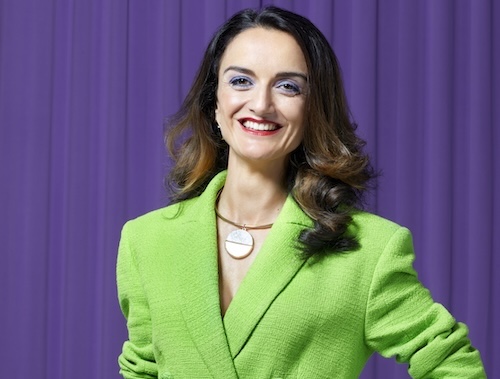
Veronica Diaferia, founder & executive producer Tinygiant
I vent → venting is how I process → I still love the work → the reason is the people.
When I was asked to write about the silver lining of my industry, I thought, easy. I’m an optimist, a glass-is-always-full type of gal. However, I like to vent. You could call me a venting optimist.
Over time, I’ve realized venting helps me think. It’s how my problem-solving skills get activated. It may also be my love language. Chances are if I don’t vent a little about you, I may not like you, maybe not even a little bit. To be clear, venting isn’t whining. Whiners don’t get things done. I vent and then I produce the sh*t out of things.
I vent through unfair situations, high-ambition-but-low-budget jobs, everyday frustrations, and even the occasional lucky break, mainly because it could have come a little sooner.
The reason I can do that and still be fun to be around is that I genuinely love what I do. Working in production has taught me to look for the best in people, even if they may disappoint you.
Whether we’re pitching or on set, we’re there because we care obsessively about the details and trust one another’s expertise. Production requires us to operate like a perfectly oiled machine in an imperfect world of impossible timelines and soul-crushing holding companies.
I will vent about such things, but at the end of the day, that’s the silver lining: the people. Filmmaking is a team sport. No matter how challenging the job becomes, you’re never facing it alone. Lots to vent about the industry but I’ll keep coming back because of the people I get to do it with.
Caleb Dewart, managing partner & EP, hungryman Productions
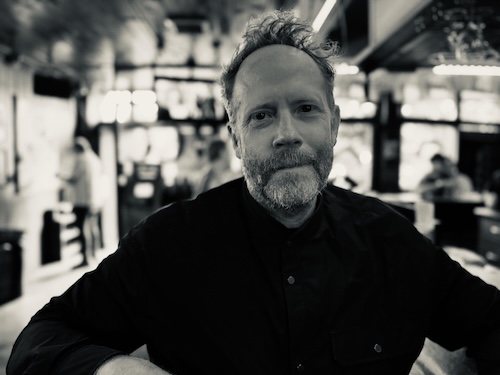
A couple years ago, I found myself having the same conversation over and over again with agency creatives. We’d all be talking about our best new work, and eventually someone would bring up a spot they loved that never got made.
Usually, it died somewhere along the way – a client got nervous, a budget disappeared, a new CMO came in and wanted to “take things in another direction.” And honestly, a lot of those ideas sounded better than the work we were all actually seeing out in the world. It started to feel like we were in a bit of a down cycle creatively as an industry. Safer work. More cautious decisions. Fewer things that felt genuinely surprising or risky or alive.
Around that same time, we were talking a lot internally at hungryman about why we got into this business in the first place. Bryan Buckley and Hank Perlman, our co-founders, always preached the same idea – make great work and everything else follows. That’s the spirit the company was built on.
So we created Dead Ad Society out of that mindset. It’s an intentionally ridiculous anti-award show award show where we resurrect the best “dead” ad scripts and have actors perform them live on stage in front of an audience of industry friends and a jury of industry titans. It’s messy, loud, weird, held in bars (that are open), with shouting, cheering, and general tomfoolery encouraged. The winning script actually gets produced by hungryman, with the help of a kick-ass group of sponsors, which is the only reason any of it means anything.
What surprised me most is how emotional people got about it. Creatives submitted scripts they’d been carrying around for years. Producers felt genuinely seen after we introduced a Producer of the Year award in Year Two. Sponsors jumped in without hesitation. People came on board simply because they believed in the spirit of it.
It reminded me that underneath all the industry anxiety and business pressures, people still really care about the work. They still want to laugh at something sharp. They still want to make something bold. Dead Ad Society isn’t going to magically fix advertising. But if, in some small way, it reminds people why they fell in love with this business in the first place, then that feels like a pretty good silver lining to me.
Corey Esse, managing director & executive producer, FINCH
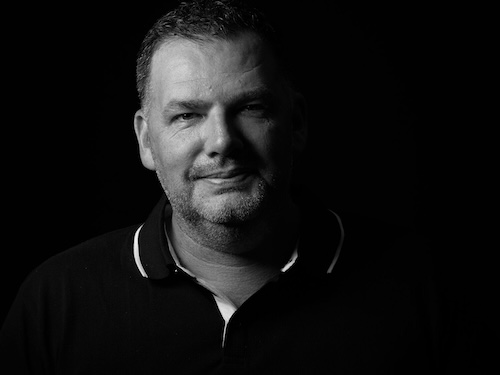
Silver linings in advertising is an interesting theme. Hard to come by, lovely to experience. Probably not enough of them in our industry…
We are a company that believes in adventure. Adventures take a lot of commitment, a lot of risk, and they are hopefully a bit of fun. We don’t give a little to the industry, we give a lot. It is awesome when it comes back in the form of a silver lining.
The most immediate ones I can think of are a result of 36 Months, Make New Zealand the best place to have Herpes and What is Dyslexia?. All three campaigns took considerable investment financially and in sheer effort but all of them ended up being highly rewarding.
36 Months helped protect teens from the perils of social media, many of our team have teens and we often look eye and nod in appreciation that our efforts stopped our 13-year-olds from being addicted to Snap, silver lining.
Herpes helped de-stigmatise, well, herpes, and gave us two Grand Prix trophies at Cannes, silver lining.
And What is Dyslexia? is well on the way to changing how kids and adults view dyslexia. It has also given a platform for dyslexics to come out and celebrate their superpowers, silver lining.
So, I suppose the moral of the story is maybe give a little, you might get a lot, aka a silver lining.
Anna Fawcett, executive producer, Filmgraphics

People often talk about finding the silver lining. For me, a silver lining is simply choosing to see the positive in almost everything, not because life is perfect, but quite the opposite.
If the last few years have taught me anything, it’s that life can be spectacularly ridiculous. Plans fall apart, people get sick, and clients disappear.
Meanwhile, the advertising industry is currently having what can only be described as an existential tantrum. Budgets are shrinking, AI is arriving at breakneck speed, and everyone seems to be worried about something.
But there is always something good hiding amongst the chaos. Sometimes it’s an opportunity. Sometimes it’s a lesson. Sometimes it’s simply a funny story you’ll tell your friends over a glass of wine.
The older I get, the more convinced I become that silver linings rarely arrive looking like silver linings; they usually arrive disguised as disasters. A cancelled project creates space for a better one. A career setback points you in a completely new direction. A challenge forces you to learn something you would never have discovered otherwise.
Every generation has had its version of the apocalypse. Television was going to ruin radio. The internet was going to ruin advertising. Social media was going to ruin humanity (to be fair, the jury is still out on that one). Now, it’s AI.
But perhaps the real silver lining is that AI is forcing all of us to be curious again. It’s making us learn, adapt, experiment, and rethink what’s possible. It’s here, and it’s not going away. We can fear it, complain about it, or embrace it. I’d rather embrace it.
The future has a habit of arriving whether we’re ready or not. The people who thrive won’t be the ones fighting it; they’ll be the ones curious enough to explore it. That doesn’t mean abandoning everything we’ve learnt. It means taking the best of what makes us human and combining it with new tools that can help us work smarter, faster and, hopefully, better. Creativity has never been about the tools. It’s about curiosity, and curiosity has always been one of our industry’s greatest strengths.
For me, silver linings have never been about pretending bad things don’t happen. They absolutely do. And yet, here I am. Still laughing. Still hopeful. Still convinced that something good can come from almost anything.
That is the silver lining. Not that life is easy, or that bad things don’t happen, but that there is almost always something positive waiting to be found if you’re prepared to look for it, even if it’s just a lesson, a little perspective, or a very funny story.
And when the silver lining isn’t immediately obvious, I just keep moving forward until I find it. Some people call that resilience. Some people call it optimism. I call it wine.
Greg Fyson, managing director & global head of director development, Sweetshop
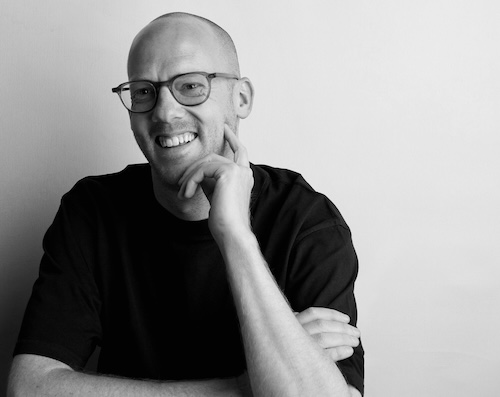
The hardest thing about the last few years is that everyone in production has become very good at saying “interesting times” while quietly wondering if their laptop should be opened under a blanket.
But the silver lining, genuinely, has been clarity.
When the ground shifts under you, you find out what is actually holding the place up. For us, it has been the people. The relationships. The directors who still care deeply about the frame. The producers who can somehow make the impossible feel merely inconvenient. The agencies who still want to make work properly, even when the world is telling them there must be a faster, cheaper, more beige way to do it.
We have also been forced, in a very healthy way, to get sharper about what we are here to do. Not just make ads. Not just service production. But to protect craft, develop talent, and keep finding new ways to make ambitious work possible. That has meant embracing new tools, without pretending they are magic. It has meant building capability, not panic. It has meant being honest about what technology can do brilliantly, and what still needs taste, judgement, humour, restraint, and a slightly sleep deprived human being saying, “That’s not quite it.”
The silver lining is that hardship has stripped away some of the noise. And what’s left, at least for me, is a renewed belief that great directors and production companies still matter.
Maybe more than ever.
Nick Simkins, founder & executive producer, cousin
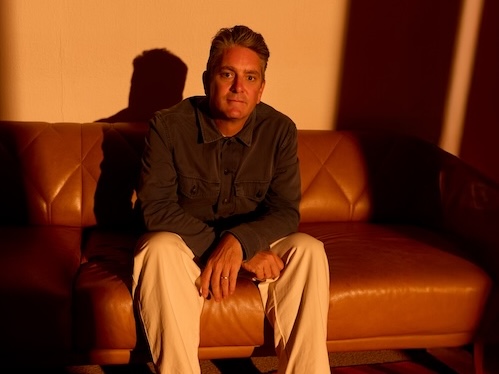
In a commercial landscape that’s becoming obsessed with automation, it’s easy to imagine a world full of frictionless content. Safe ideas. Glossy, expensive looking, but sterile. Algorithms over authorship. Then every so often something cuts through and reminds you people still crave work with a pulse.
Romain Gavras’ recent work with Gener8ion and Yung Lean (https://vimeo.com/1186905520) is exactly that: chaotic, cinematic and raw. The surprise isn’t that the film is excellent – Gavras is one of the great commercial filmmakers of the last decade, and the piece is his singular voice on full display. But the response to it, from audiences well outside the usual boundaries of music videos’ reach, has been telling. This is work that doesn’t feel engineered by committee or softened for universal approval, and yet its rough edges and intensity have been wildly embraced.
And so the silver lining – a reminder that in a sea of polished sameness, the appetite for strong directorial voices and a real point of view hasn’t gone anywhere. If anything, it’s becoming more valuable. At the end of the day, it’s why I started cousin. We want to build a more personal, organic production company – one that stays close to its directors, champions distinct voices and protects storytelling over process.
Because the work that people remember isn’t the safe, palatable stuff: it’s the work that has something to say, that makes you actually feel a lot.
Cover image by Mahmoud Yahyaoui on Pexels