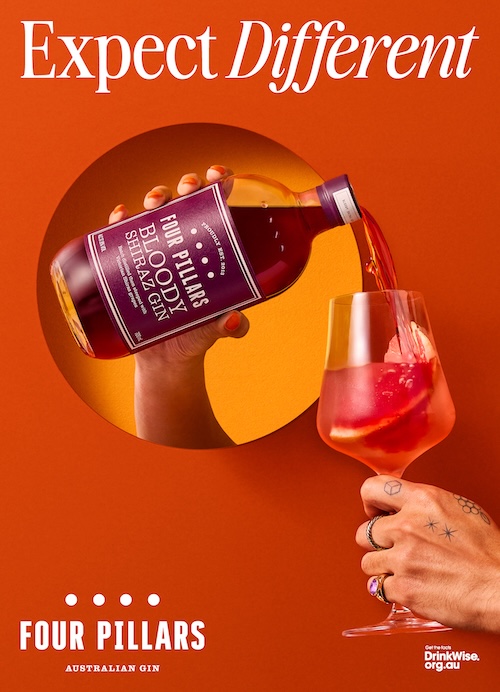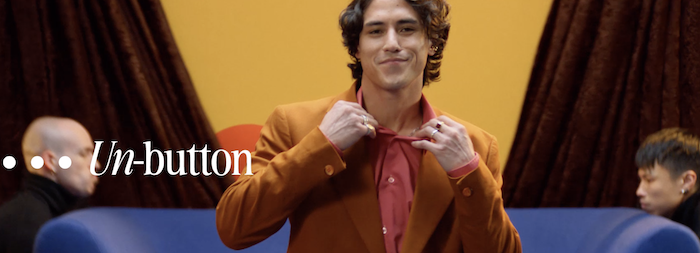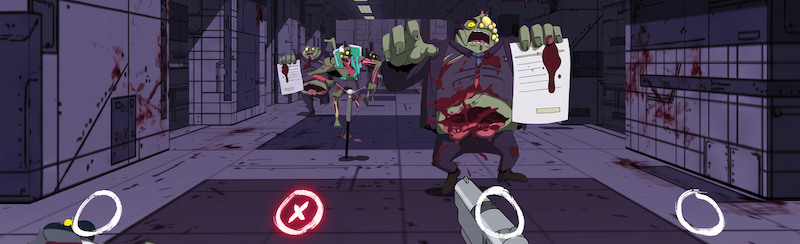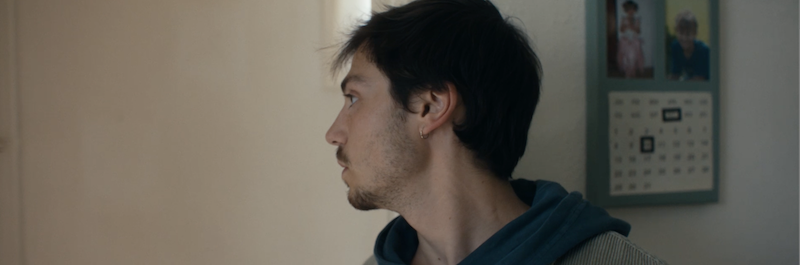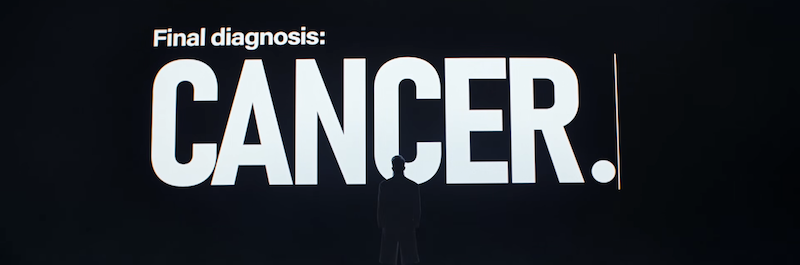
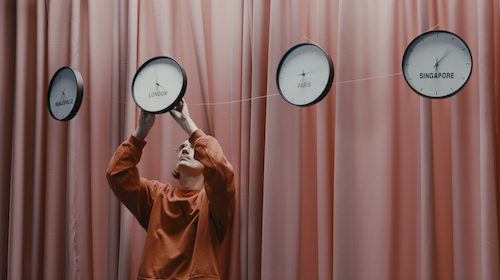
When your masterbrand platform idea is Expect Different, you’ve already set a challenge for yourself. The usual spirit ad tropes just won’t cut it. Independent creative agency, Weave, was fine with that. And it also planned on reimagining how challenging ads are made today. The campaign’s hyper-stylised world is entirely hand-made. No AI. “At a time when our social feeds are increasingly filled with AI-generated content, we wanted to make a campaign film that was proudly real. So, we built sets, choreographed stagehands and created a series of theatrical transitions all cued within a single, unbroken camera shot,” Dan Cookson, executive creative director at Weave, stated.
Here’s the rest of his story about craft, conviction and finding human ways to conquer challenge.
The Stable: AI would have been the easy option for this campaign. Why did you choose not to?
Dan Cookson: The easy and obvious answer is that we wanted to reflect the same commitment and craft as Four Pillars applies to making their gins, which is a big part of it. But, the selfish answer is we simply wanted to do it ‘by hand’.
Apart from the fact that we think people can tell when something is real or not, the honest truth is that we bloody love it… making things, working with talented humans, watching an idea transform slowly from concept to reality. This is where the joy lives. I don’t think anyone has ever experienced a rush from entering the perfect prompt, but we do get pleasure from human ingenuity and creativity, with all its irrationality, instinctive problem-solving and imperfection.
That’s the stuff that gives the work character.
The Stable: Please describe how you made the commercial.
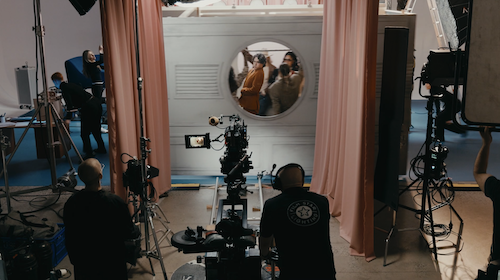
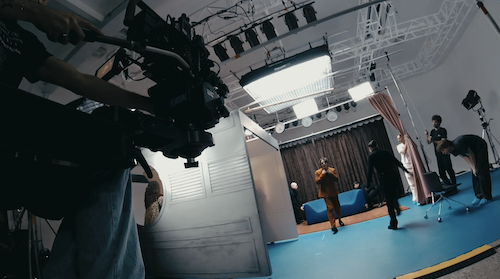
Dan Cookson: Without wanting to sound facetious, we did it the old-fashioned way… with a film crew of producers, DOPs, gaffers, grips, set builders, a choreographer and director, all working together.
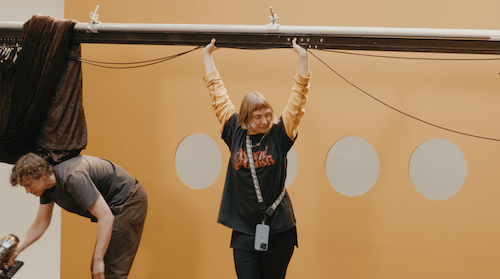
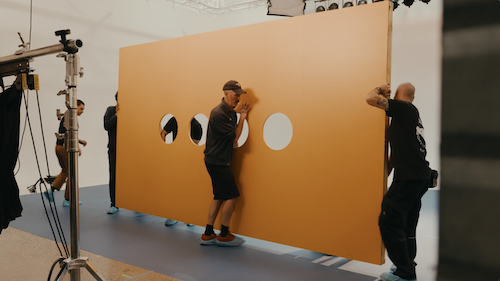
Apart from the final scene, the entire film was captured in a single, unbroken camera shot, which required a huge amount of planning and rehearsing alongside our actor and stagehands, moving furniture and entire set pieces around a relatively small studio space. The camera movement and focus pulling were just as critical, allowing us to draw attention to one part of the scene while strategically cropping out another as the set theatrically transformed.
And because we like making things even more difficult for ourselves… we were also shooting all the campaign stills in the studio next door at the same time. Our team was split across the two spaces, with a few of us constantly running back and forth to make sure the film and photography still felt like part of the same world.
The Stable: Were there any ideas that you discarded?
Dan Cookson: During the pitch process we presented two creative concepts, one of which became the Expect Different campaign. Because Weave isn’t in the habit of presenting ideas we don’t love, the second idea was also very strong (in my humble opinion) but perhaps not as single-minded, so in this instance, I reckon Four Pillars chose well.
From concept through to execution the idea remained relatively unchanged from the original storyboarded idea, which is pretty rare in advertising… although it should be noted that our strong suggestion of dressing the stagehands in Four-Pillars-Orange unitards didn’t make the final edit. We can only speculate as to the devastating impact this may have on the campaign’s overall success.
The Stable: What difficulties did you have to overcome?
Dan Cookson: In our wildest dreams this was a 10-minute film, with various scenarios and characters and sets. But this is the real world and we had 15 seconds, which isn’t much time to convey a concept of this scale, let alone tick the boxes on DBA visibility and message clarity… so our biggest challenge was to ensure the rigour of the idea in a hyper-condensed time-frame.
The other major challenge was getting the perfect take in one unbroken shot. There were so many moving parts that if one actor, stagehand, prop, camera move, or set transition missed its cue, we had to go again. It took us an entire day to capture 15 sec of footage, which probably gives you some idea of the effort involved in pulling it off.
The process as a whole says a lot about the Four Pillars team… doing it this way was definitely harder logistically, but they believed in the idea, and they backed us every step of the way. That level of trust in the process, and trust in the production team really makes the biggest difference.
The Stable: What do you think are the advantages and disadvantages of AI in advertising?
Dan Cookson: The obvious advantages are speed and cost. And there are definitely times when it’s incredibly useful. Pitching is an obvious one. We’ve all spent countless hours sketching storyboards, cobbling together mood boards, or mocking up key visuals in Photoshop so a client can see the idea clearly. Then, hopefully, you get the green light to go and make it for real.
With AI, we’re able to create a far more accurate impression of the final product in a much shorter space of time. In a pitch situation, where the strategic and creative thinking are often happening at the same time, that’s an incredibly helpful tool.
But before you can visualise something, the idea still must come first. And I’m less convinced AI can generate ideas with any real rigour or richness. Which brings me to the disadvantages…
Regardless of how advanced the technology gets, there’s always going to be an element of replication because AI is inherently drawing from things that already exist. So inevitably you start to get content that becomes more and more self-referential until eventually it just becomes white noise. We already live in a world with more content than anyone could possibly consume. I’m not sure advertising needs to get better at making more of it… It needs to get better at making things worth watching.
The Stable: Why have you chosen to make the no AI point to the industry?
Dan Cookson: We’re not in the business of deliberately ‘taking a stand’ against AI, but we are in the business of talking a lot about how to employ it tactically, responsibly, and ethically.
For this campaign, we didn’t set out to champion the rejection of technology, however, we did want to celebrate human craft. At a time when there’s understandable anxiety about what AI might replace, we wanted to make something that demonstrated what people bring to the process… instinct, judgement, experience, and thousands of tiny creative decisions that happen along the way.
On set we witnessed first-hand concerns about the fragility of the industry and individual crafts, but coming together across a full day and watching this extraordinary choreography come to life, both in and out of the camera, there was a deep sense of connectedness and community that is impossible to replicate. Great creative takes a village, and we’re proud to have created one for this project.