
Two wild and wonderful ads in one week. Audi advertising has come a long way – suddenly.
Venables Bell & Partners has made the most of Audi’s sponsorship of the Emmys with an Airbnb partnership that demonstrates its new flair for adventure.
Audi & Airbnb: Is the Nevada Desert your ultimate getaway weekend?
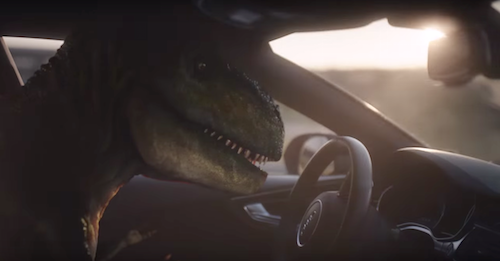
And now Razorfish is using a depressed T-Rex to demonstrate the possibilities of Audi’s driverless car.
The Comeback, as the new campaign is called, is not the first Audi driverless car ad. But its predecessors have all taken the road driverless Audis were expected to travel – torture tests for the new technology and its performance. In 2009, the Audi TTS traced the brand’s iconic four rings into the surface of a salt lake. In 2010, a piloted TTS conquered the winding road at Pikes Peak in America’s Rocky Mountains. In 2014, a piloted RS 7 Sportback took on the challenge of the Hockenheimring racetrack.
Razorfish has found a new road for Audi. It’s all about emotion. A T-Rex has lost his mojo. One embarrassing internet image led to a craze – of embarrassing memes and GIFs.
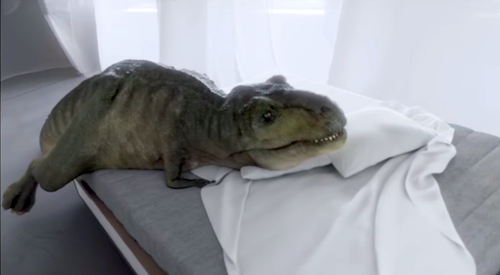
And T-Rex lost the will to live.
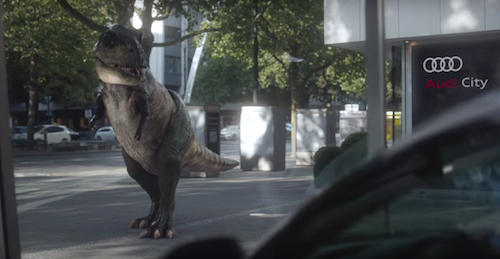
Until he comes across a piloted Audi. The feeling of being behind the wheel of that car he can only describe as magic. The piloted Audi restored the thrill of driving. And life.
Razorfish Germany chief executive officer, Sacha Martin, explained, “To get a campaign that works on social media you have to create relevance. That means you have to use something like an idea that is already known by the audience. Because of the success of the T-Rex meme, it was perfect for our purposes. In the past, people only saw what the T-Rex isn’t able to do. We highlighted what he – surprisingly – can. The biggest challenge in this kind of communication is not to seem insincere. There are thousands of examples where companies try to be hip and act as if there were millennials. Obviously, they aren’t. In this case, the product, the meme and the audience perfectly matched together…
“…The biggest mistake you can make in a digital world on behalf of advertising is to focus on the product and not on the customer. The empowered customer of today doesn’t want to be overwhelmed by the messages of a brand but to experience it. The only way to reach this is by a “customer obsession” approach.”