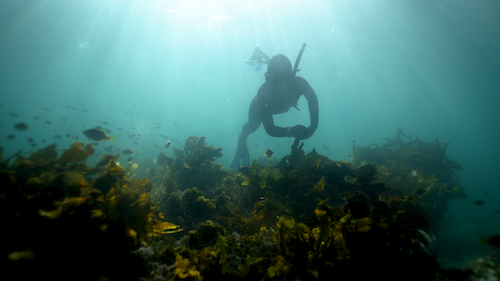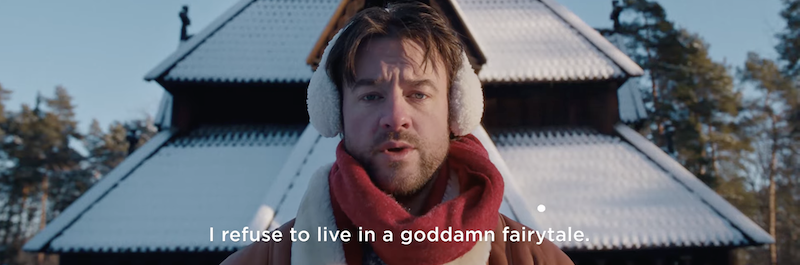

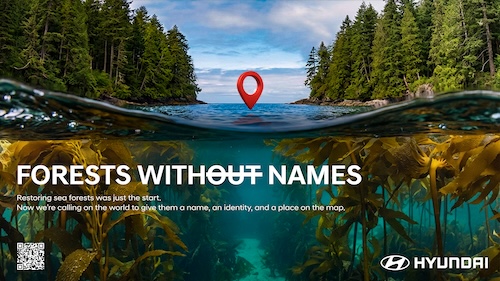
Everyone can name a famous forest on land, from the Amazon to Yosemite, but almost no one can name a sea forest. Sea forests are climate-critical but rarely make it into the public’s awareness. We can’t see them. BBDO New York and Hyundai are making the ocean’s invisible forests visible. Forests Without Names is the first unified global effort to name and map sea forests.
Sea forests are biodiversity hotspots that support hundreds to thousands of species locally. The campaign is designed bring overlooked ocean ecosystems into maps, public conversation, and the frameworks needed for long-term protection.
According to a BBC report, globally, seaweeds (including kelp) are thought to reove nearly 200 million tonnes of carbon dioxide every year – as much as New York State’s annual emissions. Global scientific interest in seaweed’s climate value accelerated in 2025 following discussions at the IPCC’s 63rd Session in Lima, recognising the need to consider seaweed in future carbon accounting frameworks. Their loss can trigger ecosystem collapse in some coastal regions. In areas where kelp disappears, biodiversity drops dramatically, according to a 2023 study.
The invisibility of sea forests meant that had not been recognised as carbon offsets until recently, and they have been excluded from climate policy frameworks. just 15.9% of sea forests globally are in protected areas. Ecological areas that aren’t named are often left unprotected. Naming and defining geographic boundaries are foundational steps toward formal recognition, helping ecosystems gain visibility in policy frameworks, educational resources, and future conservation planning.
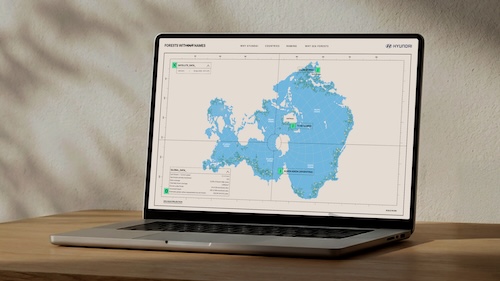
To create the map, BDO New York and Hyundai worked with coastal communities and NGO partners, combining NGO sea forest data with ocean conditions from The Weather Company, including sea temperature and storm patterns. The result is a living map to help scientists and conservation groups track ecosystem changes over time, build historical records, and better understand how sea forests grow, shift, or decline. The map is designed as a living scientific resource that ultimately supports efforts to preserve biodiversity. The campaign will culminate in the naming of three previously unrecognised sea forests. Local communities will play a central role in the naming process, ensuring that the identities assigned to sea forests reflect regional culture, place and identity.
In Korea, one of the two restored sea forests in Ulsan was formally named as ‘Ullim’ (a Korean word that evokes the sense of resonance or an echo) in partnership with the Ministry of Oceans and Fisheries, FIRA (Korea Fisheries Resources Agency) and local marine experts. In Argentina, the official sea forest name has been assigned through a collaboration with a marine conservation NGO and local coastal community. In Australia, naming candidates have been proposed in collaboration with the local NGO and community, and the final name will be selected through a global public vote, ensuring broad public engagement.


A dedicated website, unified map, and film content, will be used to transform awareness into action by showing how identity, data, and community storytelling can help bring overlooked ecosystems into the future of climate conversation and conservation.
Forests Without Names builds on Hyundai’s broader IONIQ Forest Project and last year’s Tree Correspondents initiative, expanding the company’s environmental storytelling from land-based forests to ocean ecosystems. The campaign reflects Hyundai’s ongoing commitment to reforestation, biodiversity, and ecosystem restoration, now continuing its environmental efforts beneath the ocean surface. Hyundai has supported sea forest restoration work in South Korea, including in Ulsan, where two sea forests have been restored and named through collaborative efforts with the central government. It is the first case in Korea where a private company has participated in a central government initiative to create sea forests. Since 2021, the company has also participated in marine waste collection initiatives across 10 countries, with collected materials upcycled into vehicle components.