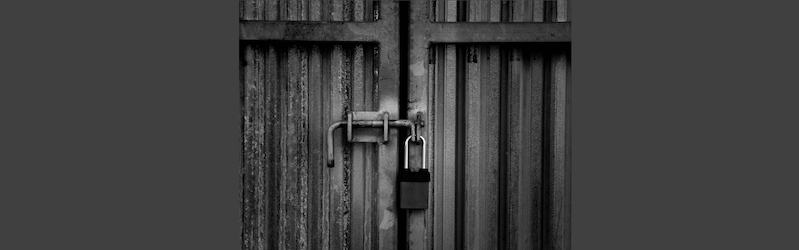
An estimated 581 journalists are imprisoned around the world today – for the crime of simply doing their jobs. They are behind bars unjustly for exposing corruption, calling out injustices, and holding states and regimes to account. Their voices have been silenced.
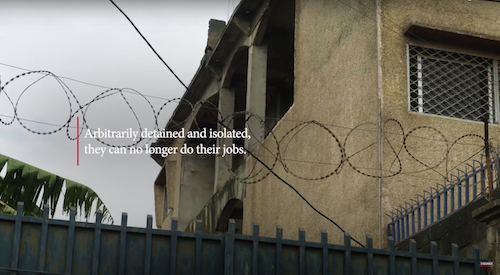
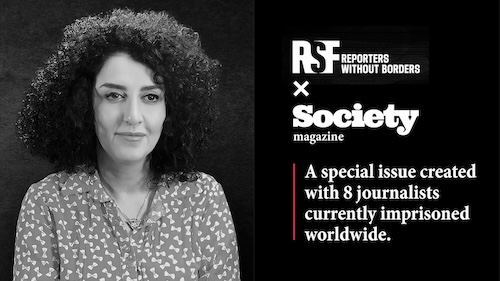
NGO, RSF (Reporters Without Borders), has partnered with cult French biweekly magazine, Society, on a new campaign to demonstrate the importance of press freedom.
Central to that campaign is the world’s first magazine issue developed together with imprisoned journalists. Called The Prison Papers, it was produced by BETC Paris. With freedom of the press under increasing threat, the issue has made the impossible possible, finally giving incarcerated journalists a voice – even from within their cells.
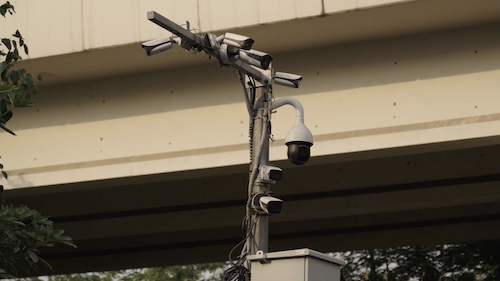
The special issue focuses on eight journalists incarcerated across four continents, and a series of articles that together present a powerful plea for freedom. These articles range from direct interviews with imprisoned journalists from inside their own cell, to a profile on an estranged journalist whose whereabouts are completely unknown. In a critical year for democracy, the campaign aims to highlight the importance of independent journalism in thwarting disinformation, corruption, and propaganda. From Hong Kong to Cameroon, and Guatemala to India, these articles paint a tumultuous portrait on the state of press freedom.
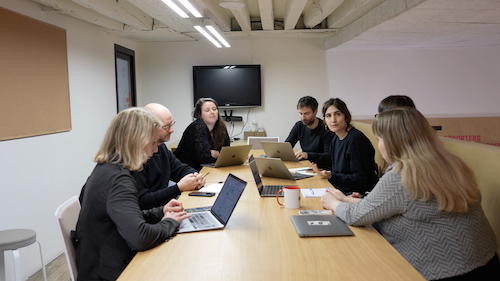
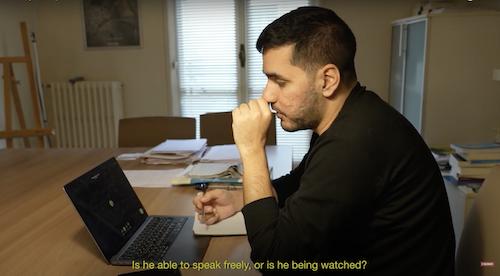
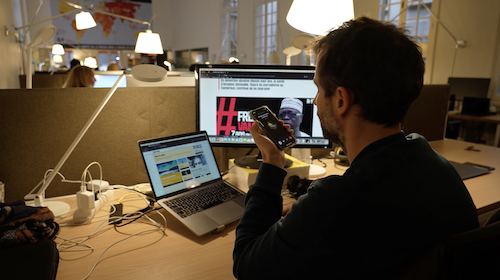
BETC, RSF and Society worked together to connect the magazine’s editorial team with imprisoned journalists on every continent, interviewing their relatives, family members, lawyers, or contacts in prison to create the stories their fellow journalists wanted to be told – but were unable to write themselves – through a lengthy process of consultation, investigation, writing, and approval.
They undertook extraordinary risks to help these prisoners to exercise the right for which they were imprisoned in the first place: to get the truth out there.
It was nine months in the making. The Prison Papers is also the latest in a long line of powerful and thought-provoking campaigns that RSF uses to draw the public’s and international community’s attention to violations of the freedom to inform. It is a stark reminder of the impunity of the regimes stifling freedom of information today. The campaign is a call to action to protect the right to be informed – or lose it altogether.
“This campaign was the result of a long and challenging process to achieve something incredibly important, which had never been done before: giving back voices to journalists who had been silenced. Society’s editorial team has put itself at their service by designing this special issue for and with them, a symbol of their unwavering commitment to freedom of press,” stated Olivier Aumard, executive creative director, BETC Paris.
“With an unprecedented number of journalists behind bars around the world, it is more crucial than ever that we find new and creative ways of keeping their stories alive. We are so pleased to partner with Society on this innovative project, lending our voices to some of the most emblematic figures of our time, whom powerful forces have tried so hard to silence. We hope seeing their stories in print will spur the world into action to secure their releases and to stop the relentless targeting of journalists once and for all,”added Rebecca Vincent, director of campaigns for Reporters Without Borders and human rights campaigner.
Articles include an investigation into the unknown fate of Eritrean-Swedish journalist, Dawit Isaak, currently serving the world’s longest prison sentence for a journalist in the infamously closed-off state of Eritrea, alongside an interview with “Guatemala’s most famous prisoner”, José Ruben Zamora Marroquin, on the rise and fall of the revolutionary El Periodico newspaper and a Q&A from Nobel Peace Prize winner, Narges Mohammadi, currently incarcerated in Tehran. Another Nobel Peace Prize winner, Maria Ressa, who is the founder of investigative news site, Rappler, is interviewed about press freedom and her fight to protect journalists, and how social networks are making her profession more dangerous.
The special edition of Society magazine containing the Prison Papers is now available in both French and English, and can now be viewed here
Credits
Client: RSF (Reporters Without Borders)
Agency: BETC Paris
Presidents: Bertille Toledano & Stéphane Xiberras
Deputy Managing Director: Hugo Ghiglia
Executive Creative Director: Olivier Aumard
Copywriter: Olivier Mille
Art Directors: Aurélie Scalabre & Morgane Alexandre
Account Team: Mathieu Laugier, Sherelle Ramire & Simon Leroy
Editorial Team At Society: Franck Annese, Stephane Régy, Emmanuelle Andreani & Thomas Pitrel
Production Company: Gum
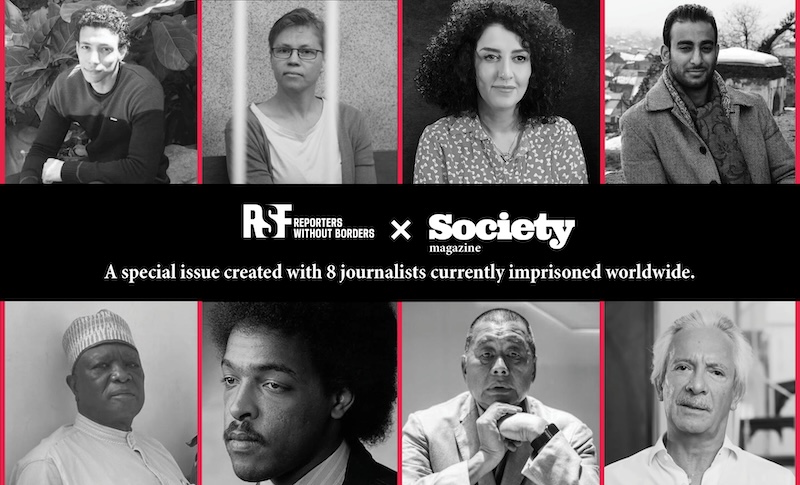
The following 8 imprisoned journalists were either directly or indirectly involved in the development of the Prison Papers [click on name link to download portrait photo].
Iran
The journalist Narges Mohammadi, who has contributed to numerous newspapers and published the documentary book White Torture, has been regularly arrested and imprisoned over the past 12 years. Despite her imprisonment Narges Mohammadi continues to denounce what she calls “gender apartheid.” She seeks solutions from seven women she has chosen, ranging from Shirin Ebadi to Jane Goodall.
Guatemala
From his cell, journalist José Rubén Zamora Marroquinrecounts the journey of El Periódico, his newspaper that, for 25 years, exposed corruption in Guatemala. He has been incarcerated and under house arrest since 2015.
China / Hong Kong
The Taiwanese founder of Apple Daily, Jimmy Lai is not only a Hong Kong newspaper publisher imprisoned since 2020 by the Chinese authorities but also a gourmet who sees the island’s restaurants as symbols of its people’s fight for freedom.
Belarus
Since the brutal crackdown began in 2020 and the imprisonment of its founder, Maryna Zolatava, in 2021 in Minsk, the editorial team of Tut.by has continued their work in exile through a new platform, Zerkalo.
Eritrea
Dawit Isaak who reported for Setit has been imprisoned in Eritrea for 23 years without trial. His family, now in Sweden, is left wondering if he is still alive.
Egypt
After being at the forefront of the Arab Spring, the Egyptian blogging scene has largely disappeared. However, Mohamed “Oxygen”(Mohamed Ibrahim Radwan) remains behind bars for his contributions to various online channels, including the “Oxygen” Misr blog, “x2oEgypt” Facebook, MrOxygenEgypt Youtube
Cameroon
On January 17, 2023, radio journalist Martinez Zogo was found dead, brutally murdered. The ongoing trial is critical for the future of press freedom in Cameroon. Meanwhile,Amadou Vamoulké, the former director-general of the national broadcaster CRTV (Cameroon Public Radio and Television), has just been sentenced to 20 years in prison.
India
Since Kashmir’s autonomy was revoked in 2019, the Indian state has intensified its crackdown in a region that has faced insurgency for 35 years. Journalist Irfan Mehrajis among those affected. He previously reported for Wander Magazine, Indian Express, Al Jazeera and Deutsche Welle
Philippines
Repeatedly prosecuted for the investigations led by her media outlet, Rappler, Maria Ressa, the 2021 Nobel Peace Prize laureate, shares her experiences in a career that illustrates how journalism has become increasingly dangerous. Maria Ressa is not currently imprisoned, but under threat.