The industry news would make you think this has just been the year of holding company restructures and redundancies. But along with that has come a quieter trend, a surge of new agency start-ups, aka indies, and creatives wanting to found new agency start-ups. Founding an agency is not a slam dunk for success. Obviously.
So what does it take? The Stable spoke to the creative founders of some of the world’s great creative start-up success stories. Episode 1 features Micah Walker, who founded Bear Meets Eagle on Fire in 2019, Vince Lagana, who co-founded It’s Friday in 2021 and Greg Hahn, who co-founded Mischief @ No Fixed Address in 2020.
Come back for the stories of John McKelvey, co-founder of Miramar; Ant Melder, co-founder of Cocogun; and Jessica Walsh, founder of &Walsh, in episode 2.
Micah Walker, CCO & founder, Bear Meets Eagle on Fire
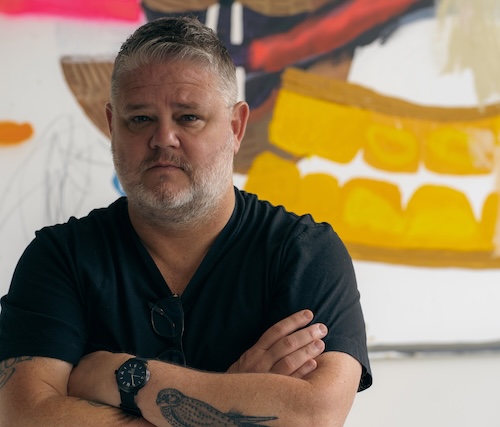
Why did you start your own agency – what did you hope to gain, what did you want to leave behind?
Micah Walker: It wasn’t just one thing to be honest.
Part of it was that I had a lot of experience, across a range of agencies in the US, UK and Australia – some incredible places and some not so much – and I was seeing the same frustrating patterns emerge. It was always the most talented people who were also the most frustrated and disheartened, and either due to structure or legacy it just wasn’t possible to radically change that.
I also think it was just time, for me at least, to stop being frustrated and disappointed and put in place the beliefs and values I believed could make for something better. Now, my better might not be everyone’s better, but that’s part of what drives the decision, making decisions you’re not asking for permission to make.
There are so many things I’ve gained, new skills, the rewards of shaping a culture, experiencing a unique kind of pride and perspective that only comes from the personal pressure you feel when you’re starting something. It’s a different pressure and reward roller coaster, for sure, but it’s also rewarding learning to navigate that. Humbling, but rewarding.
So much stuff I wanted to leave behind – politics, mediocrity, hypocrisy and the inability to just make decisions without a committee. The thing that bothered me the most was just how much of my happiness was dictated by other people’s agendas.
What did you find you needed?
Micah Walker: A lot of advice. I also needed my wife kicking me over the edge when I kept finding excuses for why it wasn’t quite the right time. I realise now there are never the perfect conditions you think you’re waiting for, and you need someone to support you, so you just do the bloody thing.
You know what you know, believe what you believe, but when you’re staring at no salary after having had a steady one for your whole career, and the roadmap isn’t just laid out in front you,
it can be a lot of pressure. So, support is important, family, friends, collaborators. A dog.
I’ll also say this – not having a start-up client, which most people advised me was the best way to start, ended up being a blessing. It meant I could really think about what I wanted Bear to be, without immediately being shaped by outside pressure.
I know that might sound a bit precious, and in a way, it is, but you can so easily wake up one day as something you never wanted to be, and that weighed heavily on me. I only wanted to do Bear if I could care hard about it and do it in a way that was true to what I believed in. That doesn’t mean I had all the answers, far from it, but knowing what you don’t want to be is also important.
What were (are) the challenges?
Micah Walker: Well, the personal pressure I mentioned earlier, no salary, no roadmap, feeling alone – that all makes for unique highs and lows.
I think in Bear and my case, the determination to swim against the currents of traditional shape and to find a more equitable way to be paid, was and honestly still is, a unique challenge. I know it’s the right way forward for a more respectful and productive partnership but building something based on principles is different than just seeing a gap and opportunistically building to that.
Someone will always be faster, techier or cheaper, I just wanted to be better.
Greg Hahn, co-founder & CCO, Mischief @ No Fixed Address

Towards the end of 2019 and into 2020, I started getting this feeling that advertising was getting really hard. Nobody seemed to be having fun anymore. Clients were becoming risk-adverse, agencies were constantly in defensive mode—trying not to piss off or lose a client. It felt as an industry, we are always playing defence. It was lacking joy.
So, when the pandemic hit, and for the first time in over 20 years, I found myself evaluating the agency landscape to see which agency I would ideally love to work for, I couldn’t think of one. Sure, there were agencies whose work I loved and respected, and I still do. But no one place that seemed right for me. So I thought, why don’t I build it?
It was still kind of a blue sky, dream state-thing at that point. I think a lot of creatives have their fantasy of what their own shop would be like. I had no idea how to ever make that happen. But after meeting my partners, Dave [Lafond] and Serge [Rancourt], that fantasy actually started to feel like a reality. Dave proposed the idea, and it all just started to click.
What I was seeking was a place free from fear, with fewer layers, politics and the things that get in the way of allowing people to do the best work of their careers. I wanted to build a place that felt different and could bring a new energy into the industry. In starting Mischief I think we were able to build to that and gain an overall sense of freedom.
One thing I learned I needed, which I realised but never fully understood the true importance of, is people who are really good at the business and HR side of things. People are everything. I can’t stress that enough. Not just in the creative department but in every department. I feel very fortunate we had people, who I feel are the best people in the business, there from the beginning. The stars aligned and we just came together at the right time. I’m super grateful for that.
I think the challenge of being a founder is that you are not just responsible for the work, you’re responsible for people’s livelihoods. I don’t take that lightly. You have to make sure people feel supported and that the agency is making the right decisions for long term success. Every decision is based on that—the long term success of Mischief.
So far, by far, the benefits outweigh the challenges.
Vince Lagana, CCO & co-founder, It’s Friday
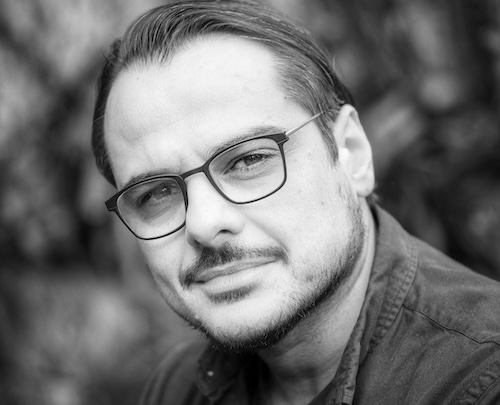
Why did you co-found your own agency – what did you hope to gain?
Vince Lagana: First off, It’s Friday wouldn’t exist without my incredible partners, Pete Bosilkovski and Jeremy de Villiers . We launched during COVID with a founding client, but no fixed address for over a year. Most people thought we were crazy to start then, but for us, the timing was perfect. While other agencies and clients played it safe, that moment defined us. It set the tone for the grit, bravery, and energy that still drives everything we do.
Between us, we’d worked at some of the best agencies in the world and experienced both the highs and the hard truths of life inside multinationals. We saw an opportunity to do things differently – to build something from the ground up that reflected our values, our creative vision, and the kind of culture we’d always wanted to be part of.
What did you leave behind?
Vince Lagana: There’s a long-held belief that big ideas only come from big agencies. Clients often find comfort in scale, but comfort doesn’t always deliver the best thinking or guarantee the best people work on your business. It’s a myth.
We knew we could bring the same, if not better, strategic and creative firepower, while staying much closer to our clients. Our team is hands-on with every brief from the moment it walks in the door. No layers. No handoffs. Just sharp, focused collaboration. That approach drives both our work and our close-knit culture.
What did you gain?
Vince Lagana: Years of experience gave us something invaluable – the freedom to work on our own terms. We’ve built a belief system, a culture, and an ethos that guide everything we do. At the heart of it is a simple principle—create work that’s impossible to ignore. And the closer we collaborate with our clients, the more powerful that work becomes.