Laura Jordan Bambach is in the very unusual position of being an ad legend. Not because she doesn’t deserve the accolade but because firstly, the creative industries have very, very few female legends and secondly, because in most other industries she would be too young to be one. Creative people tend to become legends before their time because they’re likely not to be working in the industries when they’re older.
The chief creative officer of independent agency, Mr. President, came home this week for a break – if she still calls Australia home after two decades (exactly, this year) in London. Obviously, the first question I wanted to ask her was what she felt she had gained with experience and maturity in the industry.
Laura Jordan Bambach: I don’t think we think enough about the benefits of having people who have been around for a while in agencies. We tend to overvalue newness and youth, although the new 40 Over 40 organisation in the UK is helping to bring change at the moment, which is really great. Personally, I’ve learned about what my own values are, how to negotiate conversations, how to sell in the more complicated, more creative work and how to build relationships, which after all is what our industry is about. I’ve learned a lot more about empathy and compassion – these are all very difficult skills to teach. They really do come with time and experience – through experience with people and cultures; through being exposed to the world and different ways of working. There’s also a self-confidence that comes with age – knowing who you are – which you don’t really have when you’re young.

Mr President doesn’t put traditional advertising first. I asked Laura about this next:
LJB: Maybe because we come from a different place. I’ve never been in a position where I had to put traditional advertising on a pedestal. That’s not my background. I’ve made some incredible work for brands that doesn’t even exist in the space as traditional advertising, in innovation and service design for example. I think because of that and because all of us at Mr. President have very different backgrounds, there’s a healthy sense of questioning, a “Why would we do things the way they always have been?” and an “Is there a reason for the processes, structures and media we use?” We say, “Let nothing get in the way of a great idea,” whether that’s perceptions of what we should do, or arduous processes that get in the way of the work. We have a really questioning, curious approach to things and a very strategic emphasis to how we work.
Also, because we have media thinking in-house (I think one of the worst things that ever happened to agencies was separating media and creative), media is an intrinsic part of the creative process. When you combine our media thinking, PR thinking and what we call connections planning (which combines social and experience planning), you end up with a clearer direction and more focussed ideas, ideas that work more powerfully for the brand. Rather than having to fill a thousand media channels with a thousand different things, we can go big with three things and shift the dial with the brand’s goals in mind. Sometimes we do use traditional media – if it’s right for the brand, for the questions it’s asking and the problems it has to solve.
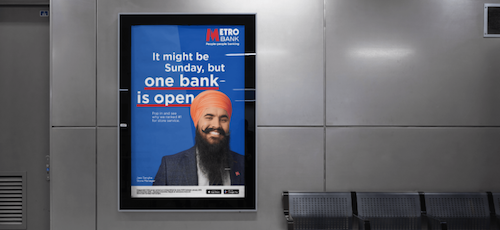
We just launched Metro Bank’s first-ever campaign even though it has been going for over ten years in the UK. We developed what we call a brand-defining idea, People-people banking, a whole brand platform for them based on an enormous amount of research we’d done with their customers and their staff. In this case, our research told us to build the campaign with work that is very traditional – out of home and TV, because that’s what the bank needs right now. It needs to build trust and awareness. For other brands, those channels are not right, but it’s nice for our clients to have an agency that has the breadth to figure out what is the right thing to do for the brand.
Read the case study here.
The Stable: Advertising and ad agencies took a beating last year. What do you think traditional advertising is doing wrong?
LJB: People say they hate advertising. They hate the bad stereotyping. They hate the bullshit in some of the ads. They hate being sold stuff they don’t need. But there’s also a lot they love. Brands are in an amazing position to create positive change in whatever way is relevant and authentic to them. The problem with traditional advertising is there’s a lot of work, work that’s just shit to add to the world of shit. I think some people in the industry have forgotten that creative work has to stand out. Has to have an impact.
A lot of advertising is just the strategy made into a film. The creativity, the bravery, the interesting stuff has been stripped out of it, in both traditional media – and in digital media, in programmatic, where you’re relying on putting something in front of people when they’re in a particular mindset, it’s all very rational and not very interesting. To make a great ad, creativity is not a risk. Creativity is the one thing that will make your brand sing. It’s actually absolutely fundamental to brilliant work. But it’s seen as a risk by clients who are trying to keep the status quo going and by agencies who don’t have the capacity or the relationships they need with the client to get brave work through.
I heard an amazing speaker, Matt Tanter, the chief strategy officer at Mother in London, talking about how his agency makes such great work. He admitted that clients can come back and be quite brutal with Mother if they don’t like the work, “It’s actually quite boring; actually we don’t like it.” But that conversation continues with, “I know you’ve got it in you, so let’s go again and try to right things,” not “the work is boring, we’re going to pitch and get rid of you,” which is what happens more these days. Because Mother and its clients have trust in each other, the agency’s work has become even greater. Ikea work at Christmas, for example, was very cool, really charming and very much stood out. You would think that relationships would be the one thing that agencies are good at.
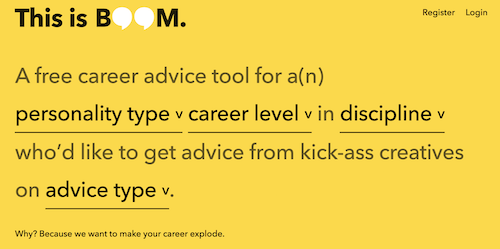
Thirteen years ago, Laura Jordan-Bambach and Alessandra Lariu founded She Says, a network that helps women to progress in the creative industries. From a small gathering of women who got together for a one-off meeting in 2007, She Says, has become a global network in 55 countries.
TS: What were your aims then? What are they now?
LJB: Ale Lariu and I began SheSays because we were always the only women at corporate conferences. We became really good friends, both heads of our departments. She was the creative director at Agency Republic in London, I was head of art at Glue. We couldn’t see any women at any level coming into our agencies, and our agencies were cool at the time. This, we found alarming. How, then, were we going to address the gender imbalance problem – particularly in creative, design and creative technology, but also across agencies in general, we wondered? I think there was only one other woman in my agency at that point. We didn’t really know what the answer was, but we knew we had to act in some way. We went to a number of other women’s networks around London, but no one was willing to really help us or give us a platform because we were talking about women at the beginning of their careers, and there’s no money there. So we set up a meeting to talk about what we could do. What came from that was the urge to get together, talk more and share more. Everyone has a different point of view; listening to other women’s stories and sharing skills with one another is so powerful. Our idea took off. We then realised that rather than talking about the issues which we all know, the more powerful thing was to share knowledge and provide a place where women could ask questions, learn and be heard.
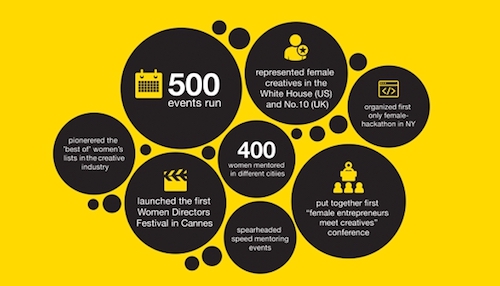
So that’s where SheSays began, running events on the latest trends or technology, talking about failure or coaching or how to run brainstorming. It was so valuable for women to take all that back into their jobs. Then, when Ale moved to New York ten years ago, she started She Says there. It took off again. Now it’s in 55 cities all over the world with two more cities opening in the next two months, all run by amazing volunteers who give their time for mentoring. Our plan now is to build on these foundations. Ale has just done a massive piece of global research on what makes you special, and on the back of that we’ve started to integrate more practical stuff around mentoring and helping women to grow – looking at the tools we can apply to help guide women’s careers, right from leaving university all the way through to advancing their careers to the top. What that looks like exactly we’ll know more in the next twelve months as we work through all the research and develop key ideas. We also want to connect all the different chapters of She Says a bit more, to help women who want to move throughout the world in their careers.
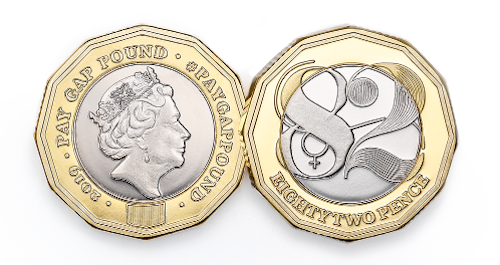
We’re also planning more campaigns, along the lines of Pay Gap Pound which was a Mr President x SheSays collab last year for Equal Pay Day, where we created minted pound coins worth 82p to highlight the gender pay gap.
The multinationals weren’t the only companies to feel the squeeze in 2019. A number of indies perished. Mr. President stood firm.
TS: What does it take for an indie to survive?
LJB: It IS hard, and I have a feeling that it’s only going to get harder. Obviously, each market has its own challenges. The UK has had Brexit which hasn’t helped, but also globally everyone is struggling a bit. Where independents can thrive is in using their freedom. Independents can break the rules so they can be different, do things their own way, can do different work, design their own processes, experiment and fail in a way you can’t when you’re part of a bigger organisation. That’s really the key to independents, and the independents that thrive will be the ones that remember that, rather than trying to replicate the big agency model in a smaller size. You see people leaving bigger agencies to set up something on their own and then copying what they already know. Then you see some amazing independent agencies throughout the world like Uncommon in London. I have all the respect in the world for that crew because they really treasure their independence and I think that the agencies that really treasure their independence and use it to their advantage will always be the most successful.
TS: What is your favourite recent Mr. President work?
LJB:
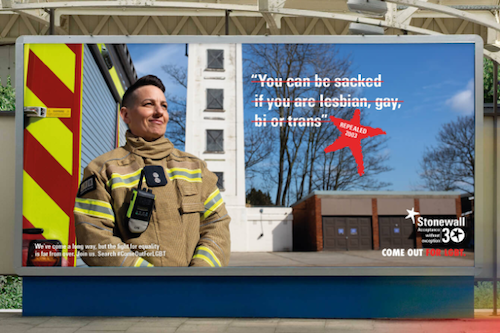
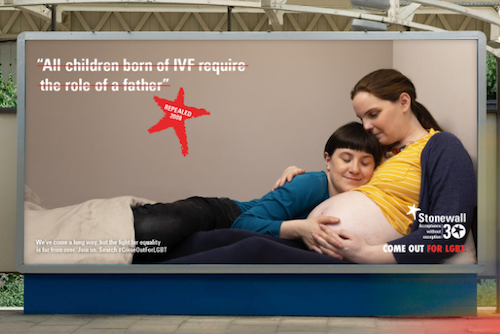
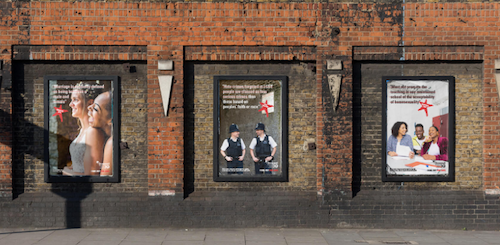
Stonewall. Come Out for LGBT.
We developed the Brand Defining Idea, Come out for LGBT, for the UK’s largest LGBT+ charity, Stonewall. In it’s 3rd year, we celebrated 30 years of positive change brought about by Stonewall and its allies.
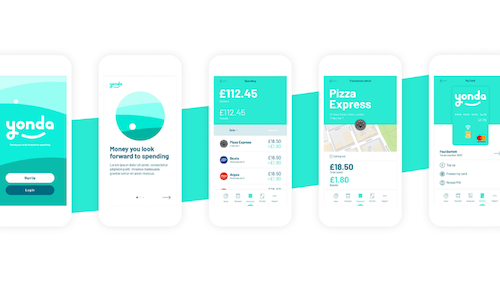
Yonda. Money you look forward to spending.
Under our Brand Defining Idea of Money you look forward to spending, we launched Yonda into the market – name, brand and visual identity, and mobile user experience.
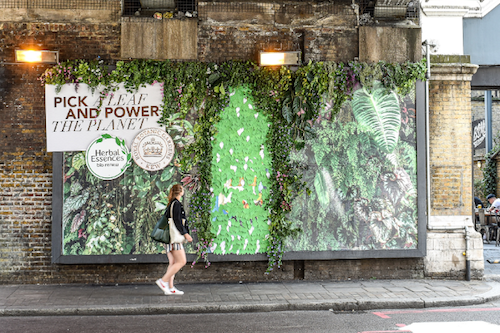
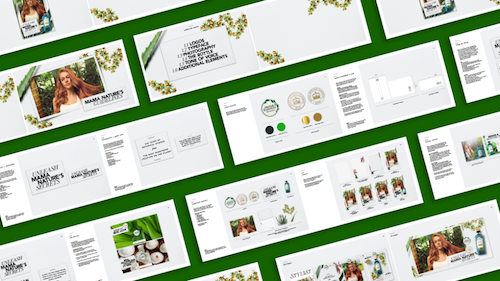
Herbal Essences. Flaunt the hair mama nature gave ya.
Our Brand Defining Idea, Flaunt the hair mama nature gave ya, is a contemporary take on the sassiness of the Herbal Essences brand and the campaign highlights the brand’s partnership with Kew Royal Botanic Gardens in London.

You might also like