Nick Law, chief creative officer of Publicis Groupe and president of Publicis Communications became jury chairman of The Advertising Club of New York’s International Andy Awards at the end of last year. And he has some strong words about the future of advertising creativity.
Law is adamant that agencies need to change to make great creative work possible. “We need to create new things, so we need new capabilities,” he stated.
He prefaced this warning in June last year, in the midst of disquiet (and in some cases, despair) caused by the increasing colonisation of the industry by in-house agencies and consultancies.
“We find ourselves in a position where, because of our original timidness and lack of courage, we’re on the back foot,” he told Campaign. “Right now we’ve gone from being a very arrogant, insular industry to one that feels under siege.” He noted then that it was an overreaction. That the industry had lost confidence. The threats, he said were real, but “there are certain things that our industry should be able to do better than any of them.”
First and foremost, Law, believes the industry has to innovate. Ironically, the need to innovate is the clarion call the industry often touts – for many things in its realm, but not its own model.

“If agencies don’t learn how to incubate and stand-up new capabilities,” Law promises, “their share of client’s budgets will continue to shrink. A reactionary service approach, encouraged by fawning account leads, has led to agencies outsourcing their model to clients. As an example, no serious thought has gone into reconsidering the atomic creative team since Bernbach paired copywriters with art directors in the late 50’s.”
The old model allows clients to typecast their agencies, he notes. The agencies then mould themselves to fit these ideas. When clients realise they need new kinds of work, they look for a new agency.
“But it’s not the client’s job to design their agencies for the future,” Law explains. “It’s up to agencies to make strategic decisions about their capabilities, and the teams inside them, that anticipate what their clients will need tomorrow and in two years’ time.”
Law is firm in his belief that growth will come from a suite of connected capabilities that mirror client opportunities and the media behaviour of actual people, “not the fatuous insistence that a ‘big idea’ can still solve everything.”
This ruinous myth,” he states, “has given creatives an excuse to avoid mastering the myriad of new mediums that have multiplied in the last twenty years. No amount of anthem-films and fridge-magnet-taglines can mask this neglect.”
Law cites the music industry as an example. It, too, had to stop looking to the past and instead, redefine its future. “As music fans moved away from CDs to digital files, music companies defended their model of physical distribution, and the industry shrunk by a third. It was rebuilt by new companies on a new foundation of streaming. Clearly, the internet is the foundation that the advertising industry needs to be rebuilt on,” he recalls.

The industry, Law says, “has to make stuff that is connected intelligently to the modern world, and is designed to be watched and interacted with on mobile (the best version of the internet).”
Does this undermine creativity? No, that’s the backward thinking of those stuck in the glories of the past, Law insists. “Somehow, they’re blind to the fact that they’ve already mastered technology in a format that was once spurned.” When broadcast TV arrived, it changed everything in advertising. And yet, it was at first seen as a blunt instrument compared to print and radio which had matured and grown in finesse. “But a thirty-second grammar was developed that took advantage of the technology and helped the creative revolution blossom,” Law notes.
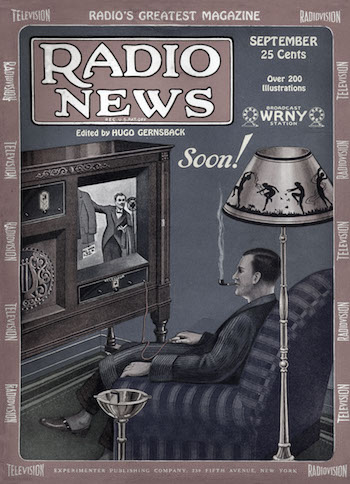
“If we’re too precious about old crafts to embrace new technology, the new version of our industry will be devoid of creativity. It’s the creatives’ responsibility to get their hands on new technology and infuse it with magic.”
Law’s prescription for the future of advertising was first publishing by The AD Club of New York here.
You might also like