“I like to tell human stories but in particular about women. I love casting beautifully spirited and strong women in everything I do and it’s become a part of my work.” It has become intrinsic to Photoplay director, Jasmin Tarasin’s, work most recently with a short film called The Story of Lee Ping, which has been selected to screen at MIFF in August.
Casting beautifully spirited, strong women is also a strong thread in the commercials Tarasin has directed – G Flip Unplugged for Bonds and Leo Burnett, #youknow for Carefree and DDB, Westfield’s Autumn campaign for Sibling being a few of these as well as Together Alone, the Isolation Tapes, which was a project Tarasin created during lockdown last year.
“I am always trying to find the human connection moment in all aspects of my work, which has created a reputation for my work being powerful, emotionally charged content. I like to blur the lines between real people and actors, real situations and fantasy in all elements of my work,” she adds. Tarasin has also become known for her ability to work intuitively with both actors and real people to evoke heartfelt performances as much as she is chosen for the cinematic beauty with which tells her stories.
The Story of Lee Ping was an opportunity for Tarasin to charge a film with both emotion and cinematic beauty. It is the story of a young Chinese woman’s journey to find freedom on her own terms, to escape the clutches of her white employer, and while it is set in Australia in the 1920s, its themes are very relevant today.
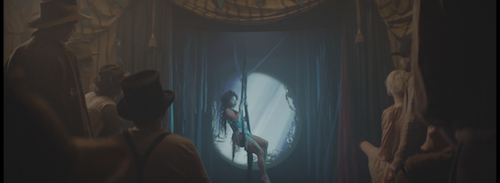
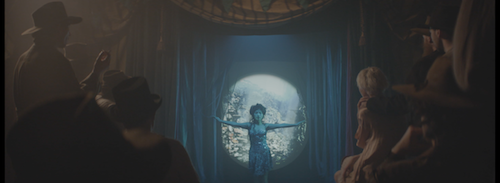
Tarasin took The Stable behind the scenes of her film, revealing what made it happen as well as what makes her tick.

The Stable: How did you come to make The Story of Ping?
Jasmin Tarasin: The Story of Lee Ping is a backstory to two characters in my upcoming feature which is based on the book, The Burial, by Courtney Collins. The short was written by John Collee. I wanted to create a world in which my feature would exist in a standalone short piece to work with my cast and production team.
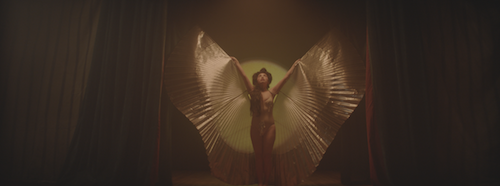
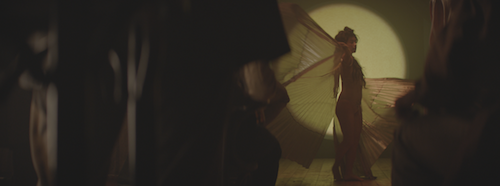
TS: What were your main aims as a director of this story?
JT: It really was a test run with the team and also a proof of concept to show investors, sales agents and distributors what the world and my directing style would be like in the longer film. We had the same main theme in the short, people finding their people and the freedom that comes with this. I am also drawn to the idea of telling strong stories of women of that time. There are currently unexplored true-to-life stories of strong independent women that make up our Australian history. They are untold and I am passionate about telling these stories.
TS: What do you think makes it stand out?
JT: Firstly, there are not a lot of stories with female protagonists set in this time in Australia. I also think my visual style is a unique fusion between classic Australian paintings of the time and European cinema (well so I have been told).


TS: What were the challenges in making it? Were there any “gifts” that made it easier?
JT: Creating and producing a proof of concept short is actually near impossible in Australia. There are no funding streams for this type of thing and the short film funds are very few and extremely competitive. Basically, we had to beg, steal and borrow to make this. We invested ourselves and had investment from industry and supporters. One of the big gifts is that I sent the film to Cat Power (Chan Marshall) as her song, Cross Bone Style, has always been thematically what I imagined for the film. We sent her the online and she loved it and let us use the track. Huge win.