Women are not funny. That’s the stereotype. In 2011, researcher, Gil Greengross, worked out (apparently, scientifically) that the reason men are funnier is sex. Women correlate humour with intelligence and look for it in a partner, he proposed. They also want a lot of sex, so throughout history, men have had to compete harder with other men to impress women with their sense of humour and have become good at it. According to Greengross, men, on the other hand, don’t rate women’s sense of humour. Men prefer women who laugh at their own humour. So women are not funny. All of this seems to prove that scientists are.
For whatever reason, the stereotype has persisted. Apologies to any ad creative who thought their campaign with Celeste Barber, Amy Schumer or Rebel Wilson (etc) was funny. Apologies to all of the ad creatives who chose Playtime director, Stef Smith, to direct their ad.
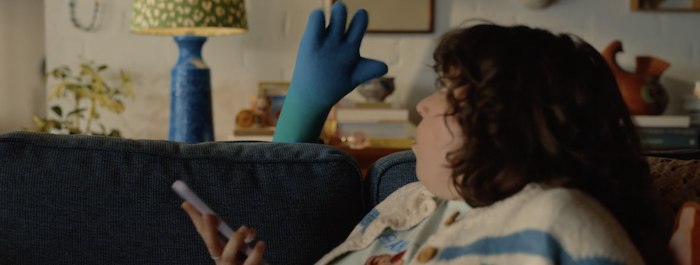
According to the stereotype this isn’t funny:
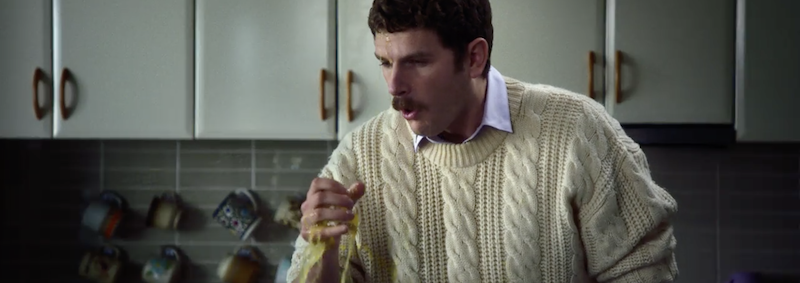
Nor is this:
But if no other good has come of 2020, it has been a year of questioning stereotypes. Women are making headway at being considered equal. The idea that after the age of fifty you’re just waiting for death is…well, dying.
As the catastrophic dumpster fire year that was 2020 draws to a close, 33-year-old Playtime director Stef Smith has been commissioned to work on eight jobs in three months. Presumably some people think she’s funny. Because she is.
Stef Smith’s humour feels natural. It comes from a country girl who likes anything silly, loves poo jokes and has a radar that can pick up bullshit a million and two kilometres away.
She has had life throw both rotten tomatoes and fairy dust at her and both have shaped the director she is today. Due to infertility struggles, Smith became a mum of two very early – “my uterus hates me,” she notes – and has fought harder to make the two roles work. She began directing because all of the male directors she asked turned her first film down. “I had the lead actor booked on a plane from Melbourne, a tiny crew locked in and I was self-financing,” she recalls, “so I thought, ‘I guess I’m directing it then’.”
But she also received a Create NSW 2017 Generator: Emerging Filmmaker’s Fund for her awarded short film, Joy Boy, as its writer/director. It won Best Australian Short Film at MQFF 2019 as well as Best Director, Best Screenplay and Audience Choice award at Freshflix, Vivid Sydney 2019. Then in 2018, she was accepted into the Australian Director’s Guild Commercial and Content Mentorship program, was selected by Create NSW to attend the MIFF Accelerator Director’s Lab and her narrative miniseries, Fish, was shortlisted for a Sundance Lab, as part of Create NSW’s #SheDirects initiative.
And most wonderfully, she says, she was mentored by Photoplay. “I adore them. They’re a bunch of weirdos like myself and extremely open-armed and accepting of me. At Photoplay, I was treated like someone of value and got to spend a lot of time with directors like Scott Otto Anderson and Gary John. Before then, I’d been on a shoot where I was treated like dog shit. I learned a lot in my attachments about how I wanted to treat my crew.”
Smith doesn’t lead with her ego. That’s the odd kind of funny. She is her own harshest critic. In fact, after a pitch in Los Angeles, Smith was told she was too self-deprecating for America. But her propensity for self-criticism is possibly her greatest asset. “I’m cursed with never being satisfied. It’s not at all my crew or cast or any part of the process that led me to feeling dissatisfied, but I think I always look at my work with a little bit of an analytical view – what could I have done better? What could I improve on next time? What could I learn from? I know that sounds a bit wanky but I do rarely look at something and say I fucking nailed it.
“I want to do my best to serve the project to the best of my ability and often that means putting the project above my own ego and my own vision and voice. I think it’s important to find that balance.”
Paradoxically, Smith’s narrative work is all drama. Most ironically, Joy Boy, the springboard for her career, is a drama too. She may love comedy, “I’m so happy and very grateful to be that square peg in that square hole. I love making funny ads and I’m awed by the epic ads of others,” she says, but her narrative work is where the director who grew up as a fan of blockbusters flexes her muscles. “In each project, I try to do something I haven’t done yet or something that scares the shit out of me so I can add little pieces of the puzzle for tomorrow’s work,” she explains.
This commercial Smith directed for Saatchi & Saatchi and The Kid’s Cancer Project isn’t funny either. It’s wonderfully, emotively and dramatically human:
But then, here’s what happens when Stef Smith and Celeste Barber get together. It’s really funny.
View Stef Smith’s reel here.