
Pepsi made itself The Choice of a New Generation in 1984. Levis told kids, “When the world zigs, zag” in 1982. Mars began to help you work rest and play in 1983. In the eighties, you talked to young people on TV. They were clearly defined then, not only by age, but by values. No one had access to as much information as people do now.
These days “young people” have a lot of mainstream values, like freedom and creativity, that are shared by everyone. 80% of the 16-34 age group state that they have common values with previous generations. 92% think that it is important to have a trusting relationship with their parents. So how do brands let young people know that they get them.
BETC set out to find what makes the Selfie Generation click ‘like’ and ‘buy’.
The survey “Hashtag Nation: Marketing to the Selfie Generation” put its questions to a representative sample of the population of 10,564 people aged 16 to 64 (with a weighting on the 16-34 age group). In 29 countries: Argentina, Australia, Austria, Brazil, Canada, China, France, Germany, India, Indonesia, Ireland, Italy, Japan, Malaysia, Mexico, the Netherlands, Poland, Portugal, Puerto Rico, Saudi Arabia, Singapore, South Africa, Spain, Turkey, Ukraine, United Arab Emirates, United Kingdom, United States, and Vietnam.
The sample was sorted between the general public (mainstream) and the most advancedconsumers who are able to predict future behaviour of the mainstream (prosumers).
What did BETC learn? The full report is here.
And an outline of the results is:
1. Young people are into brands. 16-34s are interested in brands, and this is stronger still with 20-24s. 45% of 16-34 year olds (as opposed to 35% of 35-54s and 25% of over-55s) state that brands play an essential role in their life. 60% of them (as opposed to 51% of 35-54s and 38% of over-55s) like it when a person they admire consumes the same brands as them.
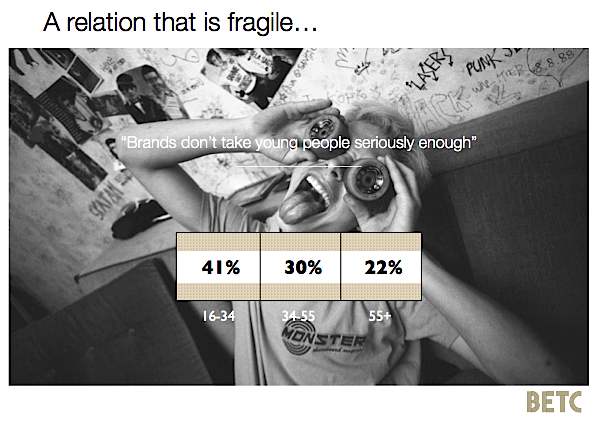
2. Brands don’t always hit their marks. 41% of young people think that brands do not present themselves in the right way (as opposed to 30% of 35-54s and 22% of over-55s).
3. Young people don’t want to feel that they are being coerced into buying more. The power has shifted. 41% of them feel that they have the power to contribute to the success or failure of a brand. They understand that they are able to organise themselves into networks and influence each other. So brands need to invent new kinds of relationships with young people.
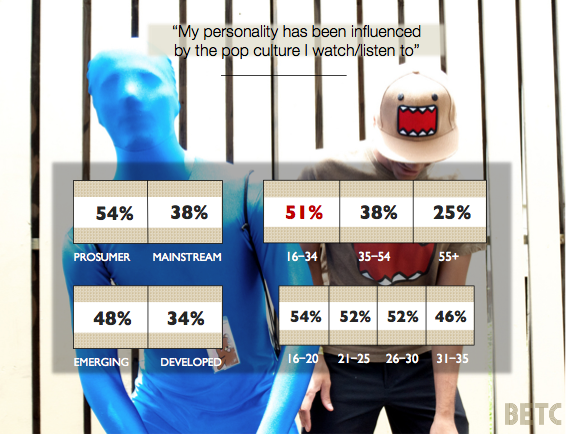
4. Popular culture is a major influencer. 51% of 16-34s feel that the pop(ular) culture they’ve consumed has influenced their personality. 50% of them also state that their attitudes have been fashioned by pop culture. 57% of 16-34s state that they spend more time consuming global content rather than the cultural content of their country. To reach young people brands, have to know what’s trending (not only on Twitter) throughout the world.
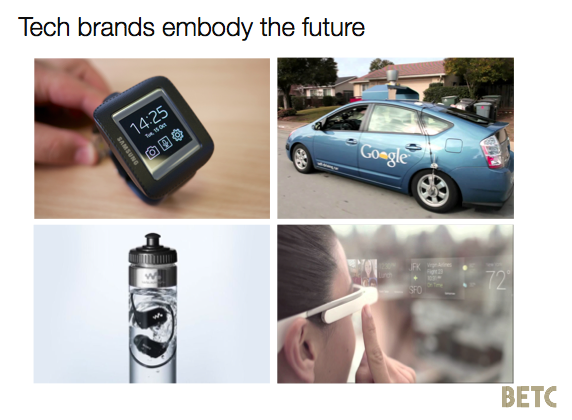
5. Technology is the new grail. To attract young people, brands have to think outside the square in terms of the technology into their products and services. It’s not content that has changed, but how young people are finding and receiving it. On demand video, live tweets, TV broadcasts, free downloads, streaming, etc. are the centres of innovation. Because they have consumed pop culture via these new technologies, 16-34s are more receptive to technology brands than the other age groups. Of the 10 brands that they consider to be the most dynamic and the ones that they prefer, there are 7 technology brands (Samsung, Google and YouTube in the top three). The 3 remaining brands are the most technological and digital in their category (Amazon in retail, PayPal and Visa in financial services).
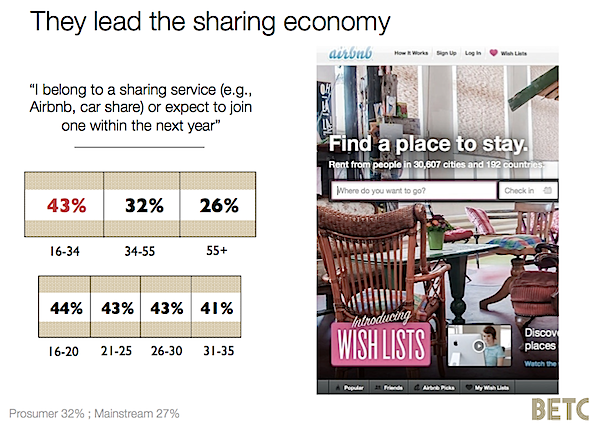
6. Generation Selfie would rather share than buy. 16-34s have learned to consume for free by downloading or watching streams. 54% of them are reluctant to pay for consuming culture (cinema, music, etc.). The habit of getting things for free has contributed to the age group’s distancing themselves from the very idea of ownership (51% of them say they prefer to share rather than to own, as opposed to 37% of over-55s). They just don’t buy as much as did their parents. Brands need to prove they are useful, by giving young people access to the experiences and technology they value. 47% of 16-34s prefer spending money on an experience like a concert or travel, than on clothes.
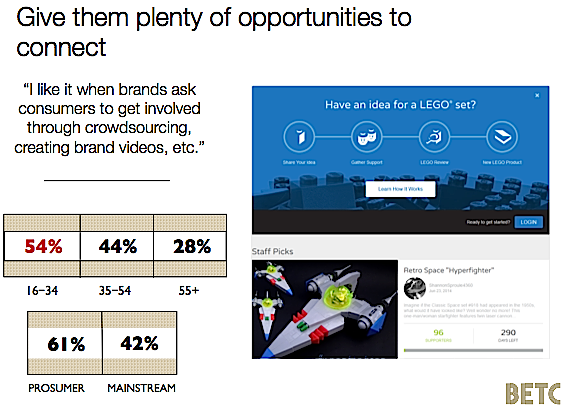
7. Young people socialise in new ways. Popular culture is everywhere and dictated more by young people themselves than it ever has been. Images on social media are the libraries young people use to shape their identities. 54% of 16-34s state that they prefer brands that allow consumers to feel engaged and involved in the life of the brand. So the brands that are very attractive to young people are the ones providing access to content from popular culture.
You might also like