Once upon a time there were two walls between your advertising campaign and the music or muso you wanted to use – too hard and too expensive. Rumble Studios has torn down these walls and planted Michael Szumowski in their place. Szumowski has brought his experience as head of development, artists & repertoire at Alberts Productions to a new role as head of Rumble’s music licensing department, and added a lot of new ideas about when and how to get advertising and pop culture working together.
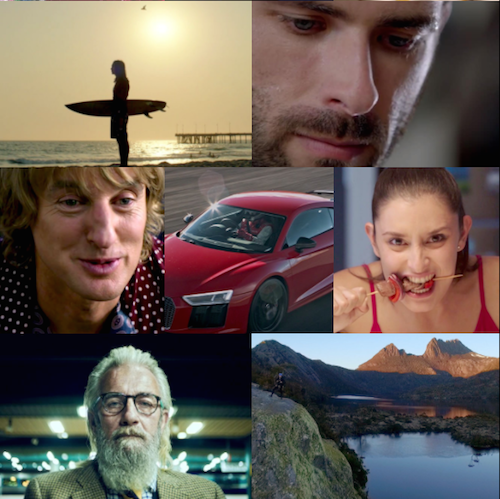
He has also brought his network of labels, publishers and artists to his new job. One of Szumowski’s close relationships is with Gregg Donovan, co-owner and director of Wonderlick Entertainment, an independent Australian music company with management, recording and publishing divisions. As well as a solid stable of Australian artists such as Josh Pyke, Grinspoon, Montaigne and Pete Murray, Wonderlick has a joint venture with Sony ATV publishing and a record label joint venture with Sony Music Australia.
The Stable talked to Szumowski and Donovan about the opportunities presented by a new music landscape and the changing relationships between artists and brands.
The Stable: Let’s get right into it. What’s the opportunity here?
Szumowski: There are very many ways of integrating how music is used by brands. There are missed opportunities when there’s not an alignment with what an artist is doing and what a brand is potentially doing. What I want to do is have conversations that help to integrate what the two parties are looking to achieve. There’s a new appetite and enthusiasm in the music industry to have those conversations.
Donovan: …And kids are getting more and more savvy all the time. They have more access to things. They understand the difference between an authentic voice and an inauthentic voice. And they can smell a new movement from a mile away. There are more and more brands and agencies getting to realise this. And, as Michael said, more and more bands becoming open to marrying their “cool” and their aspirations with brands. You might think there wouldn’t be but that’s a bit of a hang over from old times, particularly the ‘90s when indie bands like Nirvana set the pace and you had to be anti everything – but even then, these bands were all signed to labels with millions of dollars of marketing behind them. It was all a bit of BS.
These days, artists are workers. They need to do multiple things. They’re not making a lot from record royalties although streaming is turning that around. Musicians have adapted to the rigours of the fact that downloading is cool by touring a lot more, getting more savvy about merchandising, and getting more savvy about projects. So now a lot of artists, especially the songwriters within bands or solo writers are always looking for new projects to do.
Grinspoon’s singer, for example, is doing a musical, American Idiot, sharing the lead role with Chris Cheney form the Living End. He’s also written stuff for Seven’s rugby. Cool Triple J indie artist, Josh Pyke, created the original soundtrack for independent film, Black Balloons – won an AFTA for it, and he’s done kid’s music stuff for Playschool as well as an album with the Sydney Symphony Orchestra (we won an ARIA for that this year). Plus, he’s still done five of his own albums, that have all gone gold and have all had top ten chart positions.
Of course, there are mutual benefits when brands and artists work together. When Honda used Empire of the Sun’s 2008 hit song, Walking On A Dream, in its 2016 campaign in the US, it ended up on the Ellen de Generes show. Honda received a whole new kind of (free) press and social media coverage and Empire of the Sun charted in the US for the first time, with a song that had been a hit in Europe and Australia years before.
In Australia, The Monkeys and Flume made people pay attention to what’s inside their computers for Intel in 2013, with this:
And in Sweden, Forsman & Bodenfors expanded Volvo’s appeal to a younger audience by taking (Swedish) Avicci on an adventure for the Made by Sweden campaign, underscored by his own reworking of a 1964 Nina Simone song.
Szumowski: My aim is to make Rumble the conduit between music and brands, using my relationships with managers and right holders. It’s about our being the glue in the middle and saying, “You know what? If you’re thinking about a campaign that integrates what an artist is doing or brings an artist on board as a brand ambassador, there are ways to do it – if you have the conversations early – where each side can look at what the other is doing and come up with something that works together for both. At Alberts, for example, we got a band to tie in the release of its next single with the online bank campaign that was using it, so that both marketing machines were working together. That meant extra for visibility for both the brand and the artist.
Donovan: There’s a shared goal – reach. It’s hard for bands not to say “yes” to these things.
Szumowski: And for brands, it’s a whole new kind of exposure – Air play, what happens on radio & TV, music press and social media. For Rumble, it’s about tapping into those kinds of opportunities and allowing those relationships to occur with creatives and brands in a way that provides a very good outcome for everyone.
You might also like