A new school year. The same menstrual inequity. In many countries menstrual inequity keeps numbers of young girls from attending school regularly. Latin American sustainable intimate care brand, Somos Martina, has integrated sustainable period care into the official school uniform in a campaign by Serviceplan Innovation and supported by supported by Colombia’s vice minister of education.
“It’s a big problem for us that girls stay home because they fear a leak or cannot afford pads. Our responsibility is to ensure no student is left behind. By adding period care to the uniform, we fulfill our promise of an equal education,” stated Jhoana Rincón M., teacher at Institución Educativa Mayor de Mosquera – the first school to officially adopt The Period Uniform, in Bogotá.
School uniforms, which are mandatory in Colombia, have long been used to promote inclusion and equality in public education. The Period Uniform extends this principle to period care. Instead of distributing period products through temporary, local programs that require separate logistics, the Period Uniform model builds on the existing school uniform system to make period care accessible.
The project solves an urgent problem. Across Latin America, 1 in 4 girls regularly misses school during their period because they don’t have access to period products. This is linked to a deep-rooted menstrual stigma. Periods are often not even discussed at home, which makes it difficult for girls to ask for support. Without protection, many of them stay home to avoid leaks and the shame that comes with them. Repeated absence affects education and future opportunities.
The initiative launched at Institución Educativa Mayor de Mosquera in January, and is expanding now to additional schools, supported by Lucy Maritza Molina Acosta, vice minister of education in Colombia. “It is fundamental to talk about menstrual health in education in Colombia. And I believe that menstrual care should be discussed in all schools,” she commented. The principle of the initiative is straightforward, add period underwear to the list of required school items.

The Period Uniform achieves four main goals: Normalise Period Protection by turning period protection from an extra into the standard; Avoids stigma by lifting the burden of initiating the conversation from girls, as schools communicate the requirement to parents; Works at Scale by building with existing school uniform infrastructure and processes which, once established, works for every school, without additional effort; and Reduces Cost, as period underwear is already more affordable than single-use period products over time. As part of the initiative, Somos Martina provides period underwear to participating schools at a price comparable to regular underwear, along with access to information and resources for period care.
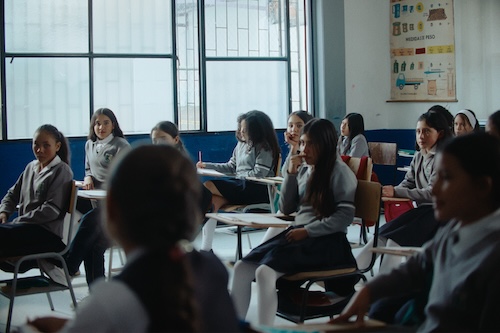
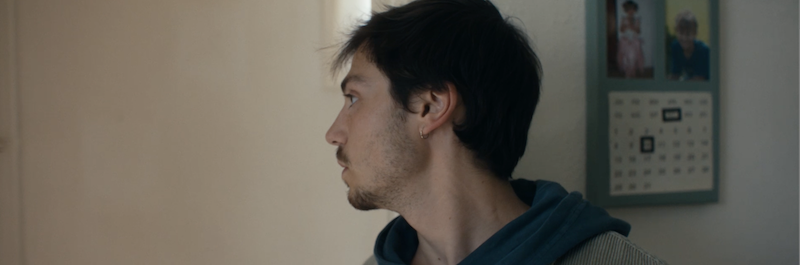
To inspire public discussion and encourage the government to adopt the model and inspire a worldwide conversation, Somos Martina has launched a global awareness campaign – not only in Colombia, but in different countries. It includes a dedicated website with more information accessible in different languages, and an editorial by New York Times contributing journalist, María F. Fitzgerald, as well as a short film by director, Claudia Barral, that illustrates the reality faced by students during their period.
The lack of access to menstrual products and education is a global issue. According to UN Women, 1 in 4 teens in the United States struggle to afford period products, especially teens of colour and lower-income households. In the United Kingdom, the same thing happens for 3 in 10 girls – and more than half of them used toilet paper instead. The World Bank estimates that 500 million girls and women lack access to menstrual products and adequate facilities for menstrual hygiene management (MHM) – around 35% of all people menstruating.