
In a world hell-bent on making multicultural experience and understanding smaller and smaller, Migrante Content agency has a different attitude. It is dismantling cultural borders. And that’s doing a really good job for the agency and its creativity. Sol Ricagni tells that story for The Stable.

Creativity comes in many guises, and its inspiration springs from many different sources. For me, as a 30-year-old Latina woman running a global independent network, it’s multiculturalism that energises us, builds pride in the Migrante family around the world, and fuels the superpower that charges us every day.
In a fragmented, divided world, multicultural creative input harnesses the power of authenticity, cultural relevance and inclusive representation to connect deeply with diverse consumers – and you don’t have to be part of a global holding company with impressive flagship offices around the world to achieve this.
Migrante is growing thanks to clients who believe there’s another way, and who understand that agility, cultural fluency, and creative freedom can defy the traditional, office-bound model. I am building the agency alongside my father, Leonardo, with the ambition to push boundaries through our creative-first approach: my joint roles as managing director and VP of creative allow me to put this into practice by ensuring we hold on to the powerful magic of creative ideas that connect on an emotional level.
We work with people from all over the world in line with our “follow the sun” ethos, which enables us to operate internationally across borders, time zones, languages, and cultures. Our teams span LA, NYC, Montevideo, Buenos Aires, Madrid, Milan and Turin, all of us immersed in our cultures and together sharing global perspectives.
The tools to achieve this are not just the preserve of tech deals made by the big holding companies. It’s now possible for small independent shops to bridge language and distance barriers and have a global impact.
Our European launch campaign for the Alfa Romeo Junior brings together a lot of this creative philosophy. It shows what we are capable of, and it beat some of the industry’s most prominent players to win Ad Age’s Best New Model Launch in the 2025 Global Automotive Marketing Awards, so you understand the tangible results of multicultural innovation.
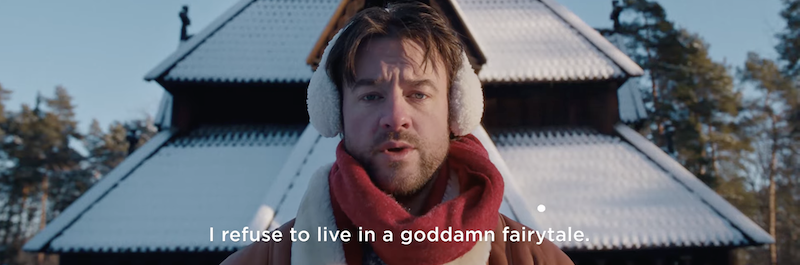
Learn to Love Again is the story of a charismatic salesman who challenges a roomful of people to sell him a car, but only one succeeds – the one who reminds him of what it means to fall in love. It’s a story in which visceral emotion overpowers even the most compelling statistics, and its star, Pedro Alonso, reflects everything we stand for.
Migrante’s multiculturalism isn’t just satisfying our creative drive, siloed off in the industry and in the year of progressive backsliding; it’s also why clients like Stellantis come to us for their global campaigns. For Migrante and our clients, representation isn’t a box-ticking exercise; it’s a way to open creative pathways and a smart business decision. When you show people that you see them, you hear them, and you represent them, you can connect authentically, and when you do that, you create a special kind of loyalty that cuts through in a world where so many brands and products vie for our attention.
Driven by this mission and a passionate pursuit of changing the status quo, I’ve realised, as a leader, the importance of continuously growing a strong network of creative allies, and I plan to work hard to strengthen it at every opportunity. It’s a case of finding other people who share the same values and want to create meaningful change in how the industry is run. It’s not just about the work we produce, but about the way we work and the kind of relationships we build.
I am building a community of outsiders by demonstrating a non-judgmental leadership style, and together we are finding our own way in. I know how special and valuable it can be to offer new perspectives and, more importantly, hear from different multicultural voices, which is what keeps us going despite the challenges of finding a place in the industry — we are seeing that our cultural fluency is our creative superpower, helping us find our own place in the industry.