

At the beginning of May 2016, Deutsche Telekom launched Saatchi & Saatchi’s online game, Sea Quest Hero. The fun mobile game has a serious purpose. It is designed to aid research into dementia, which currently has 47.5 million victims worldwide.
Within 16 days of launch, more than one million people throughout the world had downloaded the mobile game and participation in the game continued to grow as the word about it spread.
The 2016 Sea Hero Quest campaign became the world’s largest dementia study of its kind, collecting the data of nearly 3 million people worldwide and generating the equivalent of over 12,000 years’ worth of research. GThe largest study before Sea Hero Quest involved only 599 volunteers. The campaign has won 61 awards worldwide including 11 Cannes Lion awards and three D&AD pencils. It has also collected more than €30m (AU$45m) of earned media in press coverage and has been shared by over 2,700 media outlets to date.
From the results garnered, scientists were able to establish the first worldwide, cross-cultural global benchmark for human spatial navigation.
Now Saatchi & Saatchi London has released the game in VR. It will now help scientists to advance their understanding of spatial navigation, one of the earliest symptoms of dementia.
In VR and with its 6 challenges, the game will be able to provide data that is 15 times more precise than the smartphone game, and will also likely provide the format of a diagnostic tool yet to be developed. Sea Hero Quest VR will give scientists the opportunity to cross-validate the data collected by Sea Hero Quest mobile and bring them one step closer towards helping doctors detect dementia earlier.
Just 2 minutes spent playing Sea Hero Quest VR collects the equivalent of 5 hours of lab based research.
Tim Parry, Director at Alzheimer’s Research UK stated, “Dementia is already one of the greatest health challenges we face and is predicted to affect over 130 million people worldwide by 2050. Research holds real power for creating more accurate diagnostics and effective treatments that those living with dementia and their families really need. The reaction to Sea Hero Quest illustrates the public appetite to get involved in research and be part of ongoing efforts to tackle the condition. Deutsche Telekom’s Sea Hero Quest project is just the kind of innovative cross sector partnership that we need to accelerate progress in this important area.”
VR based experiments within a lab-based setting are already in existence, however this initiative marks the first time that such a study has been designed for a mass market consumer audience, able to provide much needed scientific data from the comfort of their own home.
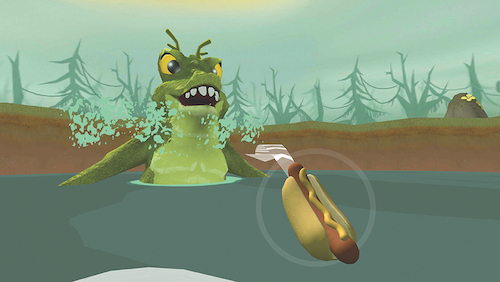
“While Sea Hero Quest mobile gave us an unprecedented data set in terms of its scale, allowing us to gauge spatial navigation abilities at a population level, the VR game allows us to build on this by measuring subtle human behavioural reactions with much greater precision,” explained Dr. Hugo Spiers, of University College London.
“With Sea Hero Quest VR we have also been able to replicate highly credible lab based experiments such as the Morris Water Maze (winner of the 2016 Brain Prize) that would not translate well to video or mobile game format. The intuitive nature of VR means that the study can be opened up to those who might not be able to grasp the function of the mobile game – some people with advanced dementia for example.”
Michael Hornberger, professor of applied dementia research at the University of East Anglia, added, “Sea Hero Quest VR allows us to measure more intuitively when people are not sure of their bearings, for example by stopping and looking around. VR therefore has the potential to capture additional complementary data to Sea Hero Quest mobile.”
Preliminary findings from analysing the mobile Sea Hero Quest’s data were presented at the Neuroscience 2016 conference in San Diego and the game is now being trialled for use in a clinical setting. Initial results are ground-breaking, showing a fundamental difference in the navigational strategies of men and women, that players from Nordic countries have particularly notable spatial navigation abilities and that on the whole, our spatial navigation ability declines after age 19.
As with Sea Hero Quest, other scientists can apply for permission to use the data collected from Sea Hero Quest VR in their own research.
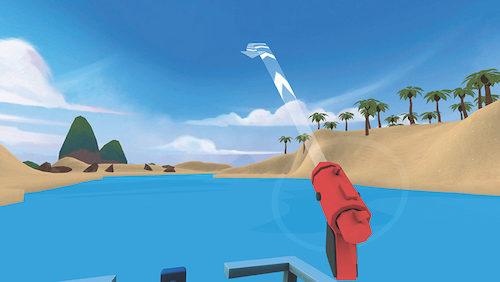
Sea Hero Quest VR has been developed to work with the Samsung Gear VR and up to 10 people can play the game, with individual profiles, on each device. It is available from the Oculus Store.
The VR game will be available globally but the campaign is being targeted in Deutsche Telekom’s key markets. Paid media and shop activation will be focused in Germany, Austria, Netherlands, Hungary, Slovakia, Poland, Montenegro, Macedonia, Slovakia, Croatia, Czech Republic, Albania and Romania. Other campaign elements will include online, digital display ads – targeting to drive downloads, as well as press activities and re-targeting in-app Sea Hero Quest mobile user.
Sea Hero Quest VR was developed in partnership with University College London, the University of East Anglia and Alzheimer’s Research UK. The VR game was developed jointly with independent game designers, Glitchers.
Here are the earlier stories:
More than 1m people help S&S and Deutsche Telekom combat dementia