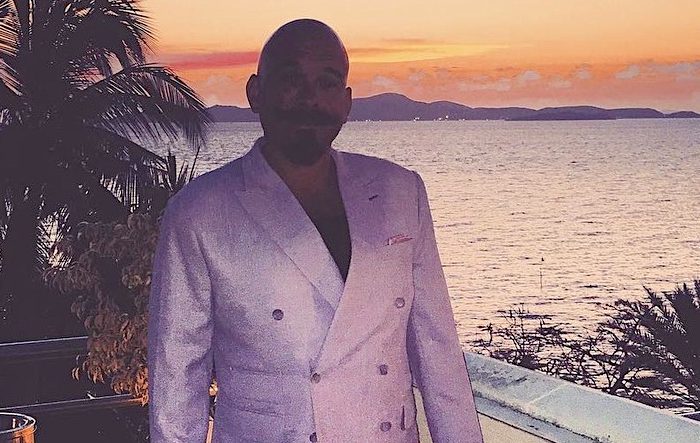

Ted Royer is a comic book nerd. That’s not a random piece of information. Royer used his encyclopaedic knowledge of comic history, creativity and business to illustrate his Adfest talk, The Party You Can’t Go to and the Universe in Your Head.
And yes, he did use the word, psychedelic, more than once. But despite the title and the seeming randomness of the comic book genre, the chief creative officer of Droga5’s talk contained well-grounded, well-argued advice.
Beginning with something you’ve never thought of before (unless you read The Stable’s interview with Royer.) Because Point #1 has already been published, I’ll recap briefly:
Advertising is, for the most part, desperate. It begs for your attention, lures you with wild offers like Free! and Sale! And it tries to bludgeon you with wheedling messages. That’s really annoying. And the ever increasing use of ad blockers should be telling advertising, it doesn’t work so well. Malcolm McLaren said it more bluntly, “Stop begging for attention. It makes you look like a dog.”
There’s an inviolable natural law – we’re all attracted to what we can’t have. Like the party you can’t go to. In the ‘70s, McLaren set out to create the rudest, most unappealing, world’s worst sounding band in the world. The Sex Pistols became one of the most popular bands in the world.
In 2017, Droga5 is making Mailchimp the most popular digital service company in the world (perhaps – the campaign is ongoing), the McLaren way. The agency is creating all sorts of very cool content (9 pieces so far) that people want to know about – a band called VeilHymn, whose first song has gone Gold, the SnailPrimp facial (snails wander all over your face) and three weird films, MailShrimp, KaleLImp & JailBlimp
RiffRaff & Droga5: MailChimp takes a walk on the very, very wild side
When you Google search to find out more, Google answers, “Did you mean MailChimp?” Mission accomplished for the brand awareness campaign and the brand whose brief was, “We want to be cool.”
Point #2 is about being true to the brand’s truth. Brands say a lot of crap about themselves. People want the truth to be true. Droga5 found out that the secret truth about its client, Johnsonville (a smallgoods brand) was that it’s so much a family the employees are called members. So Droga get the members to write its ads. Truly. All the agency did was direct the scripts and edit them. These are two of the results:
Point #3 says that the details matter. It’s easy to lose little things in your idea during the process to a finished ad. If you feel it’s important, fight for it.
Here are two examples:
The client wanted to lose the little ball leaving the eye.

Maybe it doesn’t mean anything definite, Royer argued, but it’s evocative. It gives you something to wonder about.
The same thing happened with Droga5’s most applauded commercial of 2016.
The client thought that the disused pool didn’t fit. But it might mean Phelps’ becoming aware of ageing, of his mortality. It might be him asking, “Am I that?” Or it might be something else to a viewer. It matters, Royer stated. It stayed.

Point #4 is where comics come in. And this part of Royer’s talk wasn’t an argument supported by successful Droga5 work. It was the story of a comic book illustrator, Jack Kirby.
When comic books began, they were meant to be disposable. They were printed on the crappiest paper and weren’t supposed to hang around like books.
A bit like advertising.
As art, they were given zero respect.
Again, a bit like advertising.
And they were always chasing cool and copying pop culture.
Sorry, but…
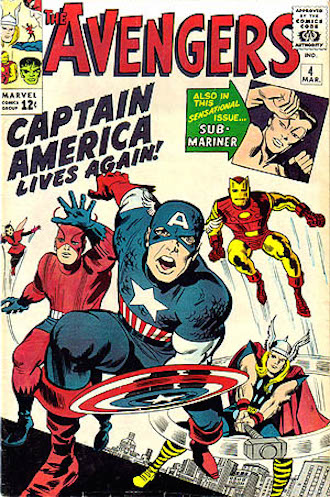
A Marvel comic illustrator called Jack Kirby used his creativity to revolutionise comic books. When he was told to create a superhero team, he created the Fantastic Four. They didn’t wear muscle hugging costumes, they fought among themselves and most importantly, Kirby gave them energy, action and vividly detailed super-imaginative worlds to play – [read:fight] – in.
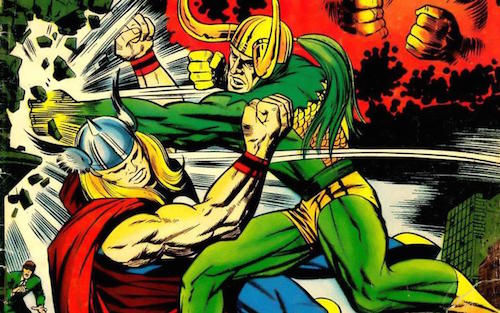
He invented The Hulk, Iron Man, The Avengers, The X-Men and Ant Man, but his company undervalued him nonetheless, and he spent the latter part of his career pinging from Marvel to competitor, DC comics, but never got the applause, or even the respect, he deserved. He worked in a shitty little office at home the whole of his life and was always underpaid. Yet he never let this dampen his creativity. His characters became epic. They’ve spawned some of the world’s highest grossing films in this decade.
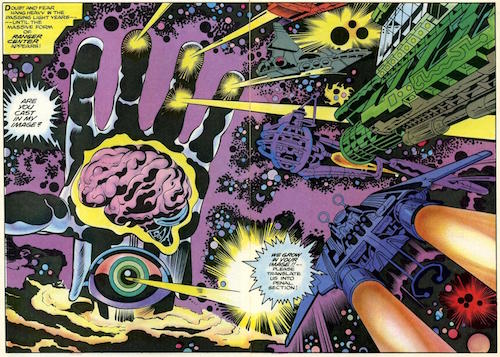
And Royer’s message? Don’t let cynicism and despair get in your way. Sure times are tough, the industry is shrinking, clients can be impassable road blocks, some agencies only pay lip service to creativity and you don’t always get the best briefs. But be loyal to your creativity. It’s needed in this world.
You might also like