By Emir Shafri, Malaysian executive creative director and eCommerce Lotus & Media Lotus Jury Member, AdFest.
What is it that holds us back from creating great work? Is it risk-averse clients? Management that’s more interested in counting beans than doing great work? “Fax machine” account management? At every festival, AdFest included, we hear industry professionals bemoan all these things that are holding us back. But what we need to really start talking about is: Is our creative ego ultimately to blame for getting in the way of great work?
I’d be lying if I say I do not have a creative ego. It’s what helps us excel. It helped us develop our creative voice, our personal signature. And gives us the confidence to stand up for our work in a room full of skeptics. But I’d also be lying if I say that it has never ever got in the way of work, in heavier doses.
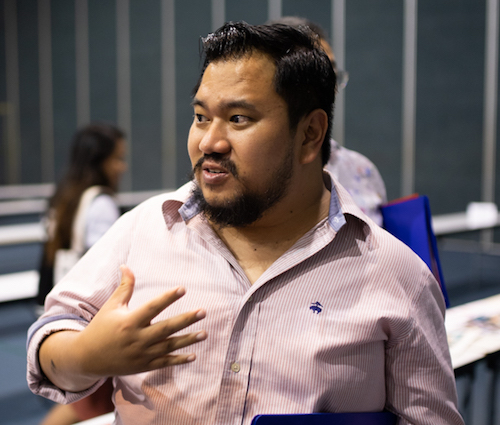
Emir Shafri
One common theme across the top winning work we saw at AdFest is how well it connected with people. Strategists call it deeply insightful. Designers call it human-centred. Design thinkers call it empathetic. “I call these works egoless creativity. It’s when we toss out every assumption about the user, and humbly learn everything we can about them even if it goes against our beliefs. It’s when we make a genuine effort to learn the problem people need solving,” explained Sherri Maxwell, executive creative director of McCann Worldgroup Bangkok and eCommerce Lotus & Media Lotus Jury Member.

Compare it with that crime we’re all guilty of – putting the horse before the cart. You know what I’m talking about. When we stumble on a cool gimmick and we’re utterly convinced the audience will love it (sample size: one), and then force the strategists to back-rationalise the strategy into the creative.

More often than not, because of the breakneck speed our industry is evolving, we feel this need to prove our relevance by showing we know our fair share of cool tech. We get seduced by the novelty of tech and our desire to show we know our sh*t, and before you know it, we’re sprinkling buzzwords like “AI”, “VR”, “machine learning” and “big data” every chance we get. But the biggest danger is that when we focus on novelty in our work, we’re not focusing on the thing that truly matters – not focusing on genuine human need.
Maxwell added, “Sometimes, I feel like it has become a d*ck measuring contest with us creatives. We’re all out to prove that we’re the champions of all things cool and exciting. Without truly asking ourselves if we’re making a genuine impact on our client’s business and on humanity.”
“It was obvious with some of the work I saw in the Interactive & Mobile categories that the creatives went, ‘Hey, here’s a cool piece of tech I can use.’ You end up creating work that may be cool to you as a creative, but work that ultimately people do not care about and do not feel impacted by,” observed Sanyen Liew, executive creative director of Isobar Kuala Lumpur and Interactive Lotus & Mobile Lotus Jury Member.
It’s probably why user experience designers obsess so much over understanding user personas, use cases and user journeys, before a single pixel is even designed. Even then, they’d still spend just as much time rigorously testing the usability of the experiences. It is after all, “user” experience, not “creative director” experience that matters.
In large doses, the creative ego that helped us excel as creatives could also be the thing that holds us back from being good creative directors. We often forget that as creative leaders, we’re not supposed to be the star player on the pitch, but rather the coach of star players. We often forget that the greatest legacy we can leave behind isn’t the shelf of trophies that’ll be forgotten after a year or two, but the people we help shape.

Too much of a creative ego also hurts the diversity of thinking in the team. Hurts a very important asset, considering the cultural diversity of consumers and the technical diversity in our industry’s platforms. We end up hiring people who are just mini-me’s – weaker versions of ourselves, due to our fear of being upstaged and outshone by our subordinates.
In my observation, the best creative leaders often make a conscious effort to reflect on what skills and cultures are lacking in themselves and their team. They then hire people who represent these underrepresented skills or cultures and have the humility to learn from these juniors and let them thrive. It’s these creative and cultural collisions that help us grow and produce richer work, after all.
But perhaps the most dangerous crime our creative egos can commit, is doing work that makes us look good, at the expense of society. This is another topic Maxwell is extremely passionate about. “We need to have more conversations on ethics in creativity and technology. Especially in an age where technology is abused for profit at the expense of the privacy, safety and wellbeing of society, especially our children. Creativity and tech can be such a powerful force for change. We owe it to use it as a positive, rather than a destructive force.”
And just like with creativity and technology, our egos can be a positive or a destructive force. I’ve seen it harnessed to build meaningful work, brands, teams and careers. But I’ve also seen it destroy many an illustrious career. As for me, I’m going to go with what MJ said, “I’m starting with the man in the mirror.”
You might also like