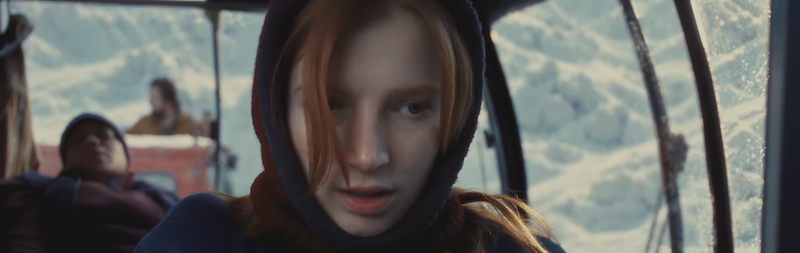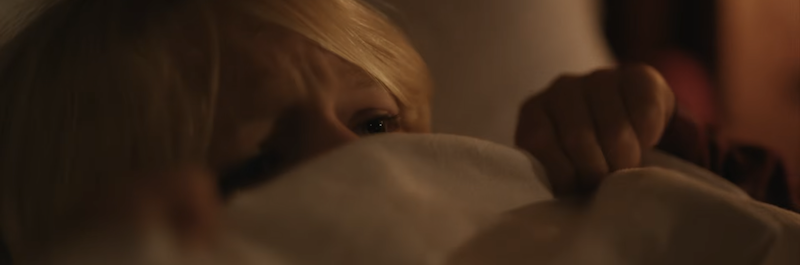
In June, The Monkeys launched a campaign for UN Women, with a piercingly sharp message for all women – and indeed all men. It noted that robo-farms, humans walking on Mars, and a Moon colony are all predicted to happen before we reach global gender equality. That space isn’t our final frontier. Gender equality is. The campaign was a time-line of expected breakthroughs – a simple, effective execution with a brilliant premise led by The Monkeys chief creative officer, Tara Ford.
Ford is a champion of gender equality. Not just with words. A woman at the top of her game and a mother of four, she has paved the way for others as an activist and by example. The campaign she led has been picked up globally by UN Women. Here is why and how that happened:

The Stable: Equality: Our Final Frontier is a very creative solution to a very pragmatic problem. The campaign has a striking premise – Where did the idea come from?
Tara Ford: We’ve talked about the timeline to reach equality before, and Australia’s complacency towards issues that matter being a barrier to making change.
This time we took a macro view and looked at all the things that would be a reality before gender equality given current projections of science and technology. When we talked about how people would be living on Mars before we would have gender equality, we were all chilled at the thought. It gave us such a visceral feeling that we knew we were onto something. The thought is simply shocking.
Putting such innovations on a timeline, along with the projection for gender equality, told the story of the absurdity of the situation. And importantly, showed where our focus should be.
TS: What was the thinking behind the creative execution?
TF: We are dealing with the future, so it’s a balance of imagination and reality. Animation is a great way to bring to life a world that doesn’t exist yet in an interesting way. But at the same time, we didn’t want it to feel so unreal that people wouldn’t think it would be plausible in the future. So, it was important the style wasn’t too abstract or fantastical. Johnny Kofoed from Assembly helped us create this world in his unique style, blending cues from a known present and imagined, but projected future. AI was used to apply the painted look of the designed world onto shot green screen footage of our talent so the two were merged seamlessly.

TS: What does closing the gender gap mean to you personally?
TF: I am passionate about this. I’ve spent much of my career fighting for equality and trying to support the many great women around me. It’s disheartening to see that things still haven’t progressed. The fact that we are still grappling with this problem in a first world country is particularly depressing.
The problem for women wanting to have families only compounds the disparity, both in the short term when it comes to returning to work and flexible work options, and long term – when it comes to accumulated superannuation. I have taken years out from my career to have and raise a family, so I know these difficulties all too well. I have four sons, no daughters, but closing the gender gap will absolutely mean a better world for them too. Equality benefits everyone so it’s important for entire generations to come.

TS: What does it mean to you to have the campaign picked up by UN Women internationally? Where and how will it be used?
TF: It’s brilliant to have a piece of work ‘go global’ for such an important cause. UN Women New York saw the work and contacted the Australian office requesting use across multiple markets. Given the global issue it made perfect sense. The rollout is in progress, aligning with the recent World Economic Forums Global Gender Gap report findings revealing that we are now 132 years away from achieving global gender equality. We won’t see gender equality until 2143. Which is completely staggering.
TS: You are one of about five women among many dozens of men above CD level in Australian agencies. What do you believe are the obstacles? Do you have ideas about how to solve the problem?
TF: Diversity AND inclusion are important. I think the industry, and especially creative departments have not always been the easiest (or most welcoming) places for women to thrive. The creative job itself requires a great deal of tenacity and resilience so adding to this difficulty makes it incredibly tough. The environment needs to be inclusive, people need to see that it’s possible for them to succeed and progress.
Diversity and creating an environment where everyone can flourish doesn’t just magically happen. It takes great care, focus and understanding and being openminded. More women in leadership positions will help. And then not necessarily emulating what has gone before but doing it their own way. Creating pathways for women to leadership early on is important so they’re not looking to the top and feeling that they don’t belong there. That’s what I’ve strived to do across my career and will continue to do in my current role.
It changes a dynamic of an organisation dramatically and makes the work better. And, as I said before, everyone benefits.


TS: What are The Monkeys and Accenture Song doing within each of the companies to create equality?
TF: At The Monkeys we are proud of the work we have achieved alongside UN Women. Having led this work, we prioritise gender equality and inclusive recruitment within our agency and are empowered to do so with Accenture’s initiatives that accelerate gender equality.
There are many policies and programs in place but here’s a taste:
- We offer a gender-inclusive policy of 18 weeks of paid parental leave at full pay, including super. There is no minimum tenure required to access it and parents have 24 months to use the leave.
- In March, we added two new leave policies to reflect the balances of life. Our people now have access of up to 5 days (or 10 half days) of carer’s support leave, which is not just for parents and means that they can keep their annual leave for the moments that matter. We also appreciate that the path to having a family isn’t always straightforward and introduced up to 5 days (or 10 half days) of assisted reproductive treatment.
- There are flexible work arrangements, including job-shares and part-time work schedules. Our senior leadership team includes part-time employees of all genders, including a part-time CCO. We are constantly measuring gender parity in pay and assign an equality champion to reinforce collective accountability.
- Today, more than 300,000 women work at Accenture – 50% of the board of directors and 27% of our global management committee are women. The Monkeys is 55% percent female, 50% in leadership and 59% in creative. Accenture have set goals to accelerate gender equality – to achieve a gender-balanced workforce by 2025.