The advertising industry has a lot of adages about making great work. “Ideas can come from anywhere” is one. “Collaboration is everything” is another. But how do you make “greatness” work in practice? You find out what teams want from each other. The Stable asked a group of top agency creatives, “How can production get the best from agencies,” and asked production people, “How can agencies get the best from production companies.” These are agency creatives’ views. (Production’s views are in the story that is linked below.)
Joe Hill, executive creative director, whiteGREY Melbourne
How can production get the best from agencies?
Stepping on-set of your first ad-thing to escape the wall/notepad/Word doc into the actual world is a joyful, foundational moment for agency creatives. The thrill of seeing talented people at work and the gratitude that kicks in, spiked with a temporary buzz of self-importance. These feelings remain constants. The extra one that creeps in is an anxious wondering (or catalogue of anxious wonderings) about what you can do, as one part of the negotiated thing that is the making of anything, to help it go well.
Anxious wondering #1
How precious/single minded should we be about THE IDEA? Very is the answer every wise voice from Award School onwards gives agency creatives. But then you meet a director who sees THE IDEA differently. I really feel for directors (and other production side creatives—forgive my shorthand) who hit a wall at this point, and for agency creatives terrified their PURE GENIUS is under threat. Clarity and courage (as a listener and a speaker) count hugely. I love it when everyone speaks and acts according to their convictions.
Anxious wondering #2
Are we being weirdly obsessive about small details and driving the production company crazy? Yes, possibly, but that’s ok. Sometimes production is a harrowing journey, other times it’s a gradient of increasing excitement as everything clarifies and becomes real. Either way, sweating the details (assuming they have an actual impact on the outcome) is a healthy form of neurosis. I love it so much when the neurosis is shared.
Anxious wondering #3
How should we be on the shoot day? Shoot day presents the nerve-wracking, exhilarating challenge of being our best selves, as intermediaries between client, idea and production. The warmth production companies bring to the day is a powerful thing. Combine that with structure and transparency and great lines of communication and we quickly forget we chose the wrong sneakers and said a weird thing and instead worry if its OK to hug literally everyone afterwards.
Anxious wondering #4
Am I helping by saying this? is the right thing for an agency person to ask themselves when they’re standing where their own discipline ends, and someone else’s begins. I’m so grateful for all the moments production side talent help us find shared language. DPs and photographers who smile at a question about lensing and answer it with an affirmation of the role of the shot. Directors who bring you back to the language of film and the way a regular, non-agency human puts a story together in their head.
And there are so many more. I love production and probably should have begged for a job as a runner straight after my first shoot.
Jon Austin, executive creative director, Host/Havas

Whether you’re on the production side or the agency side, I think the impediments that get in the way of great work all boil down to the same issue – for an industry built on communication, we can be really shit at it.
As agencies, we spend round after round carefully crafting the work to reflect, navigate, and sidestep issues within our clients’ business. Issues that we only know about because they’ve been explained to us in great detail. So every beat of every script has been pored over to accommodate stakeholder feedback, brand guidelines, and client idiosyncrasies.
And then we give the finished product to a production partner who knows none of that, and expect them, by magic, to understand all of it.
Similarly, production partners can be guilty of the same – showing us their finished result which leaves out key elements discussed throughout the process, based on aesthetic or story beats rather than commercial imperatives, assuming we understand their decisions and leaving us scrabbling towards that first offline presentation, or worse, leaving the client scratching their head wondering where the script they signed off on went.
I was reading an interesting article recently which talked about the curse of knowledge.
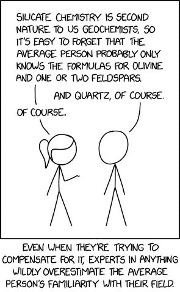
It’s so valid in this conversation. We assume our production partners will get those hidden parts of the idea – the unspoken priorities and pitfalls – simply because, after several rounds and iterations, we do. Production companies assume we’ll get the directorial decisions they make, which can take an idea far from what was intended with little time to re-align.
To get the best out of each other, we need to acknowledge the curse of knowledge and bring each other along on each other’s journeys more effectively and efficiently.
More in-depth and collaborative sessions. Earlier check ins. Fewer theatrical reveals.
By over-sharing, we’ll get more time, resource and energy to make the work better.
Tom Hoskins, creative director, BMF

Most agency creatives would agree that the moment you engage a production company with your script is one of most exciting moments of any project. Some might even suggest that the excitement is so high, you may need an oxygen canister just to attend the kick off meeting.
You’ve written and presented countless scripts. Had the scrutiny of numerous eyes and minds. And finally, the winning words have risen to the top of the pile. Without trying to sound overly pretentious about it, taking that piece of paper to the next stage of reality is nothing short of exhilarating.
I believe the best agencies get the most out of a production by not just approaching a director as a creative equal, but a true creative force. I also suspect that the best directors know this.
Here is why.
Usually, a director has been chosen because of their style, substance and flair. There’s already a sense of the potential in the air. But the true starting point for any directorial vision is the agency briefing, where so much is going on – in attendance is the script itself, the producer with one eye on the budget, and, of course the creatives with their stratospheric oxygen tanks. Somewhere in among all this a great director spots the opportunities to explore, corner, and ultimately sprinkle with magic dust.
To me, this makes the director’s treatment arguably the most important document in the process of making a film. They take time, skill, and vision to bring to life. Great creatives know that a great treatment is the start of a journey that sees a talented director add an immeasurable amount to their dream.
So, how can production get the best out of agencies?
I suggest director’s not only approach the briefing like a high-altitude hawk, but play out the treatment to their strengths, bring the script to life how your gut suggests. Yes, the precious script has made it through countless rounds of amends, but most creatives are dying to see what you can do with it.
Sharon Condy & Josh Murrell, group creative directors, Ogilvy Melbourne

Agencies and production companies. A match made in the South of France.
Or maybe over lunch at a local these days. When the relationship works, the possibilities for creativity are endless.
Being agency side, we’re extremely lucky here in Australia to have access to some of the best production companies and talent to collaborate with. Whether it’s film, animation, illustration, photography, audio, or technology. We’re spoilt for choice.
Just like our production partners, creative agencies always strive to make great work. Every now and then, expectations and budgets don’t quite align. And that’s where the magical unicorns we call agency producers come in. They keep us creatives in check, whilst making wishes come true. They somehow balance budget, timings, the creative vision, personalities, and egos, always striving for the best result. The relationship with the agency producer is key to getting the best from the agency.
It’s also worth keeping in the mind the journey the agency has already been on. At times we enter the production stage looking like Frodo and Sam after a quest through middle earth to protect the ‘precious’ idea from strategy rebriefs, debriefs or God forbid, research orcs. We’ll arrive at the production company’s doorstep excited, but exhausted. We have a clear vision of what the idea is, but not yet what it could become.
Together we can build, nurture and craft it to make something special. Who knows, we might even end up celebrating in the South of France together. Or at least the local pub.
Mandie van de Merwe, chief creative officer, Dentsu Creative

Making work is what gets me out of bed. Thankfully, we are blessed with phenomenal production companies in Australia. To get the best out of agencies from a production point of view I’d suggest the following:
Get the “emotional brief” not just the written brief we’ve supplied you. Asking about our journey to get to this point, will give you a deeper understanding of our aspirations.
Be realistic about the budget. We’re really not lying about the money. Yes, there is a little flex. But showing us a treatment that’s amazing but way over, is a buzzkill.
Lend us your rock star. Send the director or photographer into the presentation to sell the treatment with us. They are rock stars. They create hype and excitement around what we’re making and leave clients feeling giddy.
Tell us how you like to work early. All creative people have their specific ways and we will work around you and manage our clients to get the best out of the relationship.
Remember it’s our product too. Don’t exclude us from parts of the process. We have our personal reputations and client relationships on the line too.
Don’t tap out of the process. The reason we wanted to work with you is because of you. The best work is made when everyone stays invested throughout.
Don’t make us feel like you’re doing us a favour. Some of the best work I‘ve made, with the best creative process I’ve experienced, has been with Hollywood film directors who were as deeply invested in doing the commercial work as I was. Unfortunately, I’ve also had directors who made me feel like they were doing everyone a favour. That’s just adding hard on top of hard. If you don’t think you’re getting enough from the job, just say no beforehand.
And lastly, but most importantly, the way you get the best out of an agency as a production company is to build real relationships with us. Relationships that go beyond just the job. What we do together is weird and hard and fun and if, at the end, we don’t emerge as mates … was it actually worth it?
Pete Buckley, executive creative director, Enigma

“How can production get the best from agencies?” I say it comes down to things like trust, respect and collaboration.
From experience, I know the best directors and production companies ensure they get a thorough understanding from the agency of the strategic goals of the project and how it fits in to a larger strategy for the brand, before the project begins.
Years ago, we shot with Garth Davis on a big job for an alcohol brand. His treatment was inspiring and super detailed. What I do remember was he mapped the story arc with a timeline that showed the brand involvement in the narrative. Made my job easy and it was above and beyond anything I’d seen before.
To the production agency I say trust that the agency is doing everything they can to make the work great. Listen to the creative’s ideas and suggestions on the project. They might seem naive but you never know they might just be awesome.
Be clear about what we are trying to achieve together. What does success look like for the client? What’s the long-term strategy for the brand? What can we do as a production house that makes the process smoother and more enjoyable for the entire team?
Be transparent on budgets and what’s going to get on screen. Managing expectations is critical. If we’re working together, we might find a cheaper, better way to get something done. If we’re not, it’ll be the last time we ever work together. Or maybe a little awkward when we do.
And finally, take an interest in what we’re trying to achieve together. Like the great Paul Arden once said, “Once you touch a job you are responsible for how it turns out.” So can I be so bold as to suggest, at least pretend our job is the most important job you’re working on.