The Stable’s series to counter stereotypes with reality continues. Continues to defy disdain for age. Continues to show that experience is not a hindrance.
Commercial photography has changed dramatically during Simon Harsent’s career. Harsent has conquered the challenges and enjoyed the opportunities to “make the impossible possible”. Simon Langley, national chief creative officer & partner at Bastion, describes what makes Harsent great, “I knew of Simon Harsent well before I ever got to meet him. He was one of the photographers you dreamed of working with, having brought to life so many of the award-winning ideas I studied as a young creative. Simon has an infectious enthusiasm and passion that drives him to create images that are impossible to ignore, whether through his commercial work or his many stunning exhibitions and personal projects. And despite this success, he’s one of the most generous, caring, and humble people you’ll meet. We’ve been friends for a long time, but I’m still in awe of the stories he tells through his craft.”
What drew you to photography and what training did you go through to become a professional photographer?
Simon Harsent: I’ve never known anything besides photography. I started taking pictures at 13. It was offered as a selective subject at the school I went to. I wasn’t very good at the more traditional subjects at school, such as history, maths, English, etc. I had a deficient attention span for specific subjects. Learning later that I’m dyslexic probably had something to do with that, but in the art-based subjects, I excelled.
I discovered painting first, but once I started taking pictures, there was nothing else I’d ever wanted to do. I still remember the first photograph I printed. I took a picture of a rose in our back garden. Watching the image appear on the sheet of paper in the darkroom was like magic. I was hooked straight away.
After school, I studied photography at Watford College, but it was a very technical course, and I needed more patience. I was lucky that during my second year, I met a couple of photographers in London who I started to assist on a freelance basis, so I left college before my final exams and moved to London to find full-time work. Assisting was very different from what it is now. It involved long hours and very little pay, barely enough to pay for my rent and tube fare. If I went into it in detail, it would sound like a Monty Python sketch.
At the same time, I learned a lot. I had free use of the studio on weekends, where I could shoot for myself and build my portfolio. The photographer I worked for allowed me to use out-of-date film left over in the studio, and the Lab he used would process assistants’ work for free.
What do you think a young photographer needs to success today?
Simon Harsent: It’s difficult to say, there is no set path these days. It depends on how you define success. I don’t think success and making lots of money always go hand in hand. Obviously, that’s the ideal, but success can also mean doing what you love, doing great work, and being happy.
Many people cross over between photography and film, so the learning curve is very different, as is the path to success. One thing I do say to young photographers/filmmakers is that you need to be in love with photography and film, not in love with the idea of being a photographer or filmmaker. It might sound straightforward, but being a photographer isn’t simple, nor is working for yourself. It’s a career of feast or famine if you’re lucky. You must love it so much that you couldn’t think of doing anything else. Something that not only gets you out of bed in the morning but something that you are so passionate about it drives you to get better and better at it, even when the going gets tough. You can never stop pushing yourself, stop trying, and never rest, so you need an unwavering commitment. You need to be obsessed with it.
What keeps you going?
Simon Harsent: I just love it. I love making images, whether I’m shooting stills or directing, doing personal work, or doing commissioned work. I love everything about the image-making process.
And the older I get, the more I appreciate what I’ve learned, my career, and what possibilities the future will bring. Richard Avedon didn’t start shooting The American West project until he was 55. He was already at the top of his game, and then he did his career-defining work. The thought that my best work could be just around the corner is enough to keep driving me. Photography is just one of those things, I guess, like painting. So many artists do their best work way after their 50s. I love how new technology brings a different way of thinking to what I already know. Photography and filmmaking are constant explorations, so I feel the best is yet to come, and if you feel like your best work is just around the corner, why would you stop?
When I’m working on my projects, I love the freedom, although when working on personal projects, sometimes too much freedom can be daunting; sometimes, you need to restrain yourself.
This is why I love working commercially; you’re working as part of a team, and certain things need to be considered regarding how best to execute the idea. I really like the collaborative process that goes with it. Crafting and bringing someone else’s idea to life. After all these years, I still get a buzz out of working commercially. You get to work with some incredible people, creative people whose energy and ideas bring you new ways of seeing. What you learn in commercial work you take into your personal work and visa versa. They really do feed each other. I couldn’t imagine my life without those kinds of interactions.
I’m lucky to have worked with some of the most creative people I’ve ever met through advertising. I enjoy the challenge of taking someone’s idea and adding to it to create something we are all proud of. If I were always working on my stuff, I think it would change my approach. Also, photography can be a very lonely pursuit. The vitality and different ways of seeing you while working with other people are so refreshing, so to have those interactions is wonderful.
Commercial photography and photography itself have changed during your career. What advantages have come with that? What are the downsides? What has stayed the same?
Simon Harsent: Photography has changed radically since I started. For example, we no longer have our assistants ride dinosaurs to the lab to get film processed.
Every advantage has a downside. For example, digital has meant things have sped up, but that has meant you don’t have as much time to craft work. Digital technology has made it easier and quicker to produce work, but it is not necessarily cheaper. The main change everyone is trying to navigate is a lack of time and budget.
Print used to be either a billboard, a single-page ad, or a double-page ad. Film was a TV ad or a cinema commercial. How you approach the idea would mean you would shoot specifically for the media. Now, the image or film you make must work over about a million different layouts and formats for the film. This determines your approach to a job, lens choices, construction, and composition of the image, and inevitably, a lot of post-work, which is just standard on any job today. There are far more technical decisions to be made, and if you’re not careful, the work can look contrived.
Digital capture and retouching have made it easier, but again, they have taken the spontaneity out of it. People can push pixels around all day, not always because they need to, but just because they can. I think it’s very hard sometimes to just accept a great shot, no matter how good it is. It’s tough to leave something alone, knowing you can change it. And sometimes, the imperfections are what make an image perfect.
Because of technology, I think it’s made clients become much more literal about the final work, which is sad because they rarely get a chance to see something unexpected. These days, everything is mocked up, and layouts and film briefs look close to the final thing, which brings with it an expectation. I used to get a sketch on the back of a napkin as a layout, and I’d chat with the art director about how we would do it, then go off and shoot. Clients had to take a massive leap of faith; there was a lot of trust, and there had to be. It allowed for creative freedom on the shoot and led to a lot of exciting work.
These days, you do a treatment for every job and explain in detail how it will look, which means a lot of those unexpected magic moments are lost. Clients get what has been precisely explained to them in the myriad of PPM meetings we have. It’s great for the client because there are no surprises, but unfortunately, unexpected moments or happy accidents become few and far between. Having said that, doing a treatment for a job gives you and the team you are pitching complete clarity on how to achieve it, which is a good thing, and if you go out on a limb with a treatment and suggest something a bit left field, if the client buys into it you have their trust, and that trust makes for a much smoother process.
I think, for the most part, we are living in exciting times. Some of those changes have made the impossible possible, and they’ve given everyone a new way of working, creating, and developing ideas. I currently produce an online magazine called BLAST which is free for people to download on my website. It’s a great opportunity to share different bodies of work without the massive expense of printing a physical object. I’d hate to be where we were when I started out; I think I would be quite bored of working the same way.
The one thing that has stayed the same in the industry is a desire to find creative solutions and do great work.
Freelance anything is tough? What skills or attributes have you used to conquer it?
Simon Harsent: Tenacity is probably the main thing I’ve used to get me through the tough times. As many people will tell you, being freelance is about balancing the feast and famine times, which there are many. You can be the flavour of the month for a while, and then, nothing, the phone stops, for no reason. I look at those times as welcome opportunities to either work on personal work or just take a breather. It’s about not letting your mind play tricks on you, stressing that work is slow, and just accepting that’s how it is for you and most people, and everything will work out fine.
But you can never rest on your laurels. There is no time to sit around and be self-congratulatory if things are going well; you just must keep moving forward, and the same goes for if things aren’t going well.
One of the main driving points for me has been wanting to constantly better myself, not just in photography but in all aspects of life. I’m quite competitive and very inquisitive. Like most photographers, my curious nature has had me embrace changes in not only technology but also trends. It’s helped me move with the times. In the last few years, I’ve moved into directing, and it has been an incredible experience. I love the challenge. Again, like working commercially, filmmaking feeds into my photography, and photography feeds into my film work.
What are you most proud of?
That’s a tricky question because I’m often just moving on to the next project, and I feel that my next work will be the work I’m most proud of.
But with my nostalgic head-on, commercially, the Kadu Shark ad I did in the mid-90s with Paul Bennell and Ben Knot would have to rate up there. At the time, I was very much a studio photographer working almost exclusively in black and white.
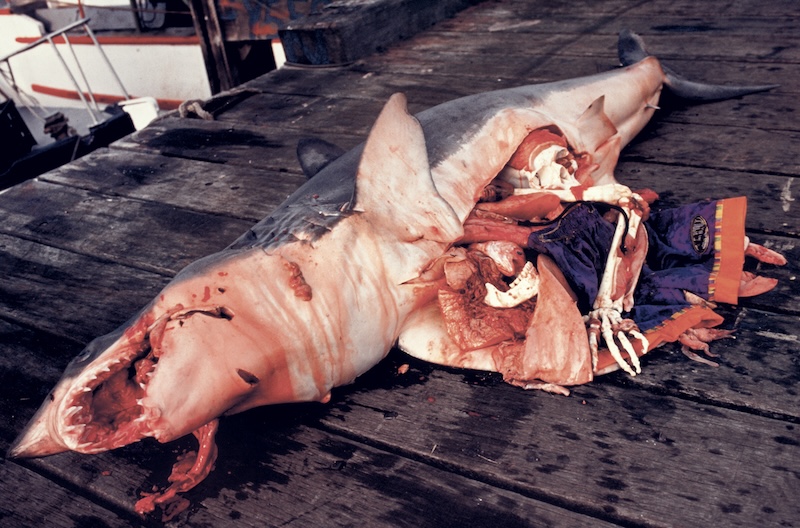
I got a call from Paul, and we discussed the idea. I suggested he look at a book I had called Pictures on a Page. The images in the book were all newspaper images, very raw, with a very simple triangular arrow pointing to the image, followed by a description. To my mind, the image needed to look natural, gritty, and very different from typical advertising stuff of the time. We shot it at the fish markets on a jetty, natural light, and 35mm film, and the resulting ad picked up Australia’s first Print Grand Prix at Cannes. It was a career-defining moment for me.
Working with Warren Brown on the AMLC campaign was incredible. It was his first job back in Australia, and he came with a daunting reputation. I’d heard a rumour he’d made Eliot Erwit re-shoot a job once. Out of that, we developed a great friendship, and the work was included in the D&AD Art Direction and Copywriting books, but Warren was responsible for another career-defining moment when he rang me one day and said, “You don’t shoot much colour work, do you? And you don’t do many landscapes, do you? … good…. I want you to go and shoot me some colour landscapes.”
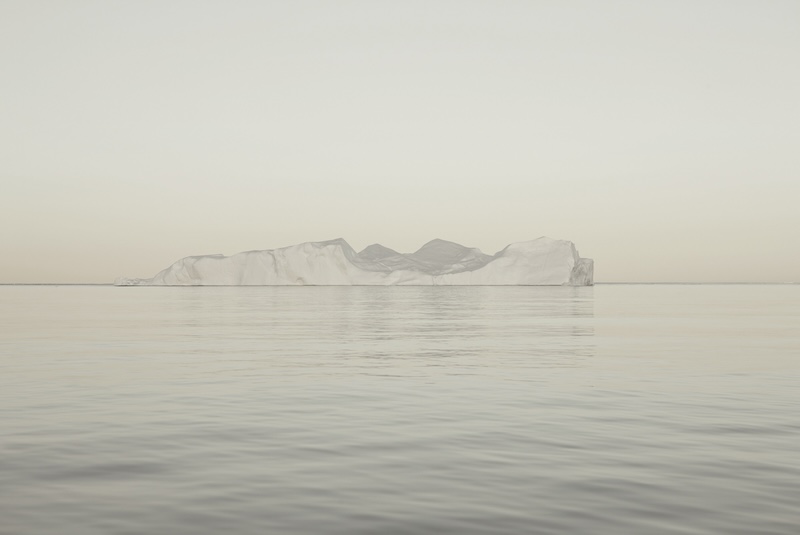
It was a job for Oroton. BMF had only just opened, so I felt a lot of responsibility, but the shots were fantastic, and I developed a love for landscape photography. This brings me to Melt, a project I’m best known for. I do wonder sometimes if I hadn’t had that call from Warren if Melt would ever have come to be.
Film-wise, a few years ago, David Nobay asked me to work on a project for OPSM. I had only shot about two commercials until that point; again, the trust he and the whole team at the Agency showed me was incredible. I learned so much from that project, and it excited me about pushing myself into directing. Challenges like that are the ones I love, where something is on the line, and you have to step up. The spot looked great still one I’m very proud of. After that, agencies started seeing my potential as a director rather than a photographer with a camera that captures motion.
More recently there is the NRMA work I did for Bear Meets Eagle on Fire and Farewell Selfie that I shot for Samsung with CHEP. And I’d have to mention the work I did for Garvan Institute with BWM, just an incredible project and experience.
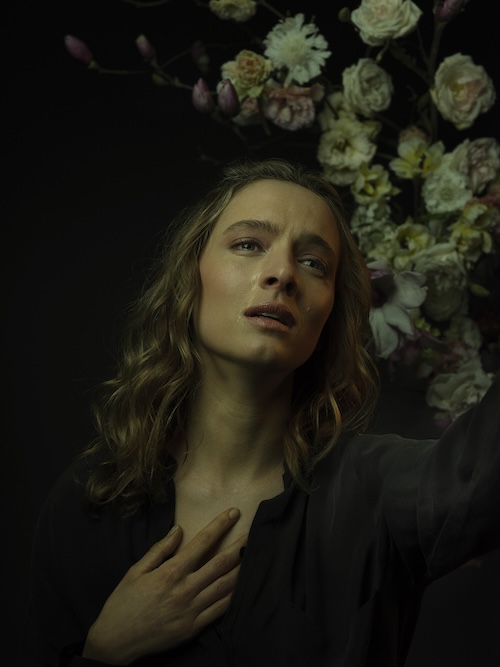
Personal work, I have so much to look back on and be proud of. Melt would be the most obvious one, but it’s the new work that excites me the most.
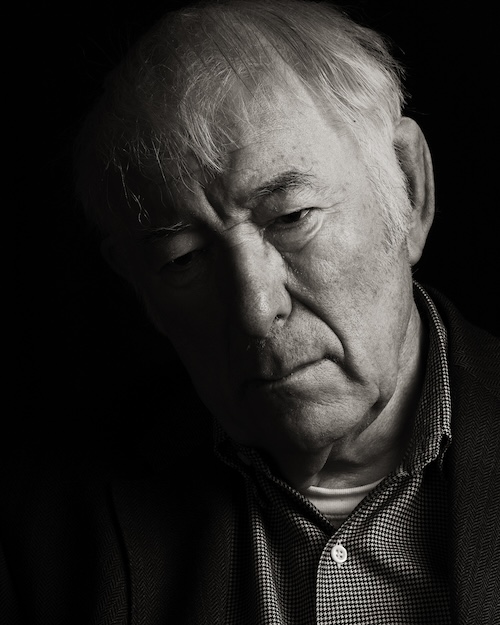
But one of the proudest moments was receiving a letter from Seamus Heaney praising the prints I’d sent him from a sitting we did. Over and above all the awards I’ve won, that letter means so much more.