
One-third of the world’s protected nature reserves are under threat from human activity. The disastrous fires in the Amazon are an example of the consequences of human disdain for the planet’s needs.
Getting people to stop destroying the planet is a very difficult job, but that is what NGOs from all over the world are trying to do. AKQA Brazil has joined them, developing an open-source software called Code of Conscience that shuts off heavy machinery when the vehicle enters a protected part of the forest.
Code of Conscience uses open-source maps from the United Nations World Database on Protected Areas, which are updated monthly by NGOs, communities and governments, cross-referenced with location data from on-board GPS systems, which loggers use to keep track of their equipment and pathfind in the forest. When it detects a machine that has crossed into a protected area, it disables it. If a machine is in an area too remote for mobile data, the code uses cached maps instead.
Because loggers, ranchers and miners are unlikely to add the code to their own equipment, AKQA and its partner, Instituto Raoni (which represents the Kayapó indigenous group and its mission to stop unfettered Amazonian destruction) have called on the chief executive officers of the world’s top-ten construction equipment manufacturers to help. They have sent an invitation to do so, along with the Code of Conscience chip embedded in a wooden sculpture of an endangered animal. The partners hope that all new machines will leave the factory with Code of Conscience pre-installed.
A small, low-cost chip has also been developed to equip the code into older, non-GPS models, and the software is available for free to everyone on CodeofConscience.org. For now, manufacturers will need to volunteer to include the code, but the organisations are lobbying in Brazil, Papua New Guinea, Indonesia, Congo and Australia, to make including the Code of Conscience federal law. Because tech-savvy owners could also remove the code from machines they buy, legal repercussions would help deter people looking to circumvent the program.
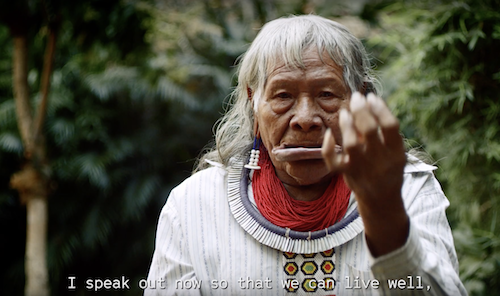
Chief Raoni Metuktire, the most prominent Native Brazilian leader and a living symbol of the mission to preserve the rainforest and its indigenous culture, stated, “May all heavy machine manufacturers and leaders come and see this. So that the tractors operate, but stop when they reach our land, our forest and so it continues to exist. It is for our awareness and for the forest to stand up.”
“The illegal destruction of nature affects everyone, whether through the reduction of biodiversity, violence against communities, degradation of soil, or the heating of our planet,” explained AKQA executive creative director, Hugo Veiga.
“Code of Conscience now invites heavy-duty vehicle manufacturers to become part of the solution to these critical global problems. And it’s clearly economically viable; while it may deter some operators who wish to break environmental laws, it will attract the growing number of responsible organisations who recognise the strategic value in supporting the rainforest amidst an increasingly environmentally conscious world.”
To spread the word about the Code of Conscience, AKQA Brazil has produced a video in which Chief Raoni Metuktire of the Kayapó makes a heartfelt plea to help safeguard these lands that are critically important to the world. The initiative is also supported by the conservation non-profit, World Land Trust; sustainable development organisation, the Amazon Environmental Research Institute; and Instituto Peabiru: A Civil Organization of Public Interest.