In only 50 years, due to human activity wild vertebrates have declined by over 73%. The process of extinction is accelerating. If we forget them, we forget our role in their extinction. So GEO magazine and BETC Fullsix agency have developed an editorial and creative project to bring back to life in photographs five animal species that have disappeared due to human activity. The project brought back the couagga, extinct around 1883; Steller’s sea cow, extinct around 1768; the dodo, extinct in the 1660s; the thylacine, officially extinct in 1936; and the koala lemur, extinct between the 10th and 17th centuries; in strikingly realistic images.
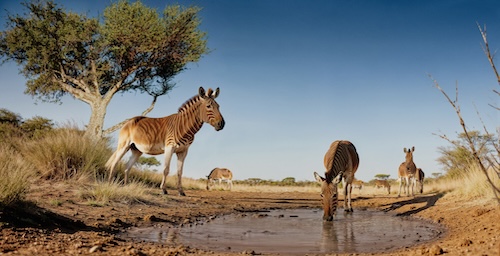
couagga
The ambitious project responds to a dual challenge: to use artificial intelligence in an ethical and scientifically rigorous manner to create photographs of extinct animals that are “as true to life as possible”. To achieve this, GEO and BETC Fullsix mobilised a multidisciplinary team of internationally renowned journalists, creatives, biologists, and paleontologists.
Sylvie Redon-Clauzard, science journalist for GEO, led the undertaking that used the expertise of Éric Buffetaut, paleontologist at the CNRS, and Jolyon Parish, paleontologist for the selection of species and information about the dodo; Daryl Domning, paleontologist at Howard University, Washington, for the Steller’s sea cow; Stephen Sleightholme, director of the International Thylacine Specimen Database, for the thylacine; Peter Heywood, biologist at Brown University, Providence for the couagga; and Laurie Godfrey, paleontologist at the University of Massachusetts, Amherst, for the koala lemur.
While AI often generates a massive production of visuals, this project created useful, accurate, and meaningful AI mages.
“This is exactly how we see the use of AI at BETC Fullsix,” stated Tiphaine du Plessis, president of BETC Fullsix. “A tool at the service of a strong creative project, with a clear purpose. Here, we have put AI at the service of life and scientific truth.”
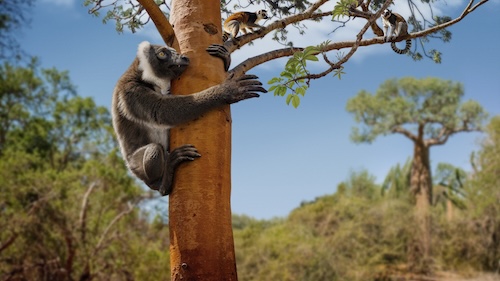
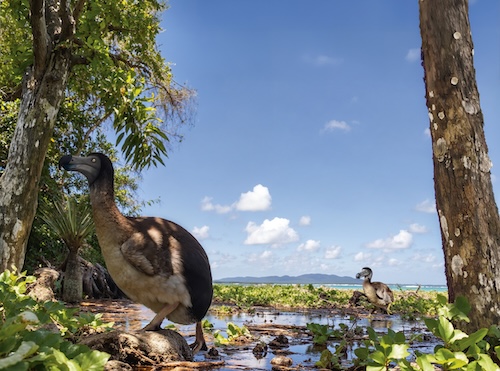
l-r: koala lemur & dodo
The team conducted research to gather the most recent and reliable scientific data on these species: explorers’ sketches, paintings, skeletons, taxidermied specimens, and old photographs. Each document was analysed and validated by scientists to feed into Vermeer, BETC Fullsix’ proprietary AI image generation tool co-developed with Prose on Pixels, that allows total control of the creative process, ensuring that each image perfectly matches the creative team’s vision while guaranteeing the originality and legal compliance of the results.
“Artificial intelligence can only create what it knows,” the team explained. “Organ by organ, the machine was trained and constrained to come as close as possible to the true appearance of these animals.” This precision work required countless back-and-forth exchanges between creatives, journalists, and scientists until the anatomy and original ecosystems of each species were faithfully recreated.”
“This is the project we’ve been waiting for to take the leap and publish AI-generated images in GEO,” explained Myrtille Delamarche, editor-in-chief of GEO. “This subject demonstrates that, when used properly, this tool enables augmented journalism, rather than cheaper but inferior journalism. In this case, it has led us to publish a story that we would not have been able to cover in a picture magazine like ours, due to a lack of reliable images of these animals. It is both the closest representation of the current state of scientific knowledge on these species and the most effective way to raise public awareness of the urgent need to take action against the ongoing mass extinction, because it makes them real and memorable.”
The animals that are impossible to photograph, and the story of their extinction, are being published in the special issue of GEO magazine, Fascinante Faune Sauvage (Fascinating Wildlife), available on newsstands on August 6.
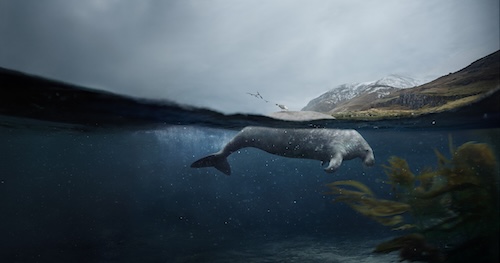
Steller’s sea cow
Credits:
Client: GEO
Client Team: Anne Cantin-Hofstede, Myrtille Delamarche, Cyril Bousquet
Creative Agencies: BETC Fullsix & Prose On Pixels
Agency Managers: Tiphaine Du Plessis, Mathieu Roux, Valentine Moura
President & Chief Creative Officer: Ivan Beczkowski
Creative Director: Christophe Clapier
Art Director: Eleonore Fredet
Copywriter: Jeffrey Thezenas-Pointel
Scientific Journalist: Sylvie Redon-Clauzard
Head Of Production: Sandy Semelin
Producer: Antonin Burbaud
Production Coordinator: Andrea Arcamone
3D Artists: Julien Chiari, Landry Stark, Frederic Rougier
Head of Gen AI: David Tamayo
AI Engineer: Valérien Braye
AI Creatives: Benjamin Ribeiro, Stanislas Chereau, Stevanisya Rotty
Cover image: thylacine