DDB New York has written a safe water manual.
Ok?
The pages filter dirty water, making it completely safe to drink.
Ok!!
The Drinkable Book came into being after DDB designer, Brian Gartside, read the work of Dr Theresa Dankovich, who was a Ph.D. student at McGill University at the time. Her work gave him an understanding of the water filtration properties of paper impregnated with silver nanoparticles.
Now a University of Virginia chemist, Dankovich created the paper that works like a scientific coffee filter, removing deadly waterborne diseases. And DDB used those pages to create The Drinkable Book. Each page of the book is a deep orange colour because it is coated with silver nanoparticles, which kill diseases like cholera, E. coli and typhoid.
The book works like this:
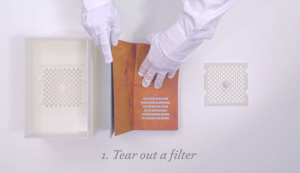
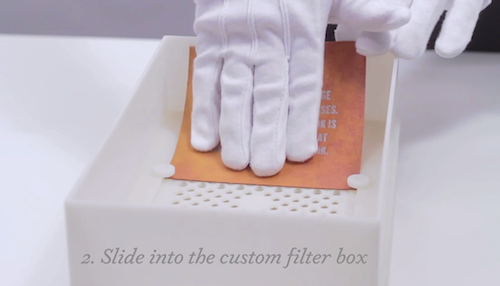
- Tear along the perforation. Slide the filter into the 3D printed case (i.e., the book’s packaging).

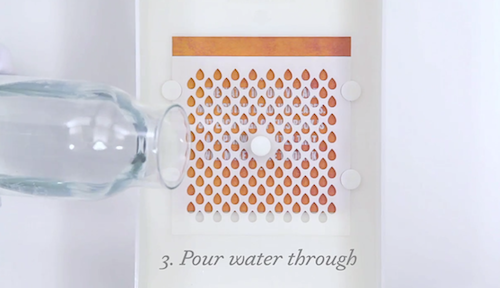
- Pour the contaminated water through

- Drinkable water is collected in the case/container.

After passing water through the filter, there is a reduction of greater than 99.99% in bacteria count, which is comparable to tap water in the United States. Each book contains 24 usable pages, each of which contains two filters. Each filter lasts 30 days. In total, the book can provide a single person with clean water for up to four years.
3.4 million people die each year from a water related disease and, in most of the cases, the victims didn’t know the water was unsafe to drink in the first place. The Drinkable Book also teaches proper sanitation. The content on each page, printed in food grade ink in both English and Swahili, educates people about safe water habits – providing life saving information, such as keeping trash and faeces away from water sources.
WATERisLIFE will be distributing The Drinkable Book to villages in need as part of an integrated water, sanitation and hygiene program to save lives and transform communities.
Matt Eastwood, chief creative officer of DDB New York, commented, “The Drinkable Book’s filter paper will revolutionize water purification. It costs only pennies to produce, making it by far the cheapest option on the market.”
“Technically, you can make this in your kitchen,” Dankovich added.
DDB New York and WATERisLIFE have worked together since 2011 to raise awareness of the global water crisis and raise donations to help build clean water solutions in the world’s poorest communities.
Donations to WaterisLife increased 500% from 2012 to 2103.
Most recently, the agency launched “The Girl Who Can’t Cry,” an online film that documents the many hardships faced by a young girl in the slums of India. The film’s heroine can’t cry due to dehydration.
Past campaigns include:
Kenya Bucket List: an online film that compiles the amazing experiences given to a four-year-old Maasai boy (his dreams come true) to create awareness that one in five children don’t reach their fifth birthday, as a result of unsafe drinking water in sub-Saharan Africa. Launch date: August 2013
Hashtag Killer: a campaign to set out to eradicate the #FirstWorldProblems Internet meme. The viral video features Third World Citizens reading the absurd tweets to communicate the irony of the trending topic. Launch date: October 2012