
In February, Diesel became the voice of the youth generation, launching its Make Love Not Walls campaign, which alluded to Trump’s decision to build a wall between Mexico and confirmed Diesel’s position as a champion of inclusion and acceptance.
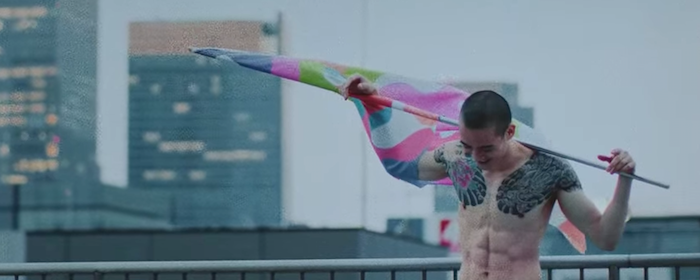
Its new campaign in Japan is more provocative and more assertive. The Walls makes use of Diesel’s influence in both the Japanese underground and mainstream to promote the idea that love has no boundaries.
And that includes love between LGBTIQ people. It’s a standout campaign in a country that is still ruled by traditional values, notwithstanding its leading edge fashion culture.
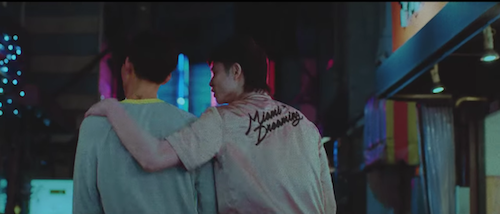
The creative idea came from Geometry Tokyo, whose intention was to build on the earlier, Make Love Not Walls tagline, to create a campaign that was uniquely Japanese. This originally involved building an army of ‘love soldiers’, who would break down the invisible walls of discrimination and inspire love.

This idea continued to evolve as Dictionary Films Tokyo and AOI Pro. joined the conversation. Executive producers, Peter Grasse, of Dictionary Films and Hisaya Kato of AOI Pro., had held a joint seminar at Cannes the previous year on production value. The two were eager to collaborate on something that would demonstrate the value in inspired production.
Like all great productions, this one started big and free – the two EPs imagined shooting through peepholes and filling subway cars with Dutch wives – “because exploring the limitlessness of our ideas can give birth to better ideas,” Grasse noted.
“Key to that limitlessness is the Cutters Studios pipeline, the Cutters Studios building in Ebisu, (which houses production company, Dictionary, and its parent, post production company, Cutters) soon became the spiritual home for the concept’s inspired evolution.”

Because it was branded content, the team had to tackle the problem of presenting sex without displaying sex. They turned first to imagery suggestive of sex in the western world, like bananas and grapefruit. But more interesting Japanese objects proved to be both more effective and appropriate.
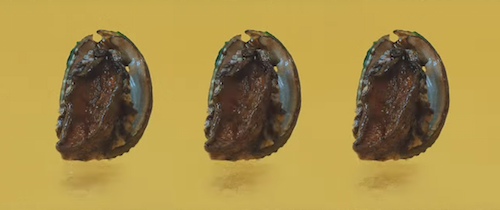
“The long nose of the Tengu mask and the bulbous curves of a matsutake mushroom seemed to pair well with the underside of an abalone,” Grasse explained. Further ideas for the love army were discovered during casting. The original idea of the solders morphed into something better. As Diesel models, the soldiers became inspirational characters whose confident sexiness naturally allowed them to march through Tokyo to spread love.
“And then this huge inflatable tank arrived from Italy and we had to figure out a way to include it in the storyline,” Grasse recalled.
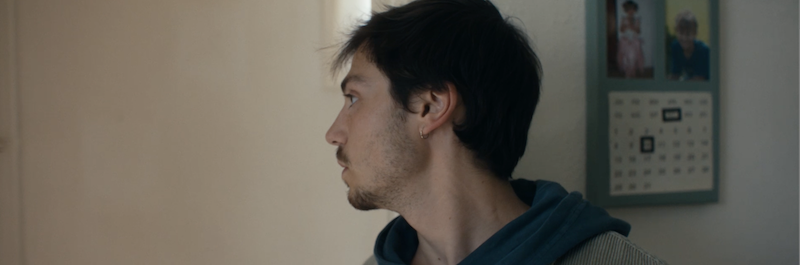
So the script continued to transform. A collection of baseball bats covered in rainbow-coloured sailing tape and a pink riding crop were added. It took a while to cast the film’s lonely karaoke girl. As it turned out, she had been standing right in front of them the whole time. She is the client services manager for Cutters Studios Tokyo.
And when Cutters editor, Aki Mizutani, asked for some extra scenes of couples kissing and clothes coming off, “we all raised our hands to do what we could to assist,” Grasse confessed. “From running to the supermarket in search of sexy fruit to having the whole team add their unique and individual expertise to each step of the way, I think our collective Tokyo team really achieved what we set out to do. We added production value at every step of the way.”
The resulting video is thoughtful, exciting, challenging and determined. Exactly what inclusion and acceptance need right now.
You might also like