Bianca Poletti is an Argentine director and photographer, born in San Diego, California. She has directed numerous music videos, commercials, and short films, with her first feature being an anthology produced by James Franco. Poletti brings her love of character-driven stories, fashion, and architecture to her work, always implementing pieces of the story into her vivid production design. Her film, Radical Honesty, premiered at this year’s SXSW 2022 film festival and received a Vimeo Staff Pick online premiere as well as winning a Gold at Ciclope 2022. Her latest film, I Am Whole, premiered with Directors Library, Short of The Week, Film Shortage, Curation Hour, and the Hammer Museum’s Flux Series in 2023. With a background in fashion photography, she has also shot for an extensive list of high-profile clients including Sacha Baron Cohen, Sean Penn, and Zoe Saldana.
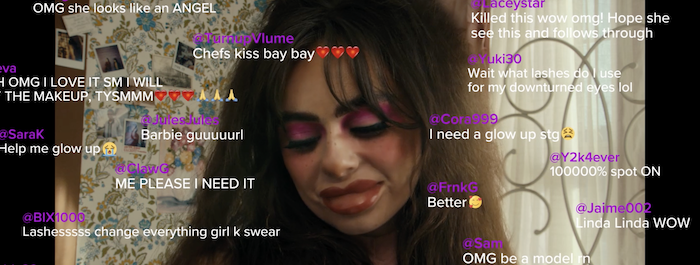
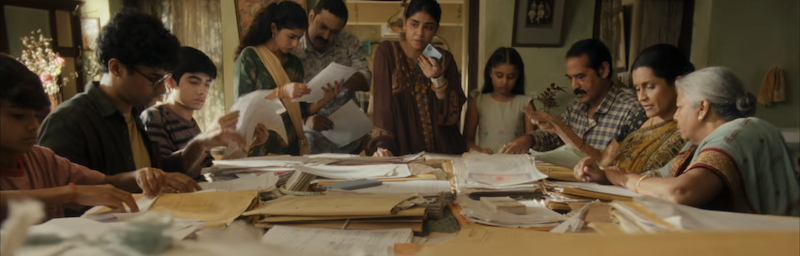
Publicist and consultant, Niccolo Montanari, interviewed Poletti for The Stable, exploring her directing style across commercials and short films, and notably her work on COCA COLA X FIFA Women’s World Cup, Believing is Magic.
Niccolo Montanari: Your latest short film Ultra Low is an ode to the chaotic beauty of indie filmmaking. Before that you shot COCA COLA X FIFA Women’s World Cup, Believing is Magic, for McCann Buenos Aires. How does your directing style change between commercial and indie productions?
Bianca Poletti: I feel like they’re all connected. For me, comedies that are also heartfelt are the strongest stories. I love comedies that stem from truth and real-life stories, and humans are complicated. The most heartfelt moments can also be very clumsy and funny. I sway back and forth between dark comedies and more heartfelt stories because I’m really drawn to both. I’m drawn to the human experience, and in a perfect world I feel like they can both exist in the same world.
Niccolo Montanari: How did you land your first big campaign and what steps did you take in order to grow and be noticed in this very competitive industry?
Bianca Poletti: I went to film school. When I graduated, I really wanted to try something new and was in a relationship with a guy who lived in Seattle. So, I sold my car, bought a bike and moved to Seattle for 4 years. During that time, I focused more on photography and was styling full time. After the fourth year of styling, I really missed telling stories, so I packed my things and moved back to LA. Enough time had passed that I really had to start from scratch. I was lucky enough to meet someone who knew someone and got me an interview to work at MJZ. I knew nothing about commercials or advertising, but I saw that they had a couple of film directors on their roster and that was exciting. So, I worked there for two and a half years, David the owner of MJZ was really supportive of me wanting to direct.
For those two years, I worked during the day at the office and then would hop on any MJZ shoot that I could and assist and PA so that I could learn during the night. Slept a couple of hours and did it all again. After that I left to become a sales rep for commercial directors, that didn’t last too long (ha), then I moved on to doing treatments for two years, where I learned quite a lot from other commercial directors. During that time, I shot a short film called Fertile that did quite well. It cost like 1k, all favours, super simple set up, but people seemed to really connect with it. It got a bit of hype and then production companies started reaching out. I signed with Epoch, and together we started working quite a lot. My first campaign was Be Seen for planned parenthood. I was SO happy and lucky to have that be my first commercial experience. It’s a platform I support deeply. On that shoot I met Corey C. Waters, a DP I use on almost all of my projects, my AD Chad Antonelli and really my whole team that I still use today. It’s luckily been non-stop creating since then.
Niccolo Montanari: Tell us about the Believing is Magic campaign. What was the inspiration behind it and what challenges did you face in bringing your vision to life?
Bianca Poletti: I loved the script from the moment I read it. It was simple, but really strong and about the magic of believing in something. This is a theme I really love exploring.
The inspiration and challenge behind it for me was to find a way to show how futbol connects people across the globe and brings them together, in an unexpected way. I was able to bring on one of my favourite DPs and collaborators, Corey C. Waters, and we we’re really inspired by Alex Webb’s photography for this, layered frames, steadicam mixed with close up handheld shots to feel closer to our characters and the anxiety they felt getting ready to watch the game. Something my editor who I work with a lot as well Dusten Zimmerman at Cabin Edit brought in was the use of sound design. Connecting each world through breath, the commentators voice travelling through different countries, building textural tension. It really was such a collaborative process.
We faced MANY challenges during prep and the shoot, time and money as always. One big thing was that we only had 4 days to shoot and they really wanted to see 6 different countries portrayed in a big way. So, finding locations that looked like Thailand, Argentina, Australia etc in Uruguay and in a short amount of time was our biggest challenge. However, we had a really strong team that worked really hard night and day and brought everything together beautifully. The agency was also extremely collaborative and trusting, which always makes the spot that much stronger in my opinion of course.
Niccolo Montanari: Utra Low shows a unique blend of comedy and truth, a theme also seen in several of your works. How do you approach storytelling to create moments that are both relatable and humorous?
Bianca Poletti: Comedy hits differently for everyone, but for me, I find humans that allow themselves to be messy and stumble through life figuring it all out through trial and error to be HILARIOUS. I’m sure this stems from my own experiences through life, but I’m very much drawn to dark comedies like Fleabag, White Lotus, and Catastrophe. So, when I’m working on a project, I try to incorporate real stories that have happened to either me or people that I know, or it’s something that I read somewhere and found it to be interesting.
When casting, I look for actors and sometimes non actors who look like they are actually the character they’re playing. They have something about them in their real life that connects them to the characters they’re playing and it’s not all coming from make believe. I’d rather cast someone who doesn’t have a lot of acting experience but who is really charming and lives the world we’re telling then an actor sometimes who can imagine it and recreate it. Both work of course, I just find non actors really interesting as well. I also really like to incorporate improv in all the comedic work that I do. Both Radical Honesty and Ultra Low have a heavy dose of improv moments in them. I think there’s a lot of magic that stems from allowing actors to play and be a part of the storytelling process in that way.
Niccolo Montanari: How did you manage the difficulties of filming Ultra Low within the constraints of a limited budget and tight schedule?
Bianca Poletti: OOF. It was tough! Luckily I had a really strong team on this, and my producer Shayna Gianelli is a magician, truly. With indies and short films, it’s really important to have a team that is down to roll with the punches, hustle and improvise. I tend to use the same team on all of my projects because we all work so well together and they’re really all so dedicated to serving the story and making it happen. In short, it’s a team effort. We faced many challenges – time and money. We had to add on an extra shoot day. 80% of the script takes place in a car, which is a difficult thing to shoot in LA on a budget. We tried to fit it in during our planned 2 shoot days, but with so much dialogue and so many set ups with difficult lighting setups, it wasn’t possible. We added a third shoot day, and on that day, we winged it. Shay found a cheap photo studio in the valley that was in the middle of nowhere a bit, we used that as our base camp, and drove around for hours shooting, hoping no one would stop us. We got yelled at a couple of times by some angry neighbours but overall we were able to do it. The actors were really incredible, they only had two takes each to nail it, and they got it every time.
Niccolo Montanari: What are you working on next?
Bianca Poletti: I’m working on a couple of different things. One is an animation short about anorexia, it’s a really visual one, it’s something I dealt with as a teen, and body image is something girls and women struggle with a lot. I wanted to explore that theme in a visual way that we don’t see often.I’m also working on two feature films (my first ones). One is with an incredible actress, Nikki Lorenzo, and John Hawkes. I just finished doing a music film with the two of them. It went so well that we’re working on developing a film together. The other one is a coming-of-age story I’m very, very excited about exploring. I’m also working on an art installation with my very talented production designer friend, Sarah Fern.