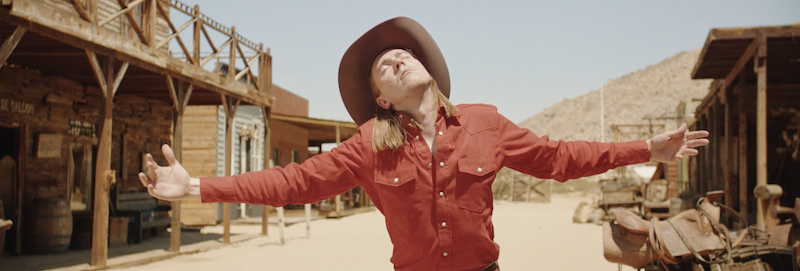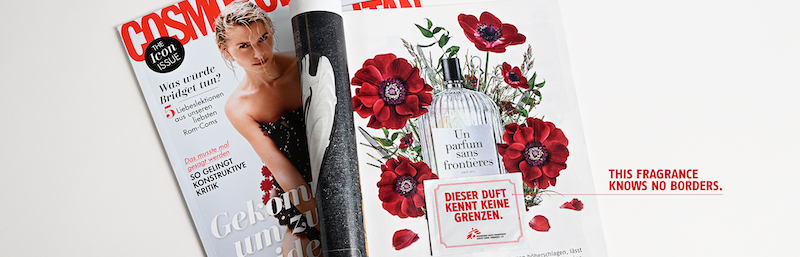
Much has been written in praise of the youthful distinctiveness in Stefan Hunt’s directing ideas. Even more valuable than this asset are the unique ways in which he tells stories. His individuality has already stood out in work For Nike and Ray Ban in the US, Kosciusko Beer and Bonds in Australia.
Exit executive producer, Leah Churchill-Brown, who has snapped up Hunt before his move to the US, explained, “There is so much advertising, so much brand content, in the world, Stefan’s original thinking and individual ideas are assets too good not to include in what Exit offers its clients. I’m thrilled to have him back and excited about doing more work with him here.”
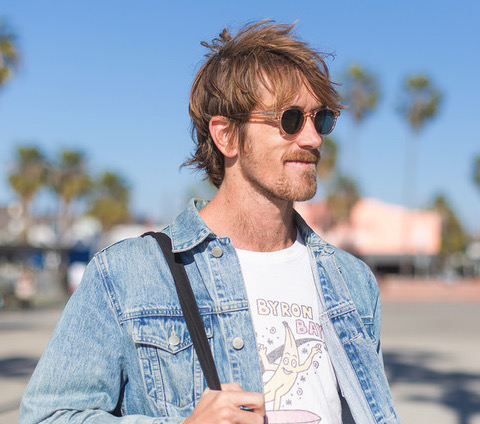
Hunt is hoping that both his original style and a lot of what he has learned in his five years in the US continue to win praise here.
The Stable: Why did you come back to Australia? What differences have you noticed between working in the US and in Aus?
Stefan Hunt: I came back to Australia to get married in April in front of 200 loved ones. Instead we had two people attend thanks to Covid restrictions. As much as my wife and I love our home in New York we figured we’re in no rush to get back there so here we are, stranded in Australia, feeling bloody grateful.
The US is a completely different market for many reasons. First of all, New Yorkers really pride themselves on being the tastemakers of the world, so weird ideas are given more airtime in the pitch development. The U.S. is also just a more explicitly political place so there is more accountability. Non-profits like Free The Work are doing incredible work around representation in the US film and advertising industry. I think that kind of thinking is something I’m really excited to lean into more in Australia.
Australia has an incredible film industry in its own right. For me it’s the industry that I’ve grown up in, so I’ve really missed the comfort of having the crew of collaborators I’ve been able to consistently grow alongside here. When you have long-standing friends who are equally hungry to push themselves, it’s much easier to create collaborative passion projects.
That Hunt is both a director and an artist is evident in his work. It often combines both and its youthful spirit is one of its points of difference.
TS: Which came first, art or directing? What, from your artistic ability or artist’s viewpoint, do you take into directing?
SH: First came art in the form of three-year-old crayon drawings. Then came films that consisted of me with a camcorder recording my mates on adventures. Then, eventually, came commercial projects that were extension of my younger creative endeavours. So, I feel as though my work always has some element of childishness whether it be a bright pop of colour, funny cartoon people, a lo-fi magic trick or a backdrop that looks like an eight-year-old’s art collage. I’m just into creating stuff that looks like the inside of my head.
Of course, I hope I’m always growing and evolving, but I try lean into my own imagination first, and outside inspiration second.
Hunt’s “childishness”, as well as his fascination with the inner world of human beings, has won him five Vimeo staff picks recently, his short film, We’re All Going to Die, being the most feted. This evolved into an interactive multi-media experience attended by thousands at The Melbourne, Sydney and Byron Bay festivals, as well as a book, talks and art events in California, Texas, New Zealand and across Australia.
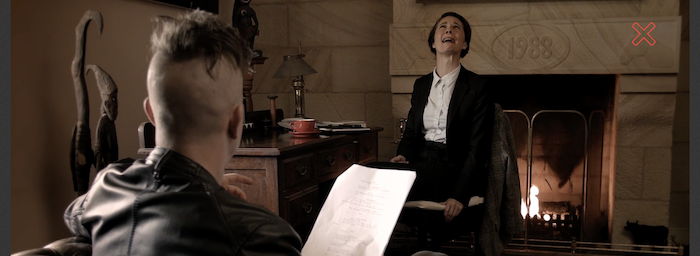
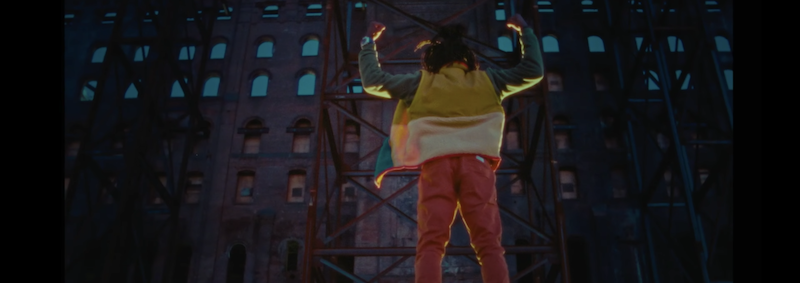
His new short, They Saw The Sun First, is no less inventive. The film, a unique evolution of a documentary, presents the voices of a collection of older New Yorker who express their views on youth, fear, regret and aging, overlaid by a choreography.
TS: Where did the idea for They Saw The Sun First come from? What were its aims?
SH: Well the idea was born after realising I don’t have eldership in my life. The advice we get these days is dished out by people like me writing interviews like this for other people like me to read on platforms where elderly people are not represented at all. They Saw The Sun First began as eleven long form interviews with some incredibly inspiring and colourful elderly citizens of New York. These interviews were edited down into a seven-minute audio clip, that was then scored by one of my favourite artists of all time, FKJ. The dance idea came to me naturally because my wife, Vanessa Marian, is a dancer, so that movement influence is always in our world. It just seemed natural that dance would become the embodiment of the words.
Vanessa and I put a lot of effort into casting people who truly have that little magic spark and then she worked with each performer to see how the words of the elderly New Yorkers could be mapped onto the bodies of young New Yorkers. The process was so moving for me that I remember not caring if the film was received well – I had taken so much from it just for having made it.
TS: What do your short films add to your skills as a commercials director?
SH: Short films teach you that it’s not about resources – it’s about resourcefulness. Independent films force you to problem solve, think creatively, get weird and lean into the power of collaboration. I always try and push myself out of my comfort zone with independent projects so that I’m learning something. The weirdness of the challenge usually helps me pull together a crew of exceptionally talented creatives who enjoy being weird and challenged. Through my last few projects, I’ve thrown myself into claymation, shooting on film, working with stunt teams and creating champagne taste VFX on a goon bag budget.
Every personal project has led to commercial projects, and I’ve truly appreciated the opportunity to use the weird skills I’ve picked up along the way on a much larger, and more impressive, scale.
TS: Your “weird skills” are evident in Nike’s Dream Crazier.
SH: Dream Crazier was such a fun ride. We shot in Spain, Greece, Romania and Florida over 12 days with a run & gun approach. Nike loves to push boundaries and they challenged me to capture the irreverent side of tennis culture that we rarely see. My approach was to lead by example, embrace some Aussie larakanism on set and encourage these world-class athletes to let their guard down.
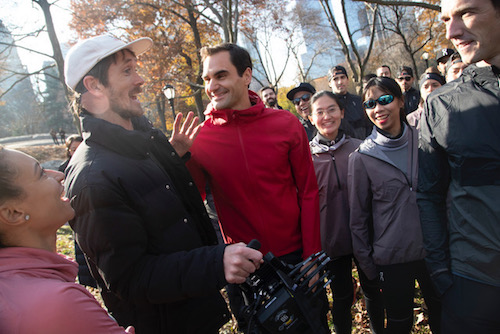
Some other favs of last year included a Ray Ban spot with actor and activist, Indya Moore; a dance-inspired commercial for sustainable furniture company, ZZ Driggs, and a piece for On Running which involved me attempting to keep up with Roger Federer running through NYC.
TS: What are your hopes for working with Exit and for future work in Australia?
I’m stoked to be back on Aussie soil (and in its time zone) and working with Exit again. Since living in New York, I feel my work has really matured without losing the uplifting whimsical nature that I feel is my voice. Exit have really supported that growth and I’m psyched to work with their incredible team to continue on that trajectory here in Australia.
Not all of Hunt’s individual thinking makes it into commercial production. Some things, like peppermint ice cream, he knows are best left as social conversation starters
TS: Why peppermint ice cream controversial at dinner parties?
SH: Until recently I had no idea it was so controversial. It’s as divisive as pineapple on pizza. I took some peppermint ice cream to a friend’s casual dinner party and all hell broke loose. All I can say is that some people are convinced it’s like eating frozen toothpaste and they’re not afraid to judge you for liking it. That’s how you find out who your real taste buds are.