This year, J.Walter Thompson Sydney sent one of its Young Guns, art director, Kostia Liakhov, to Creative LIAIsons. He returned full of anecdotes and ideas, and shared them with The Stable. We’re sharing them with you.
Inside the judging room at LIA, by Kostia Liakhov:
Today creative education is more accessible than ever with advertising schools, universities, masterclasses, workshops and even a Facebook chat bot available to anyone who is interested. So what makes the Las Vegas based Creative LIAisons event different? (Other than being held in one of most fun cities in the world?)
I was lucky enough recently to spend five days at Creative LIAisons 2018 getting inside the heads of some of the world’s greatest creative leaders and watching them judge the non-traditional advertising category. It was a wonderful way to understand what it takes to win an award. (And no, I won’t tell you who won the Grand Prix.)
Here are some key learnings I took away from the event:
- Grand Prix for Good

Should we give Grand Prix to passion projects? Some jury members say yes, we should because as creatives we have the power, tools and knowledge of mass media to make a difference and these causes are important. If you think about it in those terms. they’re right. We can, perhaps, make the world a little bit better, as great work can be even stronger when it’s made with a great cause in mind. An hour-long speech by Matt Eastwood also helped to reinforce this opinion. He noted an article stating that the vast majority of millennials prefer brands that support a cause and are socially responsible.
But there were others who said no. The Grand Prix award should go to the work created for a client. Why? Because charity work is simply more likeable. A campaign for social good gives an unfair advantage since we are prone to judging not only the idea itself, but also the cause it supports. How can you compare Fearless Girl to a Tide Ad? According to the judges, it’s impossible to compare these two types of submissions – they’re just too different. So it begs the question, are we hiding mediocre ideas behind great causes?
The juries took over an hour to discuss this topic and the room split in half. On one hand, awarding a social good Grand Prix encourages agencies to help the world’s problems. But awarding a commercial Grand Prix encourages agencies to make better work for real clients. Personally, I believe in using our skill sets and tools to make a positive change. However, I also believe you can’t judge commercial and cause-related creativity together. Maybe the solution is to give two Grand Prix awards – one for commercial and the other for good?
- Categorise it well
Another interesting, and way less polarising, discussion was about defining the ‘sub-category’ award.
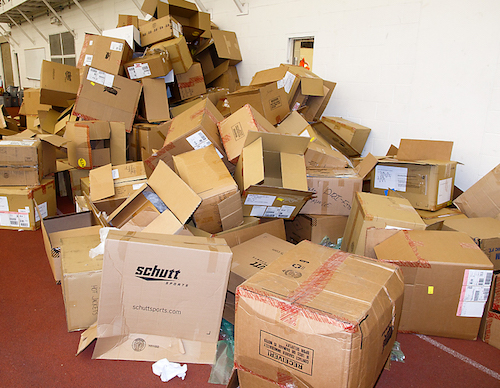
Take this example: An agency submits its ideas across multiple categories. Sometimes branded content videos end up in the product category; press ads suddenly become non-traditional media; guerilla ideas are in user experience list. It’s confusing for everyone. Many jury members don’t even agree on the definition of some sub-categories. Should the “product” category be judged based on the product the ad was made for, or should it evaluate the new physical product that was created as a part of the campaign?
A lot of jury members spent time rolling their eyes when a campaign was submitted into multiple categories. It may seem greedy for an agency to submit its work into a category that has nothing to do with the creative medium of the idea. My key learning from this discussion – make sure your case study works for the category you choose. It may do more harm than just wasting a submission fee. And speaking of case study videos…
- All about that case, ‘bout that case

Yes, the case study video is still king. Why? Videos are attention-grabbing and easy to follow. When you have a room of people looking at 300 ideas, no one wants to read a five-page document, watching a short video is far more compelling.
I believe case videos are the main weapon to get onto award shortlists. 100% of the work entered into the main LIA categories had a case study, and even in the Gorilla Doctors young creative competition over 62% of the work submitted had case studies as part of their presentation format. You don’t need to spend thousands on fancy production and animation but you should do as much as you can to sell the submission. Isn’t this industry all about selling after all?
At the end of the day, Creative LIAisons was an extraordinary event and a fantastic learning opportunity. It’s not often you get the chance to learn from the creative gurus. You may or may not agree with the jury and their choices – even they didn’t seem to agree with each other – but what you can’t deny is the fact that advertising is moving forward with the speed of light and we just can’t afford to stop learning.
Now back to work. The next LIA deadline is in just a year and I need to use what I learned at Creative LIAisons to create something outstanding.