Here’s a fun (and inspiring) story by Mr+Positive founder, Peter Grasse, that tells how a shoot that finished early, a group of summer interns, Robert Evans’ jacket and a mild post-Cannes existential crisis inspired a short film about optimism, creativity, possibility – and telling the stories of the twenty-first century:
A shoot finishing ahead of schedule is a rare and beautiful thing.
On this particular day, we suddenly found ourselves with a crew, some equipment and a few unexpected hours to spare. We also had a group of summer interns with us. So, instead of doing the sensible thing and going home, we decided to make something.
I had recently watched The Kid Stays in the Picture, the documentary about legendary Hollywood producer, Robert Evans. One moment that stuck with me was an old studio film in which Evans directly addressed the people running Paramount, arguing for greater creative ambition and a different kind of storytelling.
It was part persuasion, part performance and part a stylishly dressed declaration of intent. Evans had swagger, conviction and a great jacket.
By coincidence, I had almost exactly the same jacket. That seemed reason enough to make a film.
Of course, I am not Robert Evans. Mr+Positive is not Paramount. And our office in Tokyo is not quite the Hollywood Hills – although we do have a rooftop and a reasonably good view. 🗼✨.
But there was something in his theatrical sincerity that appealed to me. He was putting on a show, certainly, but he also meant every word. That was the tone I wanted: serious without taking ourselves too seriously.
It also gave our interns the opportunity to see that a production company doesn’t always need to wait for permission, a brief or a client to make something. Sometimes you can use what you have, gather the people around you and follow an idea simply because it feels worth pursuing.
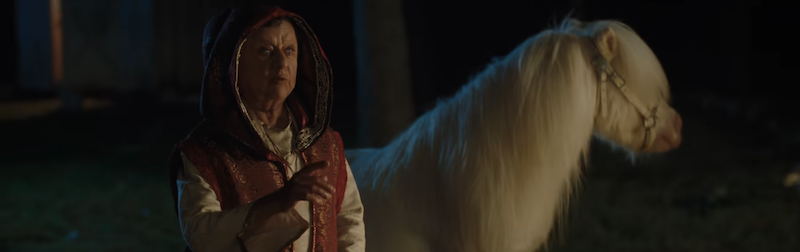
I got to do a little acting. They got to indulge me in a David Byrne-meets-Robert Evans performance involving a moustache, a wig and a healthy amount of postiove conviction. Everybody had some fun.
But beneath the costume, the message is completely honest. We are here to tell the stories of the twenty-first century.
That means recognising that the tools, the storytellers and even the definition of filmmaking are changing. But it also means holding on to the curiosity, craft, courage and collective imagination that make stories worth telling in the first place.
The annual post-Cannes crisis
Every year after Cannes Lions, I seem to come home convinced that the commercial filmmaking industry is in crisis.
This year, the anxiety was particularly loud. Artificial intelligence can apparently generate everything. Influencers and creators are being handed an increasingly large share of the pie. Traditional production can sometimes feel too slow, too complicated or simply too expensive for the direction in which the market is moving.
It would be easy to respond defensively – to insist that the old ways are the only real ways, that AI has no soul, or that people with phones cannot possibly be filmmakers. But I don’t believe any of that.
AI is extraordinary. Creators understand audiences, immediacy and intimacy in ways traditional advertising often does not. They are not the enemy. They are new creative neighbours.
We don’t want to build a wall around filmmaking. We want to make the neighbourhood more interesting.
Because the stories of the twenty-first century will not be told by one kind of person, using one kind of camera, working in one approved way. They will be made by filmmakers, artists, technologists, influencers, creators and people whose job titles may not even exist yet.
The opportunity is to combine these new tools and voices with the things that experienced filmmakers know how to do: build a world, shape a performance, create atmosphere, solve problems together and turn an idea into something that people can genuinely feel.
AI can expand our artistic possibilities. Creators can introduce different perspectives and relationships with audiences. Production companies can help both achieve ideas that might otherwise remain trapped inside a prompt, a phone or someone’s imagination.
That feels far more exciting than arguing about who is entitled to call themselves a filmmaker.
Survival of the friendliest
At Mr+Positive, we have always believed that optimism is a practical creative tool.
It doesn’t mean pretending everything is fine. It means believing there is still something interesting to make, even when the budget is shrinking, the schedule is impossible and the entire industry appears to have reinvented itself during lunch.
It means helping an idea become better rather than protecting your own territory. It means making space for new people, new technology and new forms of storytelling. It means remembering that filmmaking is an act of cooperation disguised as a collection of emergencies.
Darwin is often reduced to the idea of survival of the fittest. I think the future of our industry may depend more on the survival of the friendliest.
Not the weakest. Not the nicest for the sake of being nice. The people who are most willing to collaborate, adapt, share knowledge and help somebody else make something ambitious.
That is what “positive” means to us.
It isn’t relentless cheerfulness or motivational writing on an office wall. It is a belief that optimism creates possibility—and that creativity grows when people feel supported enough to take a risk.
If we are going to tell the stories of the twenty-first century, we will need all of it: the new tools and the old craft, technological possibility and human judgement, individual voices and collective effort.
The Positive theme park
When we finished the film, several people said it reminded them of Walt Disney’s early television appearances, when he would stand in front of a map and explain the next improbable world he intended to build. I took that as a compliment.
I joked that the Mr+Positive theme park would be opening shortly. We are currently awaiting permits, investors and several hundred acres of land near Tokyo.
Until then, we will keep making films.
We will also keep working with directors, crews, interns, artists, creators and, yes, artificial intelligence. We want to help all of them pursue bigger artistic ambitions, tell better stories and do it with generosity, curiosity and style.
Because that is what this film is really saying: we want to help tell the stories of the twenty-first century—and we want to do it together.
This little film was made because a shoot ended early and we had a few hours left. There was no brief. No strategy document. No media plan. Just an available crew, some enthusiastic interns, a jacket that looked suspiciously like Robert Evans’ and something honest that I wanted to say.
Sometimes that is enough reason to make something.
The kid stays Positive 🙂