Because “creativity is only successful when it achieves commercial outcomes.” The Stable interviews STW brand agency, Cornwell.
STW’s Cornwell won us with “we create ideas of influence”. It’s not a digital agency. Not a social media agency. Not an advertising agency. It doesn’t produce work that fits what it call itself on its business card. It produces work that fits the job at hand. In Toby Rupernorris’ words, “My job is to listen, adapt and respond to the needs of the client. That approach ensures that the outcome is lucid, aesthetically articulate, and visionary.”
The Stable asked Cornwell’s chief executive officer, Sally Dobell about that – and more:
The Stable: “We create ideas of influence.” How?
Sally Dobell: It’s simple, we listen. There is no magic silver bullet that will solve every client problem. Each client has its own challenges and so the brand and campaign we eventually go with for them only comes about after close collaboration and a really intimate look at their individual business challenges. You could say that we enjoy knowing every part of our clients business and this is what gives us the edge….a strong strategic base creates great campaigns that makes people take notice, take action and ultimately change their behavior.
TS: What caused your leap of faith from graphic studio to communications agency?
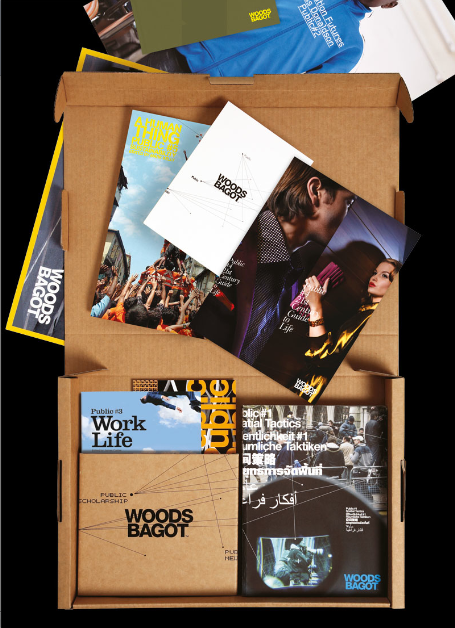
SD: A brand is not just a logo or a mark, so moving from a graphic design studio to a true brand and communications partner was a natural step for the agency. We’re no different than other agencies in that what we want is to deliver the best for our clients. In the past, our clients told us that time and time again they found traditional advertising agencies were simply just re-interpreting their brands, and a lot of the blood, sweat and tears they’d put into brand development was simply wasted. So we started working to create communication ideas as part of our clients’ brand development. Our cred as a true brand agency grew from there. It all comes down to the level of insight and understanding you can provide by being an extension to the client’s team on all levels – not just an addition to the marketing department.
TS: Strategy can lead you down a ho hum creative path. Creative can lead you on a wild and largely irrelevant adventure. How do you get from A (brief) to B (execution)?
SD: Well, I’ll start by saying we don’t see strategy and creative as two separate things. Our insights team and designers always work closely together from the outset; frameworks are good to kick start to the thinking process but again it comes down to adapting the process each time, as no two clients have exactly the same problem. There are no hoola hoops, card sorting exercises or “if this brand was a car, what would it be?” We like to keep our approach, simple and collaborative with our clients to ensure the outcome is authentic and uncomplicated. Simple as that.
TS: “The boundaries of media and engagement are blurring and new technologies continue to emerge.” …Examples?
SD: That’s a big topic as what you know about technology today, is old news tomorrow. In this day and age there are more exciting tools available to brands looking to leverage their ideas than ever before. The most exciting part of our industry is the evolution of media, the rise of online platforms and networks and the shifting attitudes of consumers toward brands all of which present so many exciting opportunities.
Our project for the Howard Hughes Corporation at South Street Seaport in New York showed the power of combining activation and social media to create a successful brand destination story:
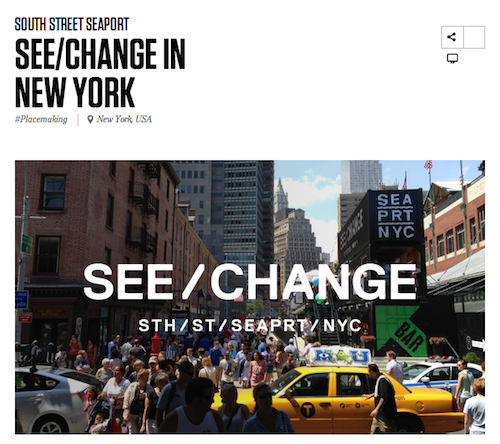
We were briefed to create long term visionary overhaul for South Street Seaport (SSS) plus a leasing campaign for its hospitality and retail precinct, Pier 17. The area has great historical significance (which is challenging in itself), but during the process Hurricane Sandy hit New York forcing mass evacuations and causing a major setback for the campaign itself.
Suddenly our brief became two-fold – the long term brand strategy in response to the initial brief – plus we then decided to present a brand, communications and cultural events program to attract people back to the area after the devastation caused by the Hurricane. Social media became a major focus and we hit Facebook, Twitter and Instagram together with a more traditional activations in magazines, underground advertising posters and outdoor. The client loved our proactive drive and we were proud to see the area become a natural gathering place for New Yorkers again in just a few short months. It was an amazing transformation for the brand and now residents are watching outdoor movies, browsing pop-up shops and sharing tables with tourists.
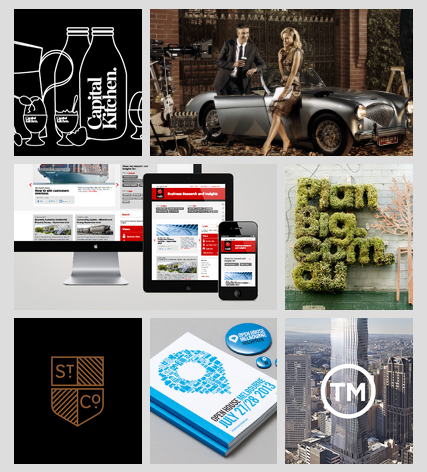
Closer to home is PlanBig, Bendigo & Adelaide Bank’s digital platform. The concept of PlanBig was developed in line with the bank’s overall commitment to local communities and it quickly became the place customers came together to talk about ideas, share inspiration and help make things happen in their community. Again the power of the social networks was at the crux of the campaign’s success – by being involved via Twitter, Facebook, and YouTube, customers earned points and badges for various planning and supporting actions. The community very quickly realised that if they put more effort in, they received more points AND their plan (or one they were helping) became more successful too.

TS: Tech is the new black. What technologies or uses of technology have been duds? What work have you seen that you wish you’d done?
SD: The true duds are when brands use tech to be relevant but come across as gimmicky and insincere to consumers. But then again, look at 3D projection mapping, who would have thought that would become so insanely popular? We’ve been through the era of QR codes, GEO fencing and apps for app sake and we’ve now come out the other end. Our approach to technology and its role in communicating brands is simple – if technology enhances the brand experience by making the customer sit up and take notice of your brand enough to want to interact with it, then it’s a good use of technology because it will reach more people.
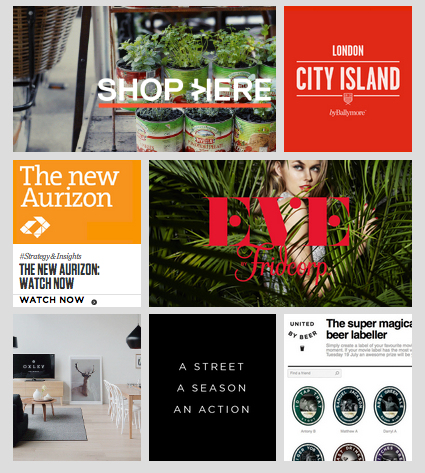
If ever there was a campaign we would like to claim as ours, it would have to be the Nike Fuel Station created by Informative out of the UK. It’s such a simple idea and it grew to become a brilliant example of true interactive retail brand experience.
TS: How has Cornwell changed because of its new people shuffle and what’s on the horizon?
SD: If you live by the formula that with change comes opportunity then you can’t go wrong. Nothing can be truer for our business
Our new leadership team mixes a love of luxury brands with travel and tourism experience and then adds architecture and property development. That all makes for some interesting brainstorming sessions in the office. The biggest change I can see is that we are now presenting fresher and more diverse solutions to our clients. This also comes about because everyone in the office plays a part in the front end of the business – not just the leadership team.
So now we can represent our long term clients in ways which we may not have been given the opportunity to do before and it’s providing a really solid platform for us as we grow into a major Asia Pacific business.
TS: Creative without borders – advantages and challenges in/of a global creative environment?
SD: We’ve learnt to ignore time zones and have become adept at firing on all cylinders at 11 o’clock at night. Such is the life of an agency that works with clients located across the globe. But that’s a minor challenge when you consider the invaluable advantages of discovering the different ways to do business in different cultures and of dealing with language translations and deciphering different consumer purchasing behaviours…and then having the opportunity to share all that knowledge with the local market. The sheer scale of working on global projects challenges your ways of thinking and clients are the ultimate benefactors. They get the best of the best from around the world all from a local team. And when you can draw on the experience and knowledge of hundreds of colleagues from anywhere around the world, you get a huge selling point to present to clients. Due to the scale of global projects, we also get to challenge our thinking and ultimately deliver better client solutions with a real point of difference.
TS: What makes for successful creative?
SD: In our business, creativity is only successful when it achieves commercial outcomes. I appreciate the quest for creativity and commercial results are often at opposite ends of the spectrum but we work tirelessly to ensure that they are one and the same. We’re media neutral, which means we develop great ideas that can translate across any media or channel. Our clients tell us this is like a breath of fresh air. This is what sets us apart. So for us, the ultimate creative pursuit is results. We never settle for less. Oh, and it helps that our design is exceptionally crafted and globally recognised.
You might also like