
When DDI managing director, Caroline McLaughlin, met Kiran Khalap, founder and brand guru at brand consultancy, Chlorophyll in Mumbai, at thenetworkone’s Indie Summit in 2016 in London, she just thought they “got on like a house on fire”.
She was fascinated by his books but even more so when he gave a talk about India’s missed call syndrome, which had turned into a marketing phenomenon. This cultural anomaly triggered McLaughlin’s curiosity about cultural mixing pots and melting pots and she kept in touch with Khalap.
Then Khalap made a proposal. “How would you feel about someone from Chorophyll going over to DDI and then us reciprocating at some point?”
Shortly after, Kaustubh Lele (also known as Cossie, because Australian names are invariably shortened to their simplest form), associate creative director at Chlorophyll arrived at DDI. “It was one of those rare, beautiful things that sometimes happen in this crazy world,” McLaughlin recalled.
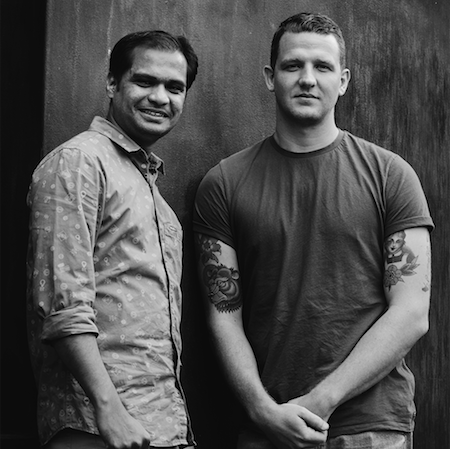
l-r: Kaustubh Lele & Chris d’Arbon
This crazy world is full of learning, as d’Arbon, McLaughlin and Cossie found out.
Cossie “hit the ground running” (in McLaughlin’s words) as a member of creative director, Chris d’Arbon’s, team. That he was able to do this astonished – and being entirely honest, thrilled – both d’Arbon and McLaughlin. Cossie had arrived in the middle of one of their busiest weeks ever.
“I think the reason that Cossie has been able to jump in is that getting off on something unique and fascinating, the germ of an idea that has the potential to be brilliant, is shared. And it doesn’t matter whether you’re in Mumbai or Hamburg, London or Sydney.” This was the first thing that McLaughlin learned from Cossie.
Cossie, who before he did a bit of research about his new home for a month, knew about Australia mostly by being a cricket fan, discovered that the fundamentals of two indie agencies in very different cultures can still be the same.
“Both Chlorophyll and DDI are smaller teams but they are both doing exceptionally wonderful work for their clients,” Cossie noted, “and I think that’s because of the efficiency of both their teams.


Both agencies also have a wide range of ages – experienced seniors and young juniors. “That forms a nice balance and it makes your output great.”
For Cossie, the only real difference he noted was executional.
“I think Chlorophyll needs to up its execution. We have great ideas, like DDI does, but our execution could be better. Some of the factors are clients and things that work in India and suit the audience mentality, but we could improve our game.”
The difference that struck Chris was Cossie’s clarity of thought, his ability to find – and articulate – the hub of an idea and articulate DDI’s visual ideas in a way that is easily grasped. “Chlorophyll’s thing is finding super-simple answers to brand problems. It’s obvious that his training has made his thinking super-distilled and super-concise.”
McLaughlin was impressed by this also. “Cossie knows the right questions to ask. They’re not always the easiest ones to answer but he goes straight to the elephant in the room.
“It shows an orientation beyond just doing pretty work. It shows an orientation that goes right to the very core of what’s actually the real meat. Ideas are tricky things to communicate,” she noted.
“People either get an idea or a new thought very quickly or you can lose them very quickly. Cossie has taught me the importance of wording an idea in its purest possible form. I’d dare say that millions of ideas have died in boardrooms because people just didn’t get it from the outset,” d’Arbon added.
If the Aussie adpeople learned the importance of keeping it simple, Cossie learned the importance of keeping up. Boutique agencies in India like his should be paying more attention to the latest trends in advertising more regularly, he stated.
“It used to be that when some new technology emerged in ‘the western world’, it came to India perhaps five years later. That’s no longer the case. Everything from new technology to a Hollywood movie release happens almost simultaneously now. There are no boundaries any more.”
Indian creativity is not just getting a boost by watching what foreign creatives are doing, though. “Our technology is on par with the rest of the world and our mindset is changing. We used to look at three or four professions as desirable, so if you were good at study you’d become, say, a doctor or an engineer,” he explained.
Now young Indians are opening up to new professions, like creative and entrepreneurial professions, and shaping up their skills earlier.
“And parents are even happy that their children have opportunities that they didn’t, and are supporting them. And our education is changing, so things like the caste discrimination and gender discrimination are disappearing,” Cossie added.
Cossie goes home next week. In June, it will be d’Arbon’s turn to give and receive insights, creative ideas and inspiration to another agency across the world. He will be spending a month at German creative agency, Grabarz.
Meanwhile, a piece of Cossie will remain in Sydney. His calm.
“This business we’re in feeds on angst and freneticism. Cossie takes it all in his stride. I want to keep that – his centred creativity and no drama approach. We aspire to it. Cossie, Kiran and Chlorophyll live it,” McLaughlin stated.
And the process of swapping people, exchanging ideas and learning between thenetworkone agencies has, perhaps, only just begun for DDI? The independent agency network has more than 1,000 agencies in 109 countries.
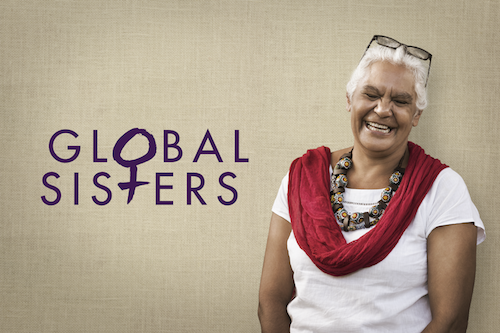
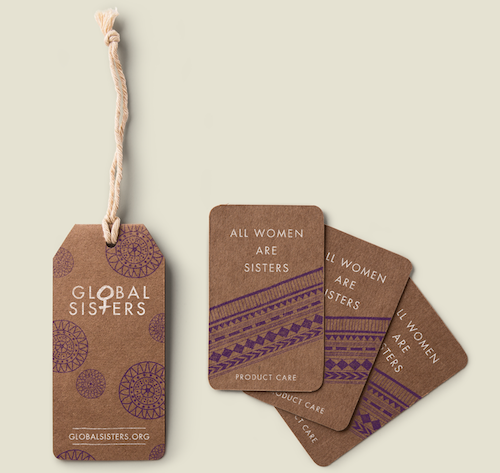
NB: Images and video above are from DDI campaigns.
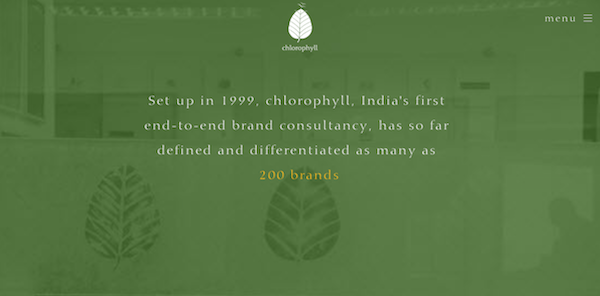
Chlorophyll is:
Grabarz is:
You might also like