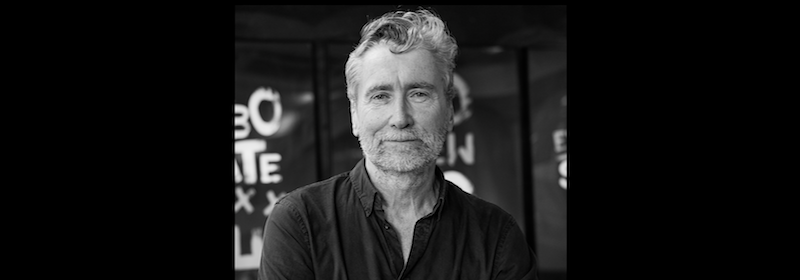
Without scaring off all the contenders for the first-class position of CEO of D&AD, Tim Lindsay is going to be one helluva tough act to follow. He’s the ad bloke, and I use “bloke” deliberately – he’s affable, approachable, open and down-to-earth – who launched White Pencil, with One Peace Day in 2011 as the client for its first brief, and introduced it formally into the D&AD Awards in 2012, the year of D&AD’s 50th anniversary. White Pencil was the start of one of the most significant changes in marketing the industry has known. He was also the CEO at the spearhead of D&AD Impact, taking doing good into the wider creative world; D&AD Shift, which is dragging an elitist industry towards real diversity (eventually) and the New Blood Academy with WPP giving young people a foothold that won’t crumble. With Lindsay at the helm, D&AD is also navigating its way steadily through rather a rough storm in the history of its industry. The Awards received entries from 73 countries this year. Its importance and how it is valued continues to grow.
Interviewing Tim Lindsay is always an inspiring experience. His knowledge of the industry is encyclopaedic. His enthusiasm for it apparently inextinguishable. This interview began with Lindsay’s vision of what September will bring, and the new broom who will guide it.
Tim Lindsay: Dick Powell has possibly done more for D&AD than any other person over his distinguished career. Uniquely, he was president for two years – president and awards winner with his partner, Richard Seymour, and he has been chairman for ten years. I want to say, very firmly and clearly, he has been an absolutely fantastic chairman. Wise, strong, supportive – as he came to trust Dara (Lynch, COO) and me he would always back our recommendations. And I don’t think we’ve let him down too badly. His stepping down creates a real vacancy. I’m at a point where I’d like to shift down again. I love D&AD and I’ve really loved the last eight years but I can see also that it will benefit as an organisation from someone new with contacts, ideas, energy.
It’s not normally particularly approved of for a CEO to become chairman because there’s a feeling they will be a back street driver – which I won’t be – and the board took the view that it would be better to keep me around for all the benefits of continuity. So, I’m very pleased and proud that they asked me to be chairman and we’re in the search for a CEO. I think we all agree that in an ideal world that CEO will come from a design background because I do believe that D&AD will pivot towards the design industry, although not at the expense of the advertising industry. I think it’s a fantastic job and I think people are aware that it’s a fantastic operation and therefore there’s the opportunity to lead a great organisation. It’s a big opportunity for someone to stay in the industry in an incredibly vibrant organisation but without some of the stresses that are now involved in running an agency or design studio in a complicated world.

The Stable: How do you see the way consultancies do business vs the way agencies playing out?
TL: We’re in one of these weird places where the advertising agency world is trying to acquire the skills that consultancies have and consultancies are trying to acquire the skills we have. The one thing consultancies have never forgotten is how to charge properly, by the way. They’re very profitable and we have forgotten how to charge adequately. Or we’ve lost the how to. It’s one of the great ironies that, in its history, advertising has created two really crap methods of remuneration.

I think traditional advertising agencies and holding companies are in danger of losing sight of what the consultancies want in their ambition to get some of what consultancies have. If the key coordinates are data, technology and creativity, we’re in danger of forgetting about the third one. And when we have forgotten about that the game’s over because they can then do what we do. So I think D&AD’s role is even more important than it has ever been because the commercial value of excellent creativity has never been higher or more important, and it has never been more under attack – from within as well as without. We’re busy shooting ourselves in the foot. I still feel very optimistic about the industry, but I think there are some dangerous signs. Consultancies all have slightly different strategies to succeed so they’re all doing what they doing in different ways. Take Accenture as an example, which has made some spectacular acquisitions, really fabulous agencies – they know enough about their shortcomings to realise that they could screw it up very easily and I’m told they appoint what they call a deal shepherd with each acquisition, an Accenture person whose main job is to get them to keep their hands off unless they’ve got something sensible to request.
TS: So what are the real challenges facing agencies now?
TL: Where do I start? There are multiple challenges. There’s the continual downward pressure on remuneration. Whereas in the past we may have been paid too much there’s absolutely no question that agencies are paid too little now. And you don’t value what you’re not paying properly for, so that leads to another thing which is clients bullying their agencies. Agencies used to take too long to do their work but now the pressure on them to turn out ideas almost overnight – or overnight. Frightened agencies never do good work, they just do lots of really shit work really quickly. You might get lucky one time in a hundred.
The rise and rise of increasing investment in digital also decreases the quality of what we do. The big change that has happened, though, is that thirty years ago, people liked advertising. Now they fucking hate it. The reason is that there used to be a kind of contract. There were five media choices. The advertiser would give people a gift and in return, people may or may not watch their ads. Everyone knew it was a game being played and you could choose to play or not play it. That’s why advertising had to be good because it had to be a good gift – of entertainment or information or both. That’s gone. The contract is broken and now advertising lies in wait, to ambush you and intrude into your life – particularly online but also in the real world. People hate it and that’s not a good thing for commercial life. We’ve rendered this extremely effective business marketing tool less effective.
I don’t think it’s bleak. It is in many ways a great time to be in the industry. But traditional advertising will look back on the forty years between 1970 and 2010 and think it was a strange aberration in the history of business communication when people enjoyed the stuff we did. Those days are gone and we have to win back the trust of the people we’re selling to. If people don’t like advertising you have to work around that. So far, that has brought us into the funny world of branded content, long-form content, podcasts, native advertising – and those things may be effective in the short term but in the long term they erode the trust still further, not only in the brands doing them or the influencers doing them, but also in the platforms carrying the stuff. People want the deal to be clear.
TS: How has a new advertising landscape been reflected in the numbers in D&AD categories?
TL: As you’d expect the traditional categories – outdoor, press, radio, TV, cinema – are in slow decline. We actually combined press and outdoor this year for two reasons. They’d both shrunk to the point where it isn’t particularly cost effective to run the two juries but also a lot of the work gets entered into both categories. Although, there were some quite interesting entries in the press category this year. Obviously, the digital categories and the branded content categories grew because what we try to do is reflect the reality of the landscape and evolve that every year. D&AD has also had a reputation for valuing craft very highly. Our judging criteria are great idea, beautifully executed and the execution part of it gets a lot of status and weight. This year, we’ve expanded the craft categories with sub-categories and we’ve invited more jurors in, twenty-five more than we had last year. Plus we have experts judging in those categories – so animators judging in animation, sound designers judging sound design – rather than generalists. That’s good because D&AD stands for craft and I think we’ve made that process more credible and given it greater integrity.
TS: What are the hot spots by country right now?
TL: The US again. It’s partly numbers, entering huge volumes of work, but partly because there’s some really good work. They’ve done really well. Latin America has won its share. Japan always does fantastic work in graphic design. There’s some nice Australian work. The big winner, I predict though, will be the US and probably the UK second, and the gap between them is probably going to widen a bit. Two years ago, the US was the big winner for the first time. Last year it happened again. This year, I’m pretty sure it will happen. You could do a weighting, winners as a percentage of entries. It would be quite an interesting exercise to see who punches above their weight and who doesn’t. It would obviously change the results but it has to be said that there’s some really good work around this year and it’s basically the usual suspects. I can’t think of anything that’s come out of the blue from somewhere unexpected.
TS: What about the impact of D&AD Impact?
TL: There’s so much work for good being done now. And some of it’s even sincere. Sometimes, it’s a bit of a stretch, however, there’s also work that is genuinely sincere and brilliant at the same time. The Libresse Viva La Vulva work has done well. It’s brilliant. And even Gillette – it was very, very brave. Given the brand’s history of putting what has become a toxic image of masculinity on a pedestal to suddenly renounce all that shows real courage. But, of course, Gillette’s calculation is that 80% of razor sales are made by women, so as well as being a good thing to do it’s also a smart thing. Same with Colin Kaepernick actually. Nike’s market is young people and African Americans but Kaepernick was also in keeping with Nike’s theme over thirty or forty years.

Impact is going pretty well, but if I’m being honest we have ambitions for it to do better. It’s coming up for its fourth go-round in New York and we’ve moved it into the early part of November. We’ve also made quite a few changes to it. In a way, it’s also our research and development laboratory where we try new stuff but its main purpose. Certainly, we’re celebrating creativity for good but the industry has been complicit in encouraging over-consumption and is still complicit in that. We have to be part of the solution. And that it was what Impact aims to do overall.
Now the creative community is everywhere. It’s not just in advertising. It’s in social enterprises. It’s in technology and Silicon Valley. The people we’re trying to appeal to with Impact are any people in any business, anywhere, for whom creativity and innovation are key success factors, and to that end we have an advisory committee in Impact with a lot of heavy-hitting advertising and design people on it but also people from a much wider business community. The aim is to expand the impact of Impact to business in general. Not so that it’s not for creative people because it still will be, but it’s less about craft and more about genius business ideas. That’s why Impact is harder to orchestrate. We’re very good at engaging with our traditional community but it’s harder and more expensive – and we’re not as adept at it – with the wider community. They don’t know about us.
TS: OK, so let’s tackle the topic of diversity in the industry.
TL: We’re still not doing a good job as an industry, both in terms of gender balance at more senior levels and ethnic and demographic diversity, which are still way behind where they should be – despite a general acknowledgement that better gender balance improves business results. We’ve achieved 50-50 gender balance in our juries for the last three years and it has made them better. There are great women out there. You just have to make a bit of effort and what you end up with is a better judging process, high-quality discussions, less posturing. But because the advertising business and design have always had financial pressures, they have to streamline and simplify their recruitment processes and therefore they do tend to look at university graduates because they have proved something. They come with credentials. Looking outside that narrow pool is expensive and difficult.

So with Shift, we’ve put 100 people through now. We’ve done Shift courses five times – three times here in London, twice in New York and we hope we’ll launch it in Sydney next with the help of Jonathan Kneebone and others. What that demonstrates is that you can recruit from this non-university educated talent pool – people who have creative project, side hustles, talent. You can identify them and train them in a rudimentary way and they can go on to be productive very quickly. 70% of that hundred are now making a living in the creative industries and 58% come from ethnic minority backgrounds. In and of itself it’s not a huge thing, but it demonstrates that if you do it right you can do it well. But we’re working against really powerful forces. Tuition fees in many developed countries are huge and just the cost of living in Sydney or New York or London is really difficult if you’re coming from Manchester or the like.
The industry wastes enormous amounts of talent by not making it possible for women to come back after they’ve had children – that’s an incredible waste of talent – and also because it tends to get rid of people in their fifties prematurely. I find it quite hard, though, to prioritise them over giving young people the opportunities that we’ve stolen from them, but I do acknowledge that it’s an issue and we do have to grapple with it as an industry. Also being sixty now is not what it was in 1960. But the younger generations are the first for decades to have worse prospects than we did. So I don’t think we’ve done them any favours, which is why looking after ourselves sometimes seems like a second priority. As I get older my position may change.
You might also like