Age isn’t a disability (although it is treated as one), or the creative industry would have embraced it. Odd, isn’t it? The industry flies the flag, loud and proud, for diversity. 21% of Australia’s population is uninvited. So here’s a series to counter stereotypes with reality. To defy disdain for age. To show that experience is not a hindrance.
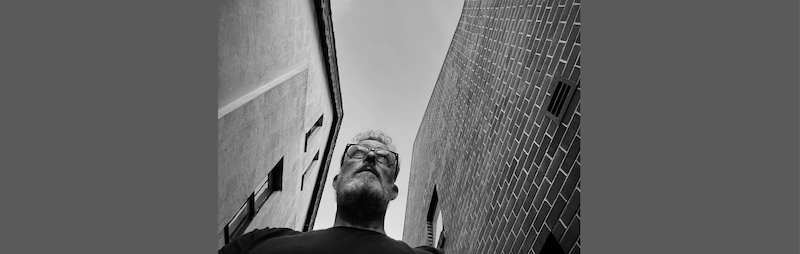
I think you should know that there were people afraid to participate in this series. That is shameful. Kieran Antill wasn’t. Ross Hastings, CEO of Ne-Lo Business Design and The Anatomy of Marketing notes why should not be. “Kieran is somewhat of a unicorn – yes, he’s a much heralded, multi-award winning creative. But it’s all of that in combination with his incredibly astute commercial sense, and application of systems thinking to business, that make him unique… and magical. We need more of this combination counterbalancing the analytic approach to strategy in all businesses. Interestingly – for this article – nurturing that combination in a single individual requires the experience, perspective, learning, and humility that arguably correlate with age.”
First, let’s frame this discussion: What has age got to do with anything?
Ageism, like any form of discrimination, stems from personal biases. When age is perceived as synonymous with decline, it’s viewed negatively. But really, what does age have to do with leadership? With creativity? With marketing?
Just as with gender and race, teams are strengthened by diversity. I’m not specifically advocating for older age, but I am championing the diversity of age and mindsets in general. While age doesn’t necessarily guarantee experience, it does provide the time for individuals to gain valuable experiences, develop broader perspective, and become experts in their fields–which is why so many leave agencies to open their own shop.
You’ve held top leadership roles at Leo Burnett NY, and JWT & R/GA in Australia. What aspects of network agency life did you enjoy, and what did you find challenging?
I relished the opportunity to think big, buoyed by the resources at my disposal – access to ample budgets and talented individuals ready to turn visions into reality. I learned that by inspiring those around you, you can achieve remarkable things.
Each of these networks had its pros and cons but leading them provided invaluable learning experiences. However, bureaucracy tends to stifle creativity and drive outcomes toward mediocrity. And, as I ascended to increasingly senior roles, I found myself moving away from what I loved most, working directly with people to solve problems with creativity.
Ne-Lo’s Business Design is a new way of marketing. How did you adapt your thinking to embrace this approach?
Honestly, it required a complete rewiring of how I think and what my experience at agencies had taught me. Ne-Lo Business Design acknowledges that marketing encompasses all four Ps, product, price, place, and promotion, which necessitates engagement across the entire company. No person (or agency) is an expert in all areas. Our role at Ne-Lo is to help build a company-wide, customer-centric culture of marketing and we specialise in building brand across key areas.
My co-founder, Ross Hastings, comes from a background in team coaching and positive psychology, emphasising that a company is fundamentally an ecosystem of people. This understanding is central to our philosophy. It’s not about having a single right answer driven by ego, but about the collaborative process and how everyone works together to produce sustainable and impactful solutions.
Recently, you co-created The Anatomy of Marketing (AoM), with a book coming. What inspired this?
This builds on my personal experiences and insights. Ross Hastings and I interviewed over 200 executives from various regions and industries to develop AoM. The program uses the analogy of human anatomy to illustrate how fundamental marketing principles are interconnected across an organisation. It clarifies the confusion of the marketing landscape, establishing a common language and aligning leadership teams. Our vision for AoM is to establish it as a universally accepted reference for marketing fundamentals that transcends the conventional view of marketing departments. Think of what Gray’s Anatomy did for the medical profession, but for marketing.
What would you say to a 23-year-old Kieran?
In his book Diary of a CEO, Stephen Bartlett reflects on his life, discussing the five buckets of success: 1. Knowledge, 2. Skills, 3. Network, 4. Resources, 5. Reputation. He argues convincingly that these buckets should be filled in sequence.
So, young Kieran, be a sponge. Read more, listen more, and in the long run, you will go further. Don’t take a job because of pay or title. Choose the people you want to surround yourself with.
What skills, assets and/or knowledge have you used most throughout your career?
The most valuable skill I’ve honed throughout my career is critical thinking. I can’t pinpoint exactly when or why I started developing this ability, but my roles as a creator and builder have certainly played a part. When faced with a blank sheet of paper, you’re compelled to rely on yourself, gathering whatever pieces of knowledge you possess and forging them into a coherent story. This process of synthesising information and creating something from nothing has been instrumental in my professional growth, driving me to write and co-create TheAnatomoyofMarketing.org.
Life, however, teaches its own lessons. I’ve faced professional setbacks and errors in judgement that cost me jobs, but nothing compares to personal loss. In late 2022, I sat with my wife in a hospital room for days before accepting that our baby Louisa was brain-dead and that we had to turn off life support and make funeral arrangements. Her passing taught me about unimaginable grief and the bravery required in moments of despair. It is lessons like these that age brings that youth (often) doesn’t.
In any professional setting, it’s crucial to recognise that everyone is carrying some burden. Whether it’s a personal tragedy, a recent breakup, or just a bad night’s sleep, these factors can affect performance and interactions. My journey has taught me the importance of empathy in leadership – a lesson my younger self may not have fully grasped.
You’ve left agency life for a brand consultancy and are also coaching. Why did you switch? What gets you up in the morning?
Let’s just say traditional agency models weren’t filling my buckets. I don’t agree with the job titles and department names that pigeonhole one’s ability to work across the business.
I definitely haven’t left creativity behind though, we saw this as a real gap in the consulting market we definitely do beautiful design work at Ne-Lo, the difference is that it’s where it’s needed most across an organisation, not beginning and ending with the ad.
What are you most proud of?
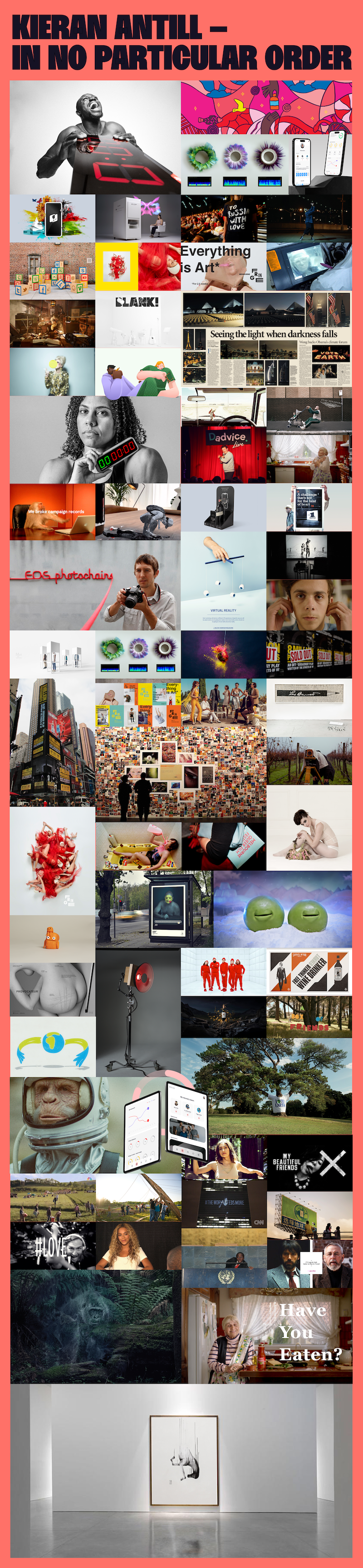
I take great pride in the diversity of my work. Reflecting on my career for this article, the variety and scale of my projects surprised me. I’ve served as ECD for Leo Burnett, JWT, and R/GA in New York, Melbourne, and Australia. Attending the Berlin School of Creative Leadership for my eMBA, built on this with valuable global perspectives, network, and learning.
I have co-created some of the world’s largest mass participation events, such as Earth Hour for WWF and The World Needs More for the United Nations. My portfolio includes leading multi-million-dollar campaigns, rebranding projects, apps, and digital platforms for some of the world’s most recognised brands, including McDonald’s, Chobani, both Summer and Winter Olympics, The Australian Open, Samsung, and Canon. Additionally, I co-produced the Off-Broadway play, 8 Million Protagonists in New York and have exhibited as an artist in Sydney, London, and New York.
Currently, I co-own two companies, Ne-Lo Business Design and Timebirds – both generating millions in revenue in their short lives so far, but more importantly, built alongside people I respect deeply and enjoy working with. Now we are focused on growing the leadership alignment and training platform TheAnatomyofMarketing.org.