The year Samson left a good job to experience the thrill of creating business ideas and what happens after that. By Ben Sampson, creative director at The Monkeys Sydney.

Ben Sampson
We left the comfort of a good creative job in advertising to see if our ideas could survive in the real world. We decided to give it one year, like a student gap year without the drinking and sex and relaxing. Like students, we felt it was enough time to watch our dreams come true or crumble. We had no understanding of the fear we were getting ourselves into.
I flew to Dublin where my creative partner, John, was originally from. We hired a tiny office space for a few hundred euros and began sticking ideas on the walls with Post-It notes. We started by writing problems – they would be the red notes. The blue notes were the solutions. Within a week we had filled an entire wall. The accountants next door thought we were mad, then offered us their services free of charge.
We did not know what we were doing, only that we had solved clients’ problems before and figured now we would do the same. Except this time it suddenly felt a bit more real. Failing was now ours to own, but so was succeeding. Our setup was quiet and small, not at all resembling the scale of our ambition, but it had a raw and naïve energy, like something could happen any day. And it did.
January.
The Idea: A fixed-price online florist, giving people one choice of flowers delivered each day. By reducing the choice and size of flowers, we could reduce waste, cost and logistical headaches. We wanted people to be able to send flowers for small and simple reasons, or for no reason at all. The gesture would become the thing, not the oversized, over-priced bunches that march into high rise buildings on Valentine’s Day. Our post-it note said, “make ordering flowers like ordering pizza”. And that’s exactly what we did.
The Fear: The first bolt of fear struck when launching Little Flowers. We suddenly discovered all the things we now had to do, which our collective ego did not want to do. After flying back to Sydney and finding talented partners to get the business going, the company began delivering flowers. But that’s the thing. We all had to deliver flowers in the beginning. We weren’t just the idea guys, we were the delivery guys too. We had to roll up our sleeves. Literally.
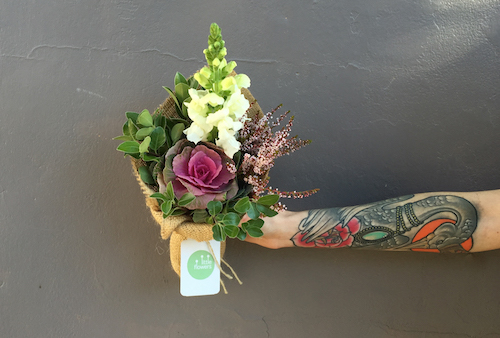
When we launched with the first-ever $30 fixed-price offering, we had more orders than we could fill. Several deliveries were addressed to people we knew in agencies we’d worked with. We placed our cap brims low over our faces so no one would recognise us or think we’d tapped out and taken a stress-free career as delivery guys. Stepping out of our little van we bought for $3k and entering the million-dollar office foyers was hard to do at first. It took us a while to realise the importance of that shitty van and those fancy foyers – the van was ours and the foyers weren’t theirs.
Littleflowers.com.au is now Sydney’s most popular online florist, employing lots of staff with several vans, none of which are shitty.
March.
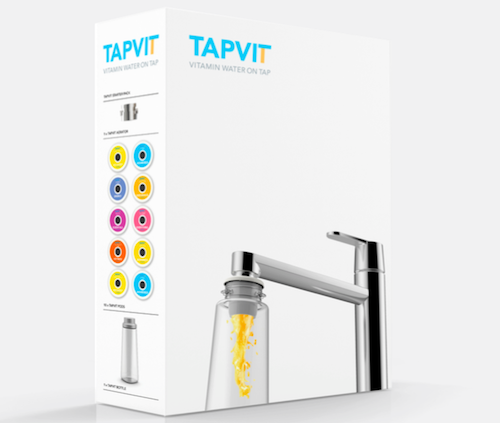
The Idea: Converting the household kitchen tap into a pod-based drink system that makes perfectly mixed and measured drinks simply by turning on your tap. Vitamin water, baby formula, and electrolyte-enhanced waters all pour freely from your tap at home or work.
We knew the world didn’t need a new device taking up space on kitchen counters, so we used what was already there. TapVit enabled a single pod to be locked on to a household tap. With the tap on, water pressure would force the ingredients to mix evenly and burst through the pod’s membrane, creating perfectly formulated drinks with no mess.
The Fear: I don’t know how many times a person gets to experience the feeling of stepping into an elevator, thinking they may have just cracked it. With TapVit it happened in Chicago and Melbourne, then in London. There was no shortage of companies that profit from mixing dry, easily transportable and preservable powder with liquid. They all wanted to see it, most wanted us to develop it further. That’s the fear we never saw coming.
Patent lawyers, prototype engineers and liquid scientists, there’s a scary amount of people who’ll profit from your idea before you do, and a terrifying amount of brands who will waste your time and resources talking. Every time we were encouraged by big brands to progress further, it was more time and more money for us. We weren’t dealing with Joe Blow’s Juice Co either. Emails came via the likes of Indra Nooyi, the global CEO of Pepsi.
We learned the biggest names aren’t always the best with a new idea. They had innovation channels to skip over and duck under, where an excruciating amount of talking takes place. It was no surprise they moved slower than mid-sized competitors in everything from legal agreements to organising presentations. These were a bit more desperate to find new ways to out-smart the competition with bigger budgets.
We had to decide quickly who was worth flying half way across the world to see, and who was just talking. Although time and money was not an issue for them, it was for us. They had no idea we were just a couple of guys with a room filled with Post-it notes, not a big company with a high-tech food science lab and a legal department at our disposal.
TapVit eventually signed an agreement with VISY, one of Australia’s largest packaging companies.
https://youtu.be/VH8pbrXZfzQ
May.
The Idea: When top restaurants are closed overnight, their million dollar kitchens lay wasted. By using these resources to slow-cook food for over 25 hours, Hungry Mondays could supply a city with thousands of quick, slow cooked meals without the need to invest in kitchens. Two meals would be available online each Monday, at pick-up spots or by delivery.
The Fear: Chefs can be passionate and crazy, but so can anyone. We discovered the scariest part of any new business can be partnering with people you need but don’t know. We knew our idea for slow cooked fast food would not begin and end with us. We obviously needed chefs – food guys who did food stuff. But when you partner with people you don’t know, you have no real control over them or the business you’re in.
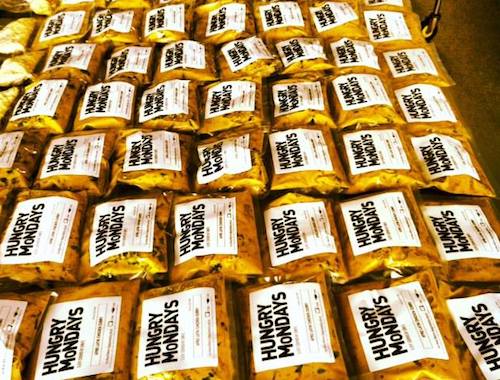
The more popular Hungry Mondays got the more demand and pressure was placed on the kitchen and the chefs, and the more painful it became. Some people who are great at a skill like cooking may not necessarily be natural business owners. And in the same way, you can partner with people whose life situation is not ready for a start-up. We all got on well. We all became good friends. But Hungry Mondays was our idea, we didn’t want to run the day to day business and we couldn’t.
With a brand that was so loved in such a short time, it was hard when we pulled out. It had such great potential. If we were more passionate about food, maybe we would have stuck in and made it work – gone all in. But we weren’t. Just like we had to create distance with Little Flowers and let someone run it, we needed to spend time on other ideas and couldn’t get consumed by this one. We only had a year and we were almost half way through.
Hungry Mondays sold over three thousand meals each Monday in Sydney for over two years, made it on the pages of London Metro and (briefly) opened in New York.
August.
The Idea: An added internal segment creating a separate air-tight chamber inside packaging, keeping half of the package contents free from oxygen, avoiding aeration and expiry of the entire pack once opened. With the addition of an extra lid, glue line and segment, all packaged goods with Two Fresh would no longer expire soon after opening.
The Fear: It was the Swedes who scared us most of all. Speaking to their heads of innovation multiple times, we knew we were onto something with Tetra Pak. With the small additions easily incorporated into their current machining processes, we believe we could have extended the life of all packaged goods, reducing food waste and costs globally.
But the scariest thing when selling an idea can be not knowing your buyer or their motives. In the real world, you soon discover no one innovates for the sake of it. It’s not a creative game. Often there had to be an immediate financial gain. Two Fresh became more of an exercise in mathematics than creativity. How many more units we would sell and at what price was the critical factor and what all meetings came down to. Telling them, “everyone would prefer if their milk never expired early,” only got us so far.
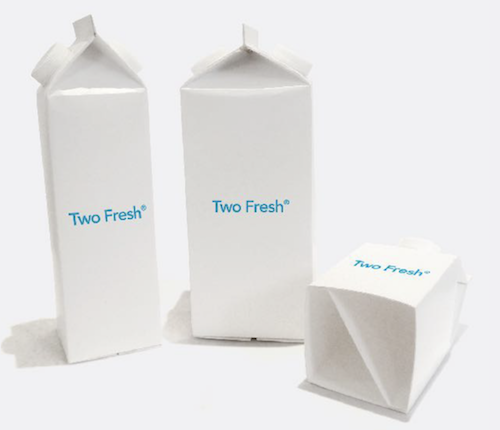
It became apparent that all potential Two Fresh buyers we met with were probably more interested in theory than the reality. We assume this was because customers would need to buy goods (and therefore packaging) less often if contents did not expire as early. We were probably helping the world, not so much long-term sales.
We retired the Two Fresh prototypes after six months. A year later an email came through with a sketch of it at an Eastern European innovation conference. It is yet to be made.
October.
The Ideas: Goothpaste is a range of collectable plastic covers for kid’s toothpaste tubes, with a standard tube screwing up inside a Goother, allowing paste to then be squeezed from the toys’ eyes and bums. It’s a way toothpaste can be fun to squeeze for kids. And a very different idea was Breakfast Butter, a dairy spread that contains fruit pieces, reducing the need for butter and a second spread like jam or marmalade. It was a busy month with very different ideas. And that was the issue.
The Fear: The scariest part of having ideas and no real brief is the sheer amount of them you can have. You realise that not all ideas out there need to solve problems. Some of the most popular ones are just games. However, when we got away from solving real problems, we found ourselves in an ocean of subjectivity where our quality of thinking deteriorated.
The ability to judge what ideas are worth chasing and which ones will give you a return on your investment becomes hugely important. We were nearing the end of the year and perhaps we were becoming more desperate to do more. Maybe a year wasn’t nearly enough? We had started companies and even sold ideas, but the ideas kept coming thick and fast. Our small room in Dublin got smaller and smaller.
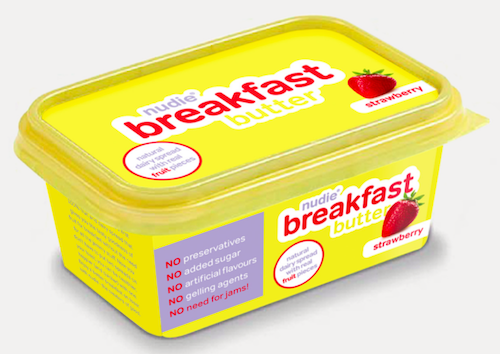
We chased Breakfast Butter across the green fields of Ireland to Kerry Group, who actually took a great interest in it. Goothpaste was received well, too, by dental companies, as weird as it was. But eventually these ideas fell into the nice to have buckets. They didn’t strike fear into people. Didn’t have the someone has to do it moment that some of our other ideas did. We needed to pursue these ideas to understand why others were better, but also to realise the kind of ideas we wanted to make as people.
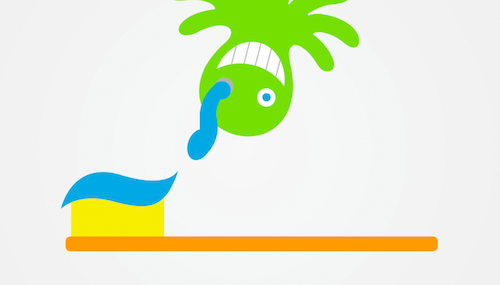
There were many more ideas, some not worth talking about and one we’re still not allowed to talk about until it’s out. The more ideas we did, the more fear came and the closer we came to understanding that there must be a personal tolerance to fear for anything creative to happen in our lives. The fear never goes away, but the more things you do, the greater your tolerance becomes. So when people say failing is good, I think it means they’re just less scared of it.
Although a few ideas were successful, our best idea was probably the Year of Fear. Because the scariest thing would have been missing out on all the experiences – delivering Little Flowers to cancer survivors who brought us to tears, walking into giant boardrooms in Sweden with a black case filled with prototypes, pouring pink water from ordinary taps to the delight of CEOs in secret beverage testing rooms in Chicago. These learnings may, one day, change our lives.
One thing that should excite us all is that the hustle seems to be alive and well. When you’re in it you meet others facing their fears too. They weren’t whom you might expect. They were farmers and waiters and even accountants, people with kids and dogs and parking tickets to pay for just like anyone.
They were not alone. The courage required to keep going did not just come from the stubborn belief in themselves but the bravery of those around them and partners who were also silently losing sleep over a strange tap invention thingamajig. That’s probably where the urge came to write any of this down in the first place.
The Year of Fear made us realise the collective fear many once had for starting or trying something truly new will only ever diminish when you’re doing it, or when you get used to it. You begin to like the feeling, or at least miss it when it’s gone.
I feel as though big companies have always let us believe it is only they who have the ideas and we have to buy them. And although big companies certainly have the money, it’s good to know that it’s we who have the ideas too. And without all the money, we just need to have a bit more courage.
Note: Cover image typography by Craig Ward
You might also like