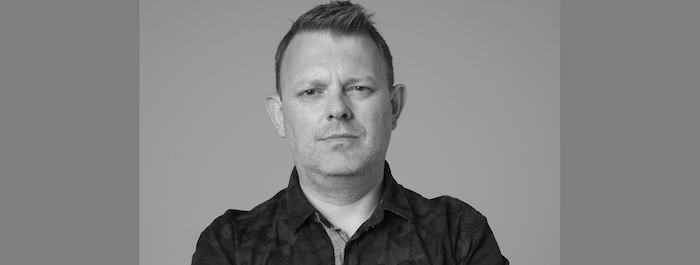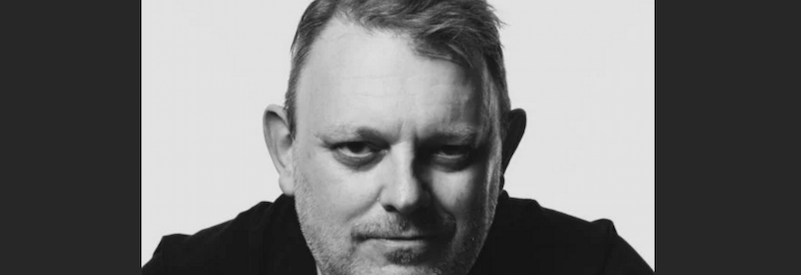
Andy Flemming was creative lead at 72andSunny before he went freelance with a big career already behind him – TBWA\Chiat Day Sydney, BSB Hong Kong, Bates CHI Singapore, George Patterson Melbourne, M&C Saatchi Sydney… He co-created the CAN campaign for CommBank, pitched and retained Optus twice, and created the winning creative concept for Australia’s biggest pitch win – Tourism Australia (that resulted in its very famous MateSong).
Now he has created the self-promo that “everyone” is talking about, TinyAgency. Flemming has created, designed and built (all by himself) a miniature agency, with AI characters doing AI work for real clients (all clients welcome). TinyAgency’s AI staff (including Flemming) have personalities, skills and foibles. They fight, gossip, comment on actual advertising news and learn to either like or absolutely despise their workmates – just like a real agency.

The Stable couldn’t wait to talk to him about it.

The Stable: TinyAgency is mad idea. Where did it come from?
Andy Flemming: I think the industry changed when we all started to use InDesign. Instead of showing hand-drawn layouts where the design never interrupted the idea, we could suddenly create presentations that looked like real work with a client’s logo at the bottom. And because the only real images we could find were from Getty,all the work suddenly became very lifestyle, very human and very, very shit. And this was right across the board. Decks became full of gorgeous landscapes and optimistic people doing optimistic things. We couldn’t have presented Guinness Surfers because Getty didn’t do images of breaking waves with horse’s heads and the studio couldn’t be fucked to spent days photoshopping them together – and besides, they had better things to do.
We dug our own graves with InDesign. The clients fell in love with the images, sold them internally and were loathe to let some wanky photographer put his own spin on the idea so what we presented we had to make. And suddenly ideas just vanished. I don’t blame the clients one bit, I blame us. Presentations were easier with work that looked like work and everyone loves a happy client so we made bulging decks filled with bright, optimistic, human pap.
AI is the next iteration of the great InDesign problem only magnified tenfold. The clients couldn’t use InDesign but my own mother could make a passable Nike ad with just a few basic prompts. The seductive power AI has is intoxicating. Absolutely anyone can make something that looks like a real poster for a real product. Pretty soon they’ll be able to make a film that looks like a real ad for a real product. But AI is beautiful smoke and stunning mirrors. Without genuine creativity, it’s vacuous nothingness that sits amongst the vast trove of vacuous nothingness that we desperately try to avoid day in day out.
I guess TinyAgency came from the ridiculous situation we’re all in right now. I think it was part frustration and part anger that made me spend literally days and days making a little agency that just churns out crap but takes it really seriously.

The Stable: Please explain how it works.
Andy Flemming: My idea was to create a simulation of a real agency. They take your brief, they have meetings about it, they have an internal review, you see them talking about the strategy, they argue, gossip, complain and eventually create an ad that they present to you, the client. But there are absolutely no human beings involved. I think I wanted to create something really fun, really engaging but with this sinister undertone. This is where we’re at. You’ve briefed an agency and they’ve given you an ad that, quite possibly, could pass as the real thing. You didn’t pay for it. You never spoke to anyone and you’ve got this little ad that they’ve made for you and presented. It’s my own little Black Mirror episode I guess.
The Stable: How did you create the agency’s staff? Did you create character prompts or let AI do its thing?
Andy Flemming: It’s actually far more complicated than it looks. I wanted to create something that looked simple but with a lot going on under the hood. I had a rough idea of how I wanted it to look, I love the 8-bit aesthetic as it’s fun and easy to animate but it was the agency staff that were a nightmare to create. I basically had to use multiple AI models. One handles the graphics. One handles the conversations and relationships and the other creates images. I had to tie all three together and essentially give the AI a crash course in agency politics.
Each character has motivations, skills and relationships and when they randomly meet up with each other, those traits create conversations. I have absolutely no idea what they’ll say, do or react to. I essentially trained them to a point and the AI just took over. Maybe they’ll get really good and start winning major pitches in real life. I haven’t got a clue what could happen with them. I’ve told them to learn so it’s not an impossibility but hey, that’s the crazy world we’re in right now.

Flemming admits that the McDonald’s brief he gave TinyAgency came up with a decent idea. (Oh no!!)
The Stable: Can you tell me how you prompted the McDonald’s brief and what TinyAgency did with it?
Andy Flemming: I had a test site built so I could spend a few days feeding the crew little briefs. I gave them a hypothetical Maccas ad for ‘a Happy Meal for NRL fans that includes a small fries, small coke and a miniature rugby ball as a free toy. They went off, had a little think and came back with a poster with a headline that was something like ‘Try to grab one’ or something punny like that. It wasn’t D&AD but for a bunch of two-day-old pixels it wasn’t shit.
The Stable: It’s a brilliant self-promo – the client has a go, then contacts you to redo. But would you ever monetise it, if its work kept being used?
Andy Flemming: I have absolutely no idea what this thing will evolve to be. Feasibly, I have access to about thirty high-end AI models from around the world that I can connect to TinyAgency – so it literally could be a working agency within a few months based on what it learns and how it’s being used. Obviously, if that happens, I’ll fuck off to a massive villa in Bali and they can send me the profits. Will that happen? Probably not. To be honest, the fundamental idea is that what they create should be mindless pap so someone like me can come in and do something real and effective.
As a half-decent writer, I can see what AI does badly, why it’s doing it and the influences it’s using. But that’s just me. To many, AI creates a long list of decent solutions to their problem. It’s not challenging, it’s not clever and it’s not precise. But it is literal and obvious, and to many that’s good enough. I’ve lost count of how many times I’ve been told that clients are creating their own work using AI and holding it up as some kind of yardstick for the agency to beat. That’s generally when I get called in to hopefully write something better.
Maybe TinyAgency will make me rich. Until then, the crap that it produces might just remind people that it takes a real creative to nail a real brief. And if I can do that, maybe a tiny agency can achieve something big.

You might also like