
Last year, a major earthquake struck Kumamoto Prefecture in Japan. It was the second that the Kobe Shimbun newspaper had experienced.
The first, on January 17 1995, left 6,434 people dead, three missing and 43,792 injured. The Great Hanshin Earthquake was the country’s biggest earthquake disaster until the Great East Japan Earthquake of 2011.
So the newspaper asked agency, Dentsu, to create a way to help people prepare for a disaster by itemising emergency supplies. Dentsu’s answer is a visual guide called Emergency Collectives.
The newspaper had compared photos of the emergency evacuation shelters in Kumamoto immediately following the earthquake with photos of shelters in Hyogo Prefecture during the aftermath of the Great Hanshin Earthquake. It was astonished to find that the level of suffering among evacuees had not really changed after more than 20 years.
It also found that many people currently believe that emergency evacuation shelters are run by government staff. On the other hand, it learned that the time needed for government officials to arrive at the shelters tends to be at least 72 hours immediately after an earthquake.
One important factor for preventing confusion in an emergency evacuation shelter is whether people prepare their own emergency supplies in advance and bring them to the shelter. It can cause discord and chaos if there are not enough supplies to go around. According to a survey, Kobe Shimbun found that only about 31% of people prepare supplies in advance.
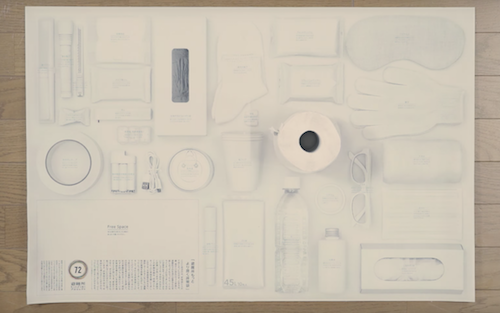
Published in its May 17 edition, a full page of the newspaper featured a photo of an actual-size “map” of supplies that were considered necessary by city residents. By placing matching items on top of the page, family members can discuss together what provisions should be stored in a bag to take out of the home when evacuating to an emergency shelter.
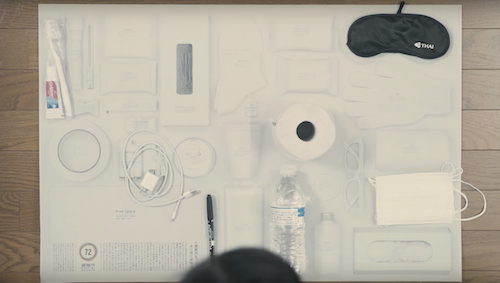
Preparation consists of three steps: First, the family members should place each emergency item on top of the respective image printed on the page. Second, they should talk about what other provisions should be taken when evacuating, and include them in the “Free Space” section of the page. Third, they should prepare an emergency bag to store all of the items. By itemising the necessary supplies for the emergency bag and by having a household discussion about what items to include in the Free Space section, families are likely to greatly increase their awareness of disaster preparedness.
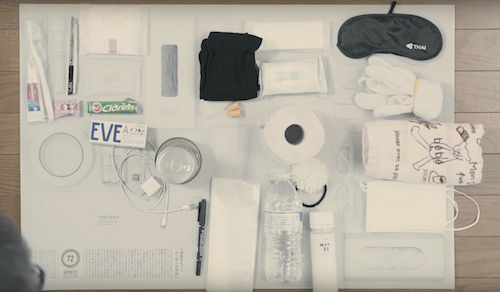
Various reasons for bringing emergency goods were included and uses other than the expected ones for the emergency supplies selected were outlined in the campaign. Both kinds of uses were written on the photograph of the items.
In the future, Kobe Shimbun is also aiming to provide the page as a resource for disaster preparedness education by making it available as a PDF file that can be downloaded from the internet, so that the printout can be used anywhere, by organisations and individuals, in communities across the country.
Credits
Advertiser: Kobe Shimbun
Creative Agency: Denstu
Creative director: Ken Akimoto
Creative team: Ueda Hirokazu, Kana Koyama & Yusuke Imai
Planners: Ryo Makishima & Kyouhei Myouga
Communications plannerJunta Yoshikawa
Account management: Ryo Komoto & Eimi Shimizu
Print & OOH designers: Toshinori Obuchi, Sari Ogino & Oyaka Ito (J.C. SPARK)
Production company: Engine Film
Director: Takashi Tomohisa
You might also like