When advertising agencies talk about the need to build diversity, they’re extolling the virtues of adding women, different socio-economic groups and different ethnic backgrounds. “Representing the richness of society.”
So why are different age groups left out?
I put this to AWARD chair and chief creative officer of Saatchi & Saatchi Australia, Mike Spirkovski, at the AWARD Awards last month, in my characteristic way – straight up. I wasn’t expecting a warm response, but I’m pretty immune to being shot down in flames. Especially on this topic. [ed: Candide McDonald]
.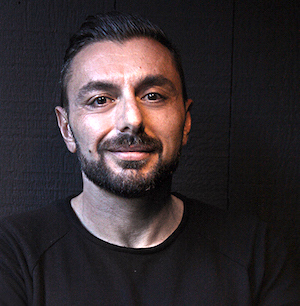
He didn’t fire back. Nor did he give me the fudgy politicians’ response. He didn’t give me the usual litany of stereotypes. And he didn’t say, “It’s a young man’s business.”
He was interested. So, I asked him if he’d give me an opinion piece. He went one better. He invited me to Saatchi & Saatchi for a discussion. And there he began with a personal story that went like this:
The world’s shortest job interview.
“I went into the mainstream business quite late. I was about twenty-eight. I’d been in design and I’d done below-the-line. I just wanted to crack into a big brand agency. I didn’t have the amazing work or the local work, but I had pretty solid work and I’d just won a few awards while I was working in Canada.
“I managed to get a meeting with a creative director at a top multinational agency here in Sydney. I was so excited thinking, “Oh my God, I’m going to get a job there.’ I ended up meeting him outside the front of the building. He was having a smoke. It was literally the shortest meeting I’ve ever had. The bloke asked me, How old are you?’ I told him – 28. He said, ‘Mate, if you haven’t cracked it by now…by thirty, and won a shit ton of awards and all that, you’re done.’
“I panicked. ‘Thirty? I’ve just started. I’m a baby.’ It really disheartened me. ‘If I haven’t cracked it, what’s left for me? Nothing?’
“And then I thought, ‘I haven’t even experienced life…to even know what solutions there are, what consumers want. I haven’t experienced the products, the brands, the technology, the innovation, the whatever’s out there.’ I left that very, very short meeting incredibly dejected.
‘I’m never going to get a job.’
“But that faded, and I thought, ‘I’m going to fucking prove this person wrong.’
“About six months later, I started my own agency, Cassius Clay, with an older creative director, Mark Collis. He was in his mid-to-late forties. And so smart. Like really talented. In the year and a half in which we worked together, I learned so much from him. If I’d been told a thirty-year-old was dead, why was this guy so good?
“Then we folded our company. Because Mark was offered the national ECD role at the agency where I’d had my very short interview. And at thirty, I got to join it as a creative group head.”
Awesome campaigns and amazing awards followed. And despite his being “too old” to begin, Spirkovski’s career moved ever upwards.
“As my experience grew, and as my experiences grew, I felt I was getting better and better. And so, when I think about age in this industry, to me it’s a benefit. Age is experience. Age is knowledge. Yes, I can see that age can also mean tired and jaded. And there’s the older person who says, ‘I don’t do it that way, it’s always been done this way.’ Some old dogs don’t want to learn. But if you’re constantly learning and sucking in information, age has nothing to do with how good you are.”

Spirkovski recalls a “really freaking smart” comment that Jonathan Kneebone made at AWARD’s Think:Long. “You give a complicated brief to an older team and they can crack it really quickly. Give a young team a really complicated brief and they need forever. Experience means you know what needs to be done. If you have to find the solution quickly, give it to the experienced people. If you have the time and you’re looking for the wilder solution, give it to the younger ones. It doesn’t matter if there are a few false goes and you can work with them.”
We both…we all…know that there are creatives who need to go. They were there when I was a creative, telling me how it should be done because it always has been done that way, arrogant in their “knowledge”, oblivious to – or worse, defensive because – they feared their lack of it. Negative about outcomes, all outcomes. To be fair to older creatives, they weren’t always old. The industry is a bitch. Burn-out happens.
But, “Age affects you as much as you allow it to. If you actually think that age defines you as inept, incapable, insecure, stuck in your ways…yeah, be that. But know that it’s your fault. As time moves on, you have to move on with it,” Spirkovski notes.

“I think that some of the best people in the business have been in it for a long time. And I respect them for their wisdom, their foresight, their insights. But they’re not living in the past. The knowledge and advice they give doesn’t come from there. It comes from now. ‘That’s not going to work,’ isn’t in their vernacular.
“Experience is critical in this business. But so is the need to learn. If you’re not learning, I actually think you’ve lost interest in the business. If you’re not inspired by new ideas, not awed by the best work out there, not challenging yourself to do things differently, then you will die off. And people will you see you as an asset that’s no longer valuable.
“On the other hand, Age has nothing to do with anything. It’s a perception we’ve created.”
How to overcome ageism influencing the industry? I had to ask. That’s why I began this – OK, quest.
“I don’t know the answer.” Spirkovski’s response, while sad for older creatives, is honest. And indicative of the general view, I am guessing.
“The bigger issue is across the board equality. If we’ve created the stereotypes in the business that exclude different ethnic, socio-economic and gender groups, as well as age groups, we need to make that a focus.
“The only thing I can say about in relation to prejudice against older creatives is that they are expensive.” Spirkovski also acknowledges that they have the right to be. It’s a genuine dilemma. Young creatives are cheap(er).
“I think the first part of the answer is to talk about it. It’s not being talked about, and it needs to be.”
Thank you, Mike Spirkovski for talking about it.