D&AD is taking over The Stable next week. Keep coming back for awards results, interviews, behind-the-scene views and reports live from London.
Winning a D&AD Pencil is hard. Very, very hard. It always has been and it always will be. D&AD stands on its uncompromising quest to promote creative excellence. And while creative excellence in advertising is enjoyed, both by those in the industry and those in the everyday world, getting it to those people in the everyday world is tough work. Very, very tough work. It deserves all the accolades it can get.
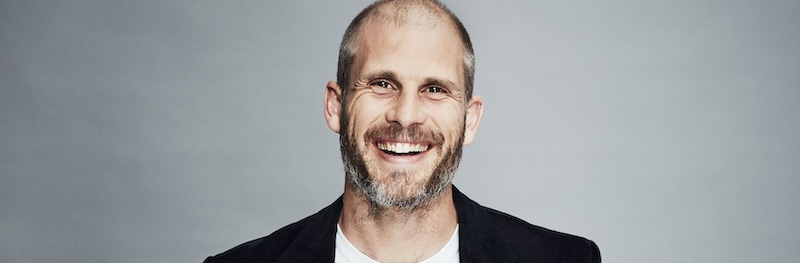
Scott Nowell has been judging the film category of this year’s D&AD Awards. The Stable talked to him about judging creative excellence, making creative excellence, the future of creative excellence and The Monkeys, Australia’s most atypical big advertising agency, which is now part of Accenture Interactive.
The Stable: What have you been looking for in the D&AD submissions?
Scott Nowell: You have to recalibrate your brain for D&AD. In pre-judging, a lot of the time you’re looking for a general finalist level. But when you look at what D&AD has awarded over the years the finalist level is unbelievably high quality. So you have to ask, “Is this going to be worthy of the years gone past? Is it up to the D&AD standards? The level of work is so much better than average”.
TS: Work that has stood out?
SN: One of the bits of work that I absolutely love in film is the Tide Super Bowl ad, This is a Tide ad, and I’m proud an ex-Monkey, Max McKeon, at Saatchi New York was a part of it. It’s genius. It’s such a simple insight, it couldn’t be executed any better and although it looks really simple, the degree of difficulty behind the scenes of getting all those people who manage all of those brands to say, “OK, you can use my ad,” is astounding. But there are also some ads that are not so well known that I feel have an honesty that stands out in a world full of crap.
TS: So is there too much timidity in advertising right now?
SN: There’s always too much timidity in advertising. Full stop. There always has been. Your number one job every day is to overcome that timidity, to do something that will connect meaningfully with an audience, despite the various corporate pressures that are pushing you the other way. We’re very lucky to work with clients who have a less dominant fear gene. They’re doing things that they feel are right – right in their roles, right for their brands, right for the societal context and the world we’re living in. And they’re doing it with a boldness that a thousand different research groups will never equal. A brave client will push an agency to do fantastic work, which makes the pressure on an agency so much greater. But brave clients are rewarded a thousand times over. You get a small group of great people around a brand – from the CMO and others on the client side, to the various agencies involved around a table, and nothing can’t be solved.
TS: The big challenge at the moment for film and TV advertising is….?
SN: You’ve got your basic challenge – trying to do something fresh and meaningful that will connect with people. But if you’re doing film for any kind of screen, this is the best time ever. The screen has never had more power than it does now because everyone has one – everyone is walking around with a screen in their hand all of the time. So there has never been a better time to be in moving images and to use the screen to communicate. It’s a fantastic era that has opened up in front of us.
TS: What will it take to make creativity great in the near future with all the doomsday talk about advertising?
SN: People talk about the end of advertising but it’s not about the end of ideas. People with ideas, no matter where they are, whether it’s advertising or in more client-based roles, will always be valuable. As we progress past the holding company margins-based, squeeze-until-you-die model into truly valuing creative ideas that can transform brands and businesses, the ability to think creatively will never be more valuable. Ideas are massively powerful and getting more so as we see more and more automation coming into our lives. So ‘the end of advertising’ is more about changing the industry structure as we know it. It’s not about the end of creative thinking – that will thrive and become more valuable. What will change is how we package that.
The Monkeys has come a long, long way from being the little indie agency born by three guys with an unfettered approach to how and where brands talk to audiences. It’s now a big agency with an office in Sydney, an office in Melbourne and global ambitions. And since last year, it’s owned by international professional services agency, Accenture Interactive.
TS: What’s changed?
SN: What’s changed for The Monkeys? Well apart from not having to buy the toilet paper on the way to work, nothing. At heart, we haven’t changed from being these idealistic people who believe that good creative thinking can transform people’s opinions, whether it’s in advertising or in film or whatever it may be. We’re still those hopelessly optimistic, ideologically driven people who want to make a good impact on the universe through what we do. We still believe that ideas can drive change and we still exist to make provocative ideas happen. You’ve got to provoke people into a response of some kind that changes their view of a product or business or their behaviour.
We’re still doing that. It’s just on a different scale now that we’ve put ourselves in the context of being able to change what the industry can give great thinkers.
Things that have changed are, obviously, the size of the business and joining Accenture Interactive last year, because that seemed like the best way that we could take the industry forward. The best way to get value for our people’s thinking and have them valued. The best way for our clients to get the best value from our people’s thinking. The best way to have a more relevant model to help our clients. Because, these days, processes are getting so complicated. There are more wide-ranging and challenging roles for CMOs and there are so many more questions to answer. And, if you can help with that; if you can answer those questions for a CMO through a whole range of abilities – from data analytics all the way through to brand strategy and brand communications – then you’re going to be more valuable.
The story behind Tide:
Saatchi & Saatchi NY: Tide takes over the Super Bowl and so many memorable ads
Some Monkeys magic:
The Monkeys: MLA lamb unites Aussies in a reimagined West Side Story
The Monkeys: UNICEF asks for just a minute of your time (between 50c & $1 on average)