
Last week, Simon Lister’s photographs were displayed on massive billboards in Times Square New York to promote UNICEF following the one-hour documentary film made about him and his work with the organisation.
That’s an achievement of which professional photographers dream. Photography and directing are hobbies for Simon. He is the creative director of Nylon Studios. Lister is quite a talent.
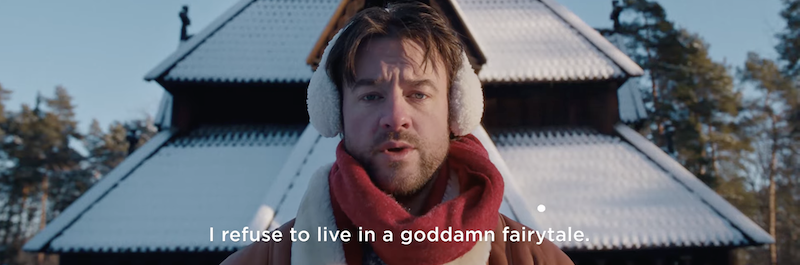
The film, Tales by Light 3, headlines the third season of documentaries about remarkable photographers and their work. To make the film, Lister took UNICEF brand ambassador, Orlando Bloom, to Bangladesh, and went himself to Bolivia, to shine a light on the plight of working children in third world countries. Tales by Light 3 made its debut on Channel 10 in Australia on Sunday, August 26, and will screen on Netflix. There is a special screening at Sydney’s famous Orpheum Theatre on August 27 and a global launch planned.

Lister’s hobby is bringing him unimaginable rewards. He became an official photographer for UNICEF nearly three years ago, when David Nobay, chief creative officer of Marcel Sydney, showed his work to the organisation.
“It’s just an amazing opportunity. This has been my hobby for years, and now my hobby is being used by this incredible organisation [UNICEF] that is showing my images, putting them up on Times Square billboards, projecting them on buildings. And 195 UNICEF offices around the world are using them on their social media, posters, billboards, branding… So I am going, ‘Oh my gosh, my photos are seen globally to help this cause and help children.’ That’s the main goal at the end of the day. If I can save one child’s life with all the photos I take over my lifetime, then that’s incredible satisfaction for me. At the same time, what an amazing opportunity having Canon able to produce the series and tell my story as a photographer and a photographer for UNICEF.”

Lister’s Tales by Light certainly fits the “important story” requirement, Canon’s mission for this year’s series. The two other films are Shawn Hendricks’ story about the need for marine conservation, and preserving aboriginal history and culture on film, in archives and photographs, by Sweet Country filmmaker, Warwick Thornton’s son, Dylan River.
https://youtu.be/yenq3OtEPec
Lister’s Tales by Light 3 gives its audience a new perspective on working children.
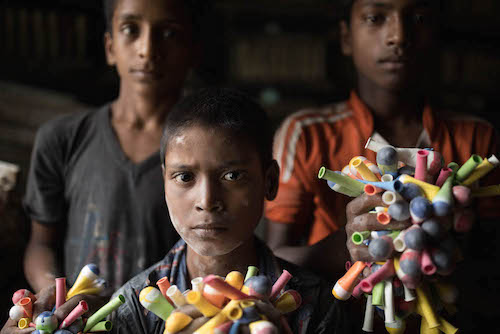
“If they don’t work, they don’t get any money, they don’t survive,” Lister explains. “They are literally making sure they can get something so that they can eat that day. A lot of us in the western culture are going, ‘Gosh, we have to get these kids out of the factories. They should be playing and getting educated.’ But when you’re there, you realise they have to get money, they have to find a way to survive.”
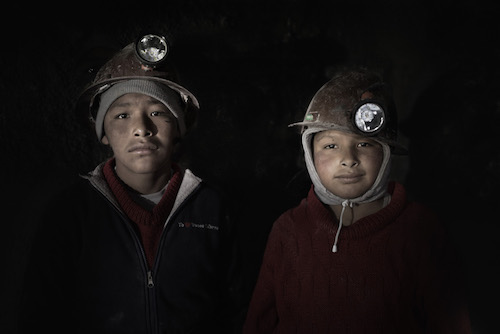
Education is important. If they can get it, it’s a luxury. UNICEF is helping to fit this, as well as health care and a safe place to sleep, into their lives as much as possible, Lister adds.
“You might have a mother with four children,” Lister continues. “The husband has died or left them. And she’s left at home with a two-year-old. Once the children are five to seven, the mother can send them off to work. These children work for three to five hours, depending on what their role or job is and then they can go to a UNICEF catch-up school. UNICEF sets up the schools with its partners. It looks after the curriculum and the teachers, and also seeks out children that need help and provides it. It also provides safe houses or shelters at night, so that street children have a safe place to go. And it makes sure that all the children are healthy. UNICEF is doing an amazing job. And it’s epic. Working children is such a huge issue in a lot of third world countries.”
For Lister and UNICEF, the goal of the Canon film and Lister’s photography, is to show the rest of the world what’s going on in countries like Bolivia and Bangladesh and encourage them to help.
The Stable: Did Canon come to UNICEF?
Simon Lister: Canon came to me. We [Nylon] were lucky enough to do the sound on all the Tales by Light. Producing them is a company, Untitled Films, owned by Abraham Joffe, who is also Australian cinematographer of the year. He has been putting these series together for the last few years. Joffe saw the work that I have been doing as a hobby as a photographer and he wanted to do a story on me.”
TS: What was the original thrill that began this awesome adventure? The motorbikes, documenting life, getting away from here…
SL: All of that. I love here so that’s probably not involved, but I love adventure traveling. The more raw and remote it is, the more I want to go for it. There’s an adventurous spirit in me. I’ve ridden motorbikes all my life – it’s a personal passion – so I use that transport to get into these places because sometimes you can’t take other vehicles in there. A motorbike can go on a track a few inches wide. But my bikes are not really involved in my UNICEF work.
In fact, Joffe created an homage to Lister’s passion for motorbikes at the beginning of Lister’s film. Lister is seen riding a Triumph across the salt flats of Bolivia, an 8,000 square metre expanse on an incredible, vast landscape…and another thrill for Lister.
TS: Which part of your story stands out for you?
SL: We went into Potosi and did stories on child labour in the mines. Children are mining under the ground there – silver and tin. That’s a really full-on story and the first in my episode. Then we followed Bolivian children who go into the jungle to harvest brazil nuts. The nuts, called coconuts, have a shell and they drop from the trees, which is incredibly dangerous. Then, the children cut them up with machetes, take the brazil nuts out and bring them out in sacks.

Lister also took Orlando Bloom to document the children who work in the rubbish tips in Bangladesh.
The children collect anything that can be recycled into sacks and take them to the recycling factory where they get paid a small amount. Bangladesh is incredible for recycling. They recycle everything – because they have to. There are so many people. There’s still rubbish everywhere but the recycling industry there is mind-blowing. That’s why I love going back to Bangladesh all the time because of its rawness but also its incredible race of people. The culture there is amazing, the work ethic is incredible, the survival – to be able to see what humans can endure to survive is amazing.”

Name: Md. Dulaly
Age: 10 years
With Unicef Goodwill Ambassador Orlando Bloom Types of work the child does: collects garbage around old Dhaka train station, garbage that can be recycled and from which she can earn money from, Dulaly aslo attends a Unicef/partner led prep school.
Father’s name and profession: Dulal, porter in Kamlapur
Mother’s name and profession: Mala, housewife
Address: Tickatoli slum Kamalapur
Dhaka, Bangladesh. Unicef involvement: Child Friendly Space (CFS), Gopibag
TS: The thrill now is…?
SL: I love people and I love meeting cultures and I love immersing myself into their ways of life. And if I can capture these situations on a camera or film and show the rest of the world, it’s opening our eyes. We live in such a fairytale kind of environment. For us to see what such a huge percentage of the world is living in or coping with – I think we need to see it. And hopefully it triggers that want in us to help.
TS: Has that thrill taken over from music?
SL: No. I love my job and I love my company and it’s growing. We’ve just opened up in Melbourne. And our New York office is exploding. That’s my day job and I’ve been putting a lot of hours into Nylon. I’m here pretty much every day. Probably three to five weeks a year I’ll go off and do filming and photography work. But that’s a hobby and a passion and side project and we also involve Nylon.
We did the sound tracks to all the Canon films and the most incredible woman, Lisa Gerrard, is singing on my episode. She sang on Gladiator and Black Hawk Down and has been touring the world with Hans Zimmer on his concerts. Jesse Watt here at Nylon composed the music, which is very cinematic and very powerful. So it has been such a great opportunity for us to put sound into this, too, as a company. In just the last three months, we’ve done eight hours of documentary films for Abraham Joffe through Nylon Studios. He has just done a big cat series – five one-hour shows for Animal Planet on Discovery Channel about the stories of lions, cheetahs and leopards following their families. And then three hours of Tales of Light.
Most of Nylon’s work though is still advertising.
That’s what we’re known for. But we do these side projects as well. We tend to pick those that have a special message or very powerful stories. Things that we really want to work on passionately. It’s then not about the money. It’s about wanting to be involved in part of that project. They’re great for us for marketing purposes as well and just for the staff to be involved in. They love working on them, they’re so much fun. We fit those around our commercial work. We have four commercial studios here now. We’ve always got one that can be floating or free for long-form work. We also send work off to our offices in Melbourne and New York, so that they can get to work on these projects.

TS: It’s incredibly difficult for an “alien” to crack it in New York. Nylon has done that too. It has just had its ten-year anniversary.
SL: I think it helped that they had the support of us down here. We can add our whole team to what they can offer in New York. So if they get a job, we’ll be working on it down here as well. If it’s a music job, we’ll provide three or four demos from here and they’ll provide two or three demos. Every day, we’re working on New York jobs in Sydney and vice versa. They’re working on Sydney jobs while we’re sleeping, so we can do a 24-hour turnover.
Over the years, you start to shape your staff to a point where you know what type of person to hire and not hire next time. And the New York team has become stronger and stronger. We have a great brand in America and we’re getting some great opportunities – really high end work. We’ve just hired a guy for sound design who’s going to bring another level to us again. And in Melbourne, we have Paul [LeCouteur] and Ceri [Davies] who have an amazing history. Melbourne is booked out for weeks.

TS: What’s important to you in directing?
I don’t see myself as a film director. I see it as my hobby. My photography is now being recognised a lot more, but I like to treat the craft of directing purely to challenge myself to learn about light and composition and just capture epic moments. I’m not interested in becoming a director for commercials. I’d like to do long-form storytelling documentary work in the future and I’ve got a couple of projects I’m looking to do over the next year or so. I just love immersing myself into the craft of directing for myself, being in control of my creativity by myself. My next goal is to get really high end professional film cameras and go back into some of the environments I captured and make epic cinematic films. That’s my challenge – to produce something epic. I need to do that by myself, without any other expectations or any other people telling me how it should be done.

You might also like