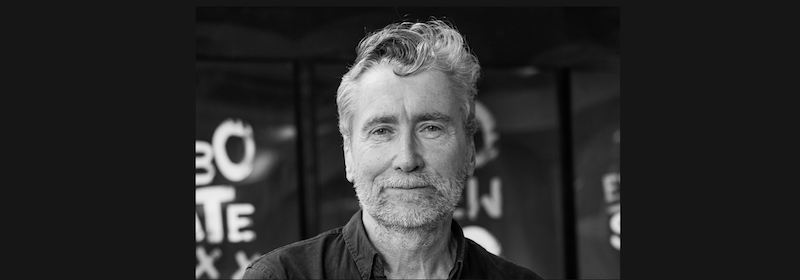
Mandy Galmes became chief executive officer of PR agency, Hill + Knowlton Strategies, in August last year leaving creative agency, Sibling, where she had been managing director for two and a half year. Prior to Sibling, Galmes has been managing director of PR agency, Fuel Communications which she had co-founded eight years before, after seven years as a director of communications agency, N2N.
At D&AD this year, she is jury president of PR and The Stable seized the opportunity to find out what she would be looking to applaud.
The Stable: D&AD is all about creative excellence. What makes PR work Pencil-worthy for you?
MG: The work needs to demonstrate a brilliant, inspiring and innovative approach to usual PR methods. It needs to have clearly addressed the brief and achieved measurable impact.
TS: The edges around PR are blurry and some PR grows from an advertising campaign. What are your red flags for ineligible PR work?
MG: It’s less a case of blurry lines and more a case of recognising the work that truly has PR strategy sitting right at the heart of it. That should be easy to identify when you look at it through the lens of the elements that typically make a strong new story: impact, timeliness, contextual relevance, conflict, human interest, or the bizarre/extreme. A red flag is when cases can only demonstrate results from paid activity or marketing trade media mentions.
TS: Has the use of influencers lost its integrity? Lost its power?
MG: The use of influencers isn’t about to stop, but it is evolving to remain relevant. We saw a lot of influencer-led campaigns in our judging. Cause-related cases such as Their Story is My Story and one from JWT and Colloquial, I Touch Myself 2018 feat. Serena Williams borrow the credibility of the celebrity influencer to quickly establish a narrative, highlight the issue and drive a clear call to action.
It’s interesting to watch the conversation around computer-generated celebrity influencers such as Lil Miquela, and how brands like Prada have embraced her and built campaigns starring an Avatar. There is real power when brands remain open and honest about their intention with influencers. When it does and should get called into question is when that influencer or talent is used in an inauthentic or even questionable way. The 2018 Listerine campaign with Scarlett Dixon is a case in point.
TS: What are the major challenges of B2B PR – how do these differ from B2C?
MG: B2B campaigns need to educate and build trust first and foremost, while B2C campaigns can centre around a product or service. With B2B campaigns you need to consider that the sales cycle is longer, the decision more complex and the investment larger. But creativity is no less important. One of the most powerful campaigns in the past few years, Fearless Girl is actually a B2B campaign by State Street Global Advisors to the need for workplace gender diversity and encourage companies to recruit women to their boards. It was topical, contextually relevant, and an incredibly creative way to reach not only a very targeted audience but to educate a global consumer audience about the lack of diversity in senior leadership positions in major corporations.
https://youtu.be/QURUlgH544c
TS: What PR work in the last few years has made you go, “Wow?”
MG: The most powerful earned media campaigns have truly started a conversation, or influenced/changed the course of a brand. It’s not too often that this happens, but Nike’s Dream Crazy campaign featuring Colin Kaepernick will set a benchmark for brand risk and bravery for years to come.
https://youtu.be/Fq2CvmgoO7I
It was a truly integrated campaign that started with a PR story: Nike’s announcement that the controversial former NFL player, Kaepernick would be one of the faces of the company’s 30th anniversary, Just do it, campaign. It was the brand taking a stand and positioning themselves clearly on a significant social justice issue.
An initial and immediate share price drop of 3% followed by consumer backlash across social media of #Justburnit shoe burning along with boycotts played out over the first few days, but rebounded sharply gaining more than 4% and resulting in a 31% sales increase. Not a lot of brands have the equity, trust or position to be able to make such a strong statement in the face of such serious business risk, but Nike really did walk the talk and delivered on its campaign line, “Believe in something. Even if it means sacrificing everything.”
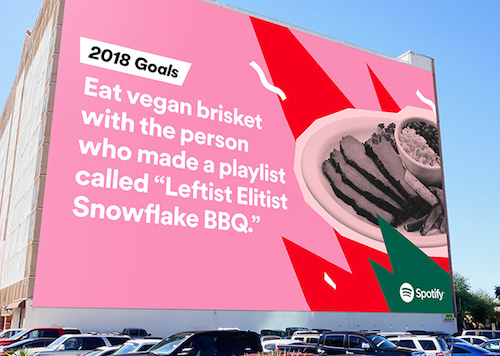
On a slightly different scale, and in terms of smarts, I can’t go past how Spotify is using the power of data analytics in their PR campaigns. Its 2018 Goals campaign used anonymous data to create stories that celebrated users’ weird and wonderful listening habits. It was engaging, insightful for the users and highly sharable and had news at its heart, providing locally relevant stories that played into end of year wraps that the media were compiling.
TS: What are you most proud of in your career (this can be anything big or small)?
MG: It’s been no small feat growing three businesses, building the careers and nurturing the talented people in those teams, while trying to bring my best-self home every evening to nurture three boys and do my best to grow them into compassionate, caring, feminist men.
TS: What assets and skills does a great PR person need now?
MG: Hands down the team at H+K Australia are some of the smartest, most experienced, creative PR professionals I have had the privilege of working with. What we look for in stand-out candidates is intelligence, creativity, curiosity, resilience, humbleness and not taking themselves too seriously.