Some years back, if you’d dropped by Armand de Saint-Salvy’s office in the middle of day, you would have found him in tears. Of course, it was all in the name of art. Here’s why perfecting crocodile tears has been so important for de Saint-Salvy’s directing career.
Q: Describe your background in 30 seconds?
Armand de Saint-Salvy: My creative background would be – uni, film studies, short films, writing and directing launch spots for tent-pole television events, studying acting, more short films, loads of crap screenplays, Doritos Crash The Superbowl finalist, television commercial directing, paid to be a wanker. Nailed it in 8 seconds.
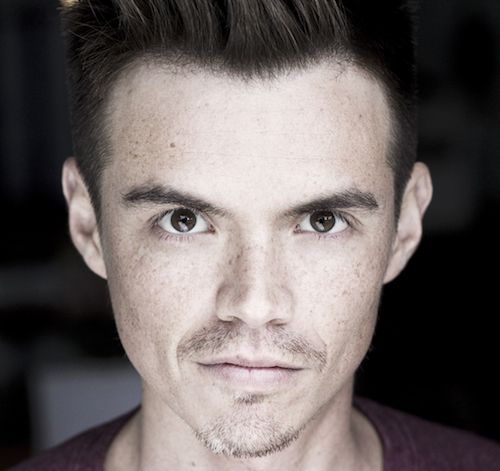
Armand de Saint-Salvy
Q: Where did you learn your performance skills?
A de S-S: It started with the question, “How can I expect an actor to cry on cue, if I can’t do it myself?” If I was to direct an actor in a scene where they have to cry, I wanted to know the various tools available to help that actor. So I studied acting for 5 years, working with leading Hollywood acting coaches and learned as many different techniques as possible (old and new) so I can speak an actor’s language. Actors really appreciate that I have an understanding of what they go through, not just on the day, but in preparation, in approaching auditions, and the struggles actors go through on personal self-development journey. The actor’s instrument is themselves, and my goal is to help them achieve their potential when in front of the camera.
Q: Can you now cry on cue?
A de S-S: I set myself that goal, then trained repeatedly. Every day I’d sit in my bedroom and try to cry. It wasn’t weird at all (?!) After a while, I got there. Then I had to do it in an acting gig. I had to cry 4 times in a row on 4 separate takes, and I got there every time. The preparation gave me the confidence. Now I get to practise again whenever I lose a job.
Q: You’ve had success in the comedy field. From a directing perspective, is all comedy the same?
A de S-S: “Is all comedy the same?” is like asking “Do all Asians look the same?” (I’m half Chinese/half French, so I have a 50% amnesty on racist humour). You know what, a lot of us Asians kinda do look the same, but within that, there are so many nuances. The current trend in comedy is to say, “We’re going to play this straight.” It’s the equivalent of smashed avo on toast. Everyone’s doing it, but what’s unique about your contribution? That’s why nuance tickles my fancy. It gives me the chance to explore unexpected ways to develop the material. And not just from a performance perspective. I try to bring a distinct and unique visual approach for every comedy job I direct.
Q: They say all great performances start in casting. Do they?
A de S-S: For me, the performance you see on set has been created before the casting. I have a detailed pre-casting process that gives all auditioning actors the tools to do their best on the day of auditions. They can’t control who is chosen, but at least I can help them be fulfilled as actors by doing their best work in the casting.
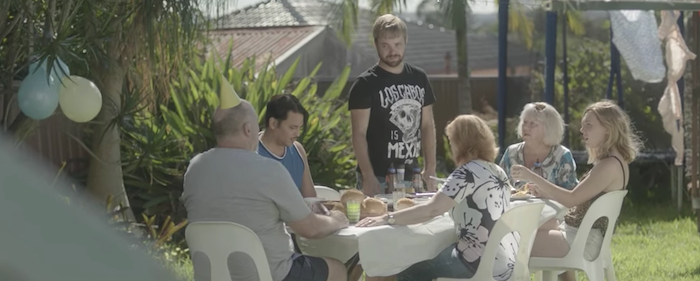
Q: Your work, The Big Deal, recently won a Bronze in the film category of Spikes Asia. How did you get to make an award winner for marriage equality?
A de S-S: At the time, the work supporting Marriage Equality was worthy and important, but not particularly “viral”. My executive producer and I thought the opportunity to write and direct a film for the Mardi Gras was a unique chance to create work that might help change an archaic law. Cheek and irreverence are at the heart of Mardi Gras’ charter, so the brief was to create work that was bold, funny, and driven by a key insight. In the end, the work really struck a chord, garnering more than 7 million organic Facebook views. And it was picked up by media around the globe. If Australia votes no, I might have to renege my passport and move to NZ.
Armand de Saint-Salvy makes equal rights for LGBTQIA+ rights as Aussie as…
Q: Your work with performance even extends to the animated world?
A de S-S: We got to jam with the Smart peeps at McCann on a 3D animation job that combined animation techniques. We mixed the visual aesthetic of miniatures, handmade craft with 3D craft and cinematic lighting to create a unique look. This spot was a sequel. Last year’s won an AEAF award – no mean feat given we were up against projects with massive budgets.
Q: What is your best memory from Wallet Dance?
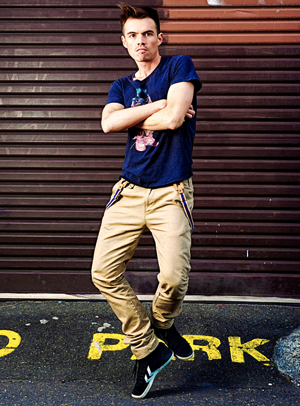
A de S-S: It’s not your typical bank commercial. I used to be a muso and on the side, I teach dance, so when a bank commercial involving dance, hip hop and comedy comes my way, I feel a little movement downstairs. Any opportunity to do something “not typical” sparks my interest. I really enjoyed bouncing with the crazy creative team at DDB on this. They were down to push the idea hard. Inevitably a bunch of funny things had to be left on the cutting room floor, but what I think survived made for a fun spot.
Q: Tell me about your treatment process?
A de S-S: So much of the creative direction is determined at the strategy stage. If there’s a great insight, then the creative has a chance at connecting. So, when a script comes to me, my first question is, “how can I deliver the insight at the heart of the creative as clearly and engagingly as possible.” Now delivery is contingent on your audience. To connect with them, the work must be engaging, whether it’s funny, thought provoking or emotional. So in my treatments, I include ideas that help the material connect with the audience. I know that most scripts have been through the wringer by the time they get to directors, so I don’t try to change the material. It’s about finding a way to improve the material, even sometimes when the client can’t quite understand why suggestions you’re making will end up helping. It also helps that my two EPs are ex agency. And in the end, if my ideas get rejected, I smile politely, walk away to my office and practise crying.
Q: What’s the best part of your job?
A de S-S: For me, it’s about using story to bring great idea to life. And usually that great idea stems from a great insight. Smart strategy helps to birth great creative. I get to blend visual art, acting, writing and music all for the sake of a good yarn. I’ve always had a passion for the arts, stories and psychology, so directing means I get to bring all those passions together. Oh, and I get to sneak away and watch movies and say that I’m working.
Q: Would you like to transition to feature films?
A de S-S: I’ve received development support from Screen Australia for a feature, and I have 3 scripts in various stages of development. I plan to move between long and short form. In long form, you can explore character and story with great depth. But in short form, I love the challenge of using story to deliver an idea. The smarter and more insightful that idea, the more enjoyable I find that short form challenge.
Q: What’s your goal for 2018?
A de S-S: I plan not to shave for 6 months, and see if the 20 whiskers on my face will grow to form anything that can be defined as a beard. I feel like, if you haven’t lived like a hipster for at least some part of your life, you haven’t really lived. However, I think I know what the result will be, which will be me practising my crying more.
Where fame began for Armand de Saint-Salvy:
You might also like